
It might come as a surprise how many people struggle to perform calf raises with proper control and stability. True control means lifting into the movement over three to four seconds, holding briefly at the top, then lowering just as slowly. This approach demands far more balance and coordination than most expect. Too often, people focus on rushing through repetitions and miss the opportunity to slow down, stay present, and fully engage the muscles.
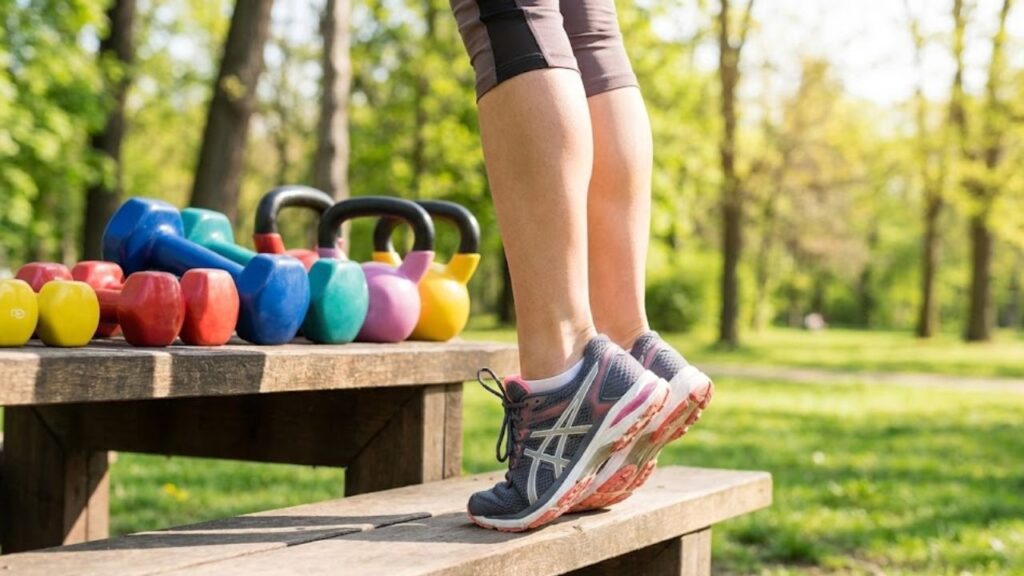
I encourage you to improve your mind-muscle connection by deliberately slowing your calf raises the next time you train—or by adding them to your routine if you don’t already. It’s one exercise I recommend practicing daily, particularly for those over the age of 60, as it supports long-term strength and movement quality.

Why Calf Raises Matter More as You Age
Age has nothing to do with capability—I’ve trained incredibly strong and fit individuals well into their seventies. Still, natural changes do occur over time. Muscle mass and bone density gradually decline, joints can stiffen, and overall mobility may decrease. These shifts can raise the risk of losing balance and falling, especially if lower-body strength isn’t maintained.
 Goodbye to Grey Hair: The Cheap Kitchen Ingredient Sparking Heated Debate Over Aging and Beauty
From a trainer’s perspective, calf raises remain one of the most effective exercises for preserving ankle mobility and lower-body strength. They play a key role in helping the body stay stable, coordinated, and resilient during everyday movement.
What Are Calf Raises?
Calf raises are performed by standing with your feet hip-width apart, either flat on the ground or on the edge of a step. From there, you lift your heels, rising onto the balls of your feet, before slowly lowering your heels back down. For those who find standing balance challenging, seated calf raises are a suitable alternative.
Performing calf raises on a step creates a greater range of motion, allowing your heels to dip below ground level. This variation gently stretches the ankles and Achilles tendons, helping to improve flexibility and overall movement capacity.

How to Perform Calf Raises Correctly
- Stand with your feet hip-width apart
- Keep a tall posture and engage your core
- Place your hands by your sides, on your hips, or hold weights if desired
- Lift onto the balls of your feet slowly, counting three to four seconds
- Pause at the top and squeeze your calves
- Lower your heels back down with control
- If using a step, allow your heels to drop as far as balance allows before rising again
- Complete 3–4 sets of 6–12 reps
The Benefits of Calf Raises
The calf is made up primarily of the gastrocnemius muscles, which activate when you lift off the ground. These muscles mimic the action of pushing forward during walking, running, and jumping, helping you stay upright and balanced while maintaining posture.
The gastrocnemius also supports the knees, ankles, and feet, playing an important role in fall prevention and lower-body stability. Beneath it lies the soleus muscle, which assists with plantar flexion—pressing down through the toes—and helps prevent the body from tipping forward.
Calf raises strengthen both muscle groups, supporting joint health and efficient gait. When these muscles are weak, the risk of strains, tears, and compensatory injuries increases. If balance is an issue, holding onto a stable surface allows you to move slowly and with purpose, improving muscle activation and neural coordination. Using a step to stretch the calves also increases time under tension, further enhancing strength and mobility.