
Most mornings we wake up and immediately reach for our phones before rushing into the day while our senses are barely awake. But imagine if you spent the first four minutes after waking up on something that gently activates your brain and supports your hearing while reducing facial puffiness. This simple Chinese-style four-step ear self-massage routine is quick and surprisingly pleasant. It might become a quiet little ritual you genuinely enjoy. This traditional practice involves massaging specific points on your ears in a deliberate sequence. The technique takes only a few minutes but can help you feel more alert & centered before starting your day. Many people who try this routine report feeling more awake & focused afterward. The ear contains numerous nerve endings and pressure points connected to different parts of your body. By stimulating these areas through gentle massage you may improve circulation and promote overall wellness. The practice has been used in traditional Chinese medicine for centuries as a way to support health and vitality. Starting your morning with this intentional self-care practice creates a moment of calm before the chaos of daily life begins. Instead of immediately diving into emails and notifications you give yourself a few minutes of mindful attention. This small shift in your morning routine can set a more peaceful tone for the entire day ahead.
Why a short ear routine makes sense as we age
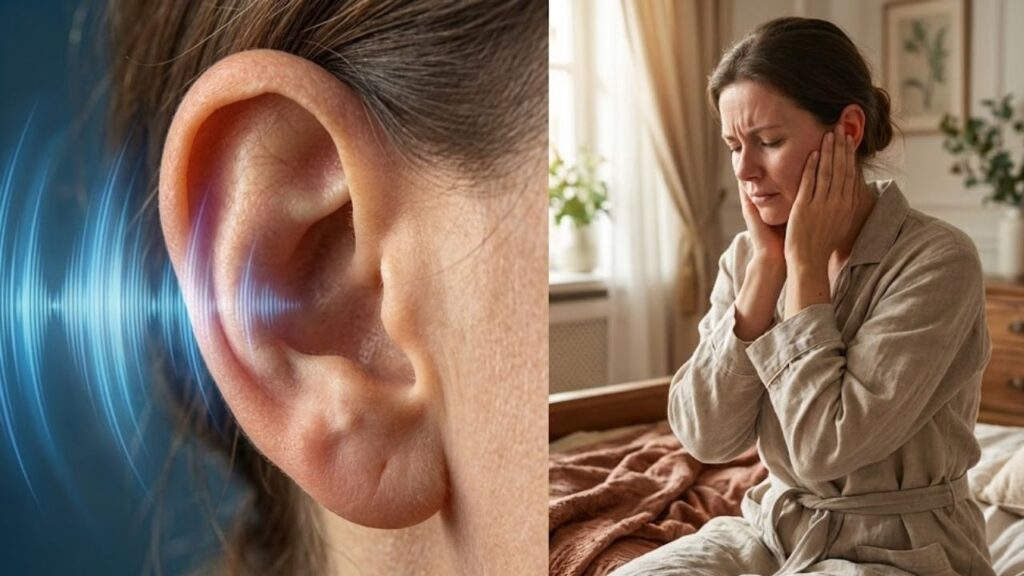
Our hearing does not remain unchanged throughout life. National figures show that nearly 19% of adults between ages 40–69 report some level of hearing difficulty, and this rises sharply to about 43% after age 70. When hearing is measured directly in adults over 71, close to 65% show hearing loss in their better ear — affecting more than 21 million older adults.

In addition, simple earwax buildup can cause fullness, itching, and muffled sound in roughly 6% of the general population and more than 30% of older adults. While a gentle ear self-massage cannot treat medical conditions, it may help you feel more alert, relaxed, and connected to surrounding sounds.

How hearing trouble tends to increase with age
As we grow older, experts caution against chasing miracle fixes such as random supplements or unproven needling-based acupuncture for tinnitus. Scientific evidence for acupuncture in treating ear noise remains weak and inconsistent. Gentle massage and Qigong-inspired routines are better understood as calming practices that support the nervous system and improve body awareness, rather than medical treatments.
| Age Category | Prevalence of Hearing Challenges |
|---|---|
| Adults aged 40–69 | Nearly one in five individuals experience noticeable hearing difficulties |
| Adults aged 70 and above | Over two in five report ongoing problems with hearing |
| Adults aged 71+ | Close to two-thirds demonstrate measurable hearing loss during clinical assessments |
Step 1: Warm the ears and surrounding skin
This routine works best in the morning, soon after waking. Before coffee or screens, bring your attention directly to your ears. Begin by rubbing your ears and the area around them to generate warmth. This can help wake you up gently while stimulating small reflex zones traditionally linked to hearing and facial relaxation.
Stand comfortably and place your palms over your ears. Make slow circular motions, rubbing clockwise around the ears and nearby skin. Aim for about 10–15 circles. You should feel gentle warmth, not discomfort. As circulation increases, tension in the jaw and face often begins to soften.
Step 2: Press and release the palms
The second step adds light stimulation by creating a mild pressure change around the ears. This is done by covering and uncovering the ears in a rhythmic way.
While standing, place your palms over your ears and press them gently against your head. Then quickly pull your hands away so the ears release with a soft “pop.” Repeat this motion 15–20 times. Keep it relaxed and playful; the aim is a mild pulsing sensation rather than force.
Step 3: “Heavenly drum” tapping at the back of the head
This classic Qigong movement is often used to bring awareness to the ears, calm internal noise, and clear mental fog. It focuses on the occiput, the area at the back of the head just above the neck.

Sit or stand comfortably. Cover your ears with your palms so your fingers rest on the back of your head. Using your index and middle fingers, gently tap the back of your skull as if drumming lightly. Start with 2–4 gentle tapping cycles. Over time, you may slowly increase up to 36 taps if it feels pleasant.
Many people describe this step as a subtle way of waking the mind, helping them feel clearer and more focused without sudden stimulation.
Step 4: Soften the earlobes and nearby points
The final step focuses on the earlobes, which are rich in small points traditionally associated with the face, eyes, and breathing. Working here often creates a soothing sensation throughout the head.
Sit or stand comfortably. Hold each earlobe between your thumb and index finger. Gently pull the lobe downward until you feel a mild stretch, then release. Repeat this motion 10–15 times. Allow your shoulders to relax and your jaw to stay loose as you continue.
Quick recap of the four-step ear routine
Step 1: Warm the ears and surrounding skin with 10–15 slow circular rubs.
Step 2: Press palms over the ears and release for 15–20 repetitions.
Step 3: Perform “heavenly drum” tapping, starting with 2–4 cycles and gradually increasing.
Step 4: Gently pull and release each earlobe 10–15 times.
A simple daily ritual, not a medical cure
When I first tried this routine, I was surprised by how quickly warmth spread through my face and how alert I felt even before my first sip of coffee. Over time, this short ear self-massage became a calm morning anchor — a few quiet minutes to notice my breathing, acknowledge any ear noise without anxiety, and let my nervous system settle.
That said, no massage replaces medical care. Sudden hearing changes, strong one-sided ringing, or the feeling that one ear has suddenly gone silent should always be checked by a professional. As a daily practice, however, this gentle four-step routine offers a simple way to ease facial tension, reconnect with your senses, and begin the day feeling more present in your body.