
The first time it happened you were probably cooking. The windows were steamed up and garlic sat on the cutting board while your favorite song played. You turned to rinse the pan and expected the water to drain away but instead it rose slowly and stubbornly up to your wrist. Bits of parsley floated on top. The kitchen became strangely quiet the way a room does when something small but important goes wrong. You jiggled the faucet handle thinking it might help. You poked at the drain with a spoon. You flipped the garbage disposal switch on and off repeatedly. Nothing worked. The water just sat there like a murky little pond where your sink used to be.
What’s Really Happening Beneath Your Kitchen Sink
Most days we treat the kitchen sink like it can handle anything. It takes coffee grounds & soup leftovers & pasta water and grease without much trouble. But down in the curved part of the pipes something is happening that we don’t notice until the water stops draining. Think about what your drain looks like after you finish cooking dinner. There is a thin layer of oil coating the inside of the pipe. Tiny bits of food stick to the walls. Soap residue settles into every corner. Hot water seems like it should wash everything away but it cools down as it moves through the pipes. When hot grease cools down it turns solid.

Layer after layer builds up on the inside of the pipe and catches more debris. Coffee grounds act like sand & vegetable peels get stuck and maybe some eggshells add to the mess. Eventually your pipes stop looking like clean tubes and start looking like blocked passages. Most people grab a bottle of chemical drain cleaner when this happens. The bottle has warning labels all over it & smells like it belongs in a laboratory instead of a home. You pour it down the drain & wait and hope it works. The water might start draining again for a little while. But those harsh chemicals do more than just remove the blockage.

Over time they can damage your pipes and eat away at metal and irritate your skin and lungs. A simple clog can turn into a costly plumbing repair. Plumbers understand this problem well. They also know something that most homeowners don’t realize. You don’t need that chemical bottle in most cases. The best natural way to unclog a kitchen sink is surprisingly simple and uses things you probably have in your kitchen already. It doesn’t look fancy and no company spends money advertising it. But it works reliably without filling your house with toxic fumes.
The Surprisingly Simple Fix Already Sitting in Your Kitchen
Some secret methods sound more like folklore than practical advice. Pour cola down the drain or sacrifice a lemon at midnight or chant to the plumbing gods. This one is different. It’s the kind of common sense solution that your grandmother might have used without needing a label or a brand name. It starts with heat. Real heat. Before you reach for baking soda or vinegar or any other magic ingredient the first and most underrated hero is boiling water.
Not hot tap water or pretty warm water but truly boiling water with big rolling bubbles that sound like a tiny storm in your saucepan. This alone can break up a surprising number of clogs that are built from grease and soap. Think of it as a reset button for the soft fatty buildup inside your pipes. But when that’s not enough & often it isn’t the most powerful natural non toxic combo is this. Baking soda and vinegar and time. Not just tossed in randomly but used in a deliberate little ritual that lets them do their very quiet work.
A Gentle Three-Step Drain Method That Actually Works’
The method seems too gentle to work well if you are used to thinking that unclogging requires harsh chemicals and force. Think of it more like cleaning a cast iron pan rather than using a sandblaster. You do not need aggressive action but rather the correct steps done in order.
| Step | Action to Take | Purpose & Benefit |
|---|---|---|
| 1. Initial Hot Water Pour | Carefully pour 1–2 full kettles of boiling water directly into the drain. | The intense heat helps liquefy built-up grease and soften soap residue stuck inside the pipes. |
| 2. Baking Soda and Vinegar Treatment | Add ½ cup baking soda first, followed by 1 cup warm vinegar. Cover the drain opening. | The bubbling reaction works to lift trapped debris and break down the sticky film coating the pipe walls. |
| 3. Final Hot Water Rinse | Wait 15–20 minutes, then flush the drain again with boiling water. | Clears away loosened buildup and helps restore a smoother, faster water flow. |
This method looks simple because it actually is simple. However that simplicity can be misleading. When you do it correctly this approach is the best option available for clearing kitchen drains that are mildly or moderately clogged. It works without damaging your pipes or creating a dangerous chemical situation in your home.
The Correct Way to Clear a Sink
Before you start look down into your drain. If you see a thick layer of food scraps sitting on top of the strainer or drain cover remove as much as you can by hand first. Gloves are recommended. This is not the time to be squeamish because you are about to get familiar with the underside of your own kitchen.
Step 1: Boiling Water Twice Bring a full kettle or large pot of water to a rolling boil. Slowly pour about half of it directly down the drain. Pour it slowly so it can soak & soften the buildup. Then wait a minute or two. Listen carefully. Sometimes you can actually hear the faint gurgle of things loosening. Pour the rest of the boiling water down. If your drain was only slightly clogged this alone may solve it. Run the tap and see if the water now flows freely.If it still pools then keep going.
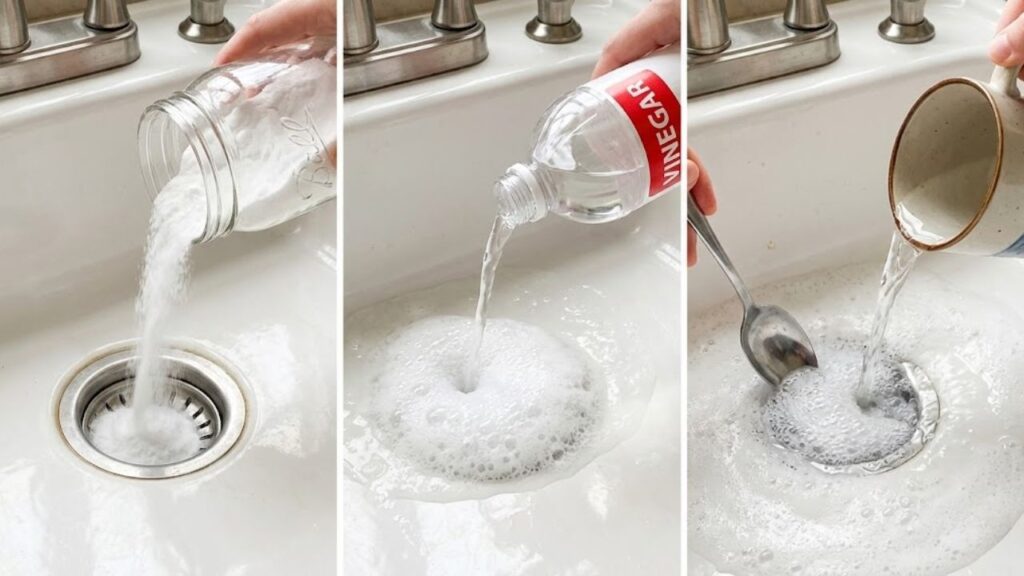
Step 2: Baking Soda Measure about half a cup of baking soda and gently sprinkle it straight into the drain. If your strainer is removable take it out. Try to get as much of the powder past any visible metal grates so it falls deeper inside. Baking soda looks unimpressive but it works well. It is mildly abrasive which helps scrub the inner surfaces and it neutralizes odors which is helpful for drains that have started to smell bad.
Step 3: Warmed Vinegar Here is the part most people rush. Instead of grabbing cold vinegar from the pantry & dumping it in take a moment to warm it slightly first. Not boiling but just pleasantly warm. You can do this by placing a cup of vinegar in a microwave safe container and heating it for 20 to 30 seconds or setting the cup in a bowl of hot water. Warm vinegar reacts more actively with the baking soda and helps maintain some heat inside the drain.Slowly pour about one cup of this warm vinegar into the drain where the baking soda is waiting. Immediately there will be a soft hiss and fizz. The reaction between the alkaline baking soda and the acidic vinegar creates carbon dioxide bubbles that help lift & break up the film clinging to the inner walls. Now cover the drain. You can use a drain plug or a small plate or even an upside down bowl that sits snugly. The goal is to keep as much of that fizzing action down in the pipes as possible.

Step 4: Let Time Work Walk away. Give it 15 to 20 minutes of undisturbed time. This waiting can feel strange but somewhere below your feet that quiet fizz is doing its job. It is eating away at buildup and loosening stubborn films and nudging small clogs toward surrender. While you wait you might notice the absence of the usual harsh chemical smell. Instead there is just the faint clean tang of vinegar.If anything leaks a bit back into the sink it is harmless enough that you could touch it without your skin protesting.
Step 5: The Final Flush Boil another kettle or pot of water. Remove the drain cover and slowly pour all of that boiling water down. Think of this as a river washing through a newly loosened canyon and carrying away the debris. You may hear another series of sounds from the pipes. Now test it. Turn on the tap. Watch the water. Does it swirl and disappear smoothly? Listen for the pace of the drain. It should be quick and unhurried. If there is still some hesitation you can repeat the whole process once more. Most mild clogs give up after the second round.
When a Stubborn Clog Needs a Bit of Extra Help
Sometimes a clog is more than just soft buildup. Maybe someone sent a lemon peel down the drain or a large chunk of potato skin wedged itself in the wrong spot. In those moments even the best natural solutions need help from simple manual pressure. If your sink has two basins you should plug one side completely with a good stopper or a damp cloth pressed firmly in place. Fill the other side until there are a few inches of warm water above the drain.
Then use a cup plunger which is the small flat-bottomed kind meant for sinks and not toilets. Place it directly over the drain and start plunging with steady rhythmic pushes. You want firm deliberate strokes that push and pull water against the clog rather than frantic jabs. What the baking soda and vinegar loosen can be nudged free by the plunger. You are not trying to pulverize anything but rather persuade it to move. Often you will feel the moment of victory when resistance vanishes and the water suddenly rushes away as if the sink has let out a breath it was holding. In many homes this simple combination of boiling water with baking soda and vinegar followed by plunging only if needed is enough to handle most kitchen sink clogs without using any toxic chemicals.
The Plumbing Truth Most Professionals Don’t Emphasize
Plumbers are not villains. Many of them will tell you to avoid chemical drain cleaners if you ask them. They have seen what those products do to pipes after years of use. The PVC gets soft & the metal joints corrode. Rubber seals fall apart sooner than they should. They have also met homeowners who mixed chemical cleaners by accident and learned too late that some combinations create dangerous fumes. What plumbers do not often say out loud is that many clogs are not that serious. They are not deep in the city pipes but right there in the first curve under your sink. With a towel and a bucket and some courage you could remove the P-trap under the sink yourself & rinse out the smelly sludge and put it back. But that sounds messy and scary so most people do not try it.
The natural method works well for this situation. It is strong enough for everyday clogs and gentle enough not to damage your plumbing. It is simple enough to do without special tools. It does not replace a professional when you truly need one. That includes times when multiple drains in your house are backing up at once or there is a deep blockage in the main line. But it does mean you do not have to panic every time the sink starts to drain slowly. The other benefit plumbers do not rush to mention is this. Every time you clear a clog yourself you learn more about your home. You notice what you have been washing down the sink. You learn that grease really does harden like candle wax. You realize that a little maintenance can prevent those Saturday morning emergency calls.
Daily Kitchen Habits That Keep Drains Clear Long-Term
After your sink drains properly again you might want to forget about it and move on. The problem seems solved. But right now you understand something important: the stuff you rinse away doesn’t actually disappear. A few small habits can help you avoid clogs before they happen: Don’t pour grease down the drain: Let cooking oils and fats cool down in a container & throw them in the garbage instead of washing them down the sink where they turn solid. Remove food scraps first: Scrape your plates into the trash or compost before rinsing them. Garbage disposals seem handy but they can be hard on your pipes. Get a sink strainer: A basic mesh strainer catches pasta and rice and small food bits that tend to expand and create blockages.
Do monthly maintenance: Once each month pour boiling water & baking soda & vinegar down your drain as a preventive measure instead of waiting for a problem. Rinse with hot water after greasy dishes: When you finish washing oily pots and pans pour a kettle of very hot water down the drain to prevent grease from building up. These habits are simple & easy to follow. You don’t need to buy special products or change your routine completely. They are just basic ways to take care of your plumbing. Over time these small actions mean fewer blockages & less need for harsh chemicals and fewer expensive plumber visits.
Clear Warning Signs It’s Time to Call a Professional Plumber
Of course not every plumbing problem can be fixed with a kettle and baking soda. Sometimes water backs up in several places at once like the kitchen sink & bathtub or the toilet starts making strange gurgling sounds. That means you’re dealing with something more serious than a simple kitchen clog. The problem is deeper in your main line where vinegar & baking soda can’t reach. Here are the clear signs that you need to call a professional plumber: The clog remains stuck after you’ve tried the natural method & plunging two or three times. Several drains in your house are slow or backing up together. You notice strong sewage smells coming from the sink or other drains. Water comes back up into the sink when you run other appliances like the dishwasher or washing machine.
When these things happen a plumber’s specialized equipment like a long drain snake or hydro-jetter or inspection camera becomes essential rather than optional. But you’ve still done something valuable by not adding harsh chemicals to pipes that might already be old or damaged. The next time your sink drains slowly you’ll know exactly what to do. You’ll heat up the kettle and grab the baking soda and vinegar. You’ll hear the gentle hiss of bubbles working in the drain. The best natural method for unclogging your kitchen sink isn’t some secret product you need to hunt down at the store. It’s just a simple process and some basic kitchen knowledge combined with understanding that gentle solutions can work just as well as harsh ones.