
Bag on the floor. Keys on the shelf. Without thinking, you kick off your shoes and let your toes relax against the cool living room surface. The tiles feel slightly rough, the rug softly plush, and the wooden floor still holds a trace of warmth from the afternoon sun.
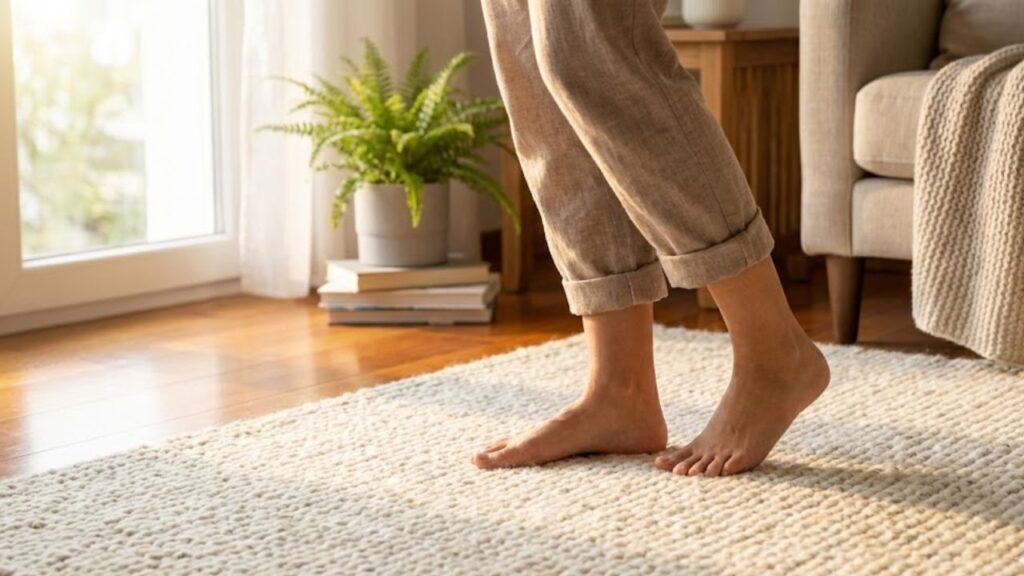
You wander into the kitchen barefoot, half-focused on your phone. Meanwhile, your feet are busy in the background, testing the ground, making tiny adjustments, sending small signals up to your brain. You don’t register it consciously, but your body is already at work.

Small Wins You Barely Notice
Later, you bend to load the dishwasher or step over a child’s toy car. You don’t trip. You sway briefly, correct yourself, and move on. No drama, just subtle successes that pass almost unnoticed.

This is where the story of barefoot balance quietly begins.
Why Your Feet Crave Balance Input
Most of us treat our feet like basic tools, hidden away in socks and shoes, carrying us from room to room. Yet each foot contains thousands of nerve endings, constantly reading the floor, your weight, and your body’s position.
Walking barefoot at home reactivates this system. Your soles reconnect with reality: cold hallway tiles, a slightly tacky kitchen floor, a soft bedroom carpet. Instead of dulled signals through thick soles, your brain receives clear, detailed feedback.
With sharper information, your body reacts faster. Ankles adjust, toes spread, and muscles engage in ways you never see. Each barefoot walk across the room becomes a quiet training session.
A Real-Life Shift in Stability
Marta, 42, noticed she was losing balance while carrying laundry down the corridor. She wasn’t injured or unwell, just unexpectedly unsteady. One rushed morning, she forgot her slippers and walked barefoot on the hardwood floor.
She felt her toes grip slightly when turning and her heel land more gently after leaving the rug. Nothing dramatic, just a sense that her feet were more alert.
Curious, she tried a simple test: no slippers at home for one month, except in the bathroom. By week two, she could stand on one foot while pulling on her jeans. By week four, she could pivot with a full laundry basket without that familiar off-balance jolt.
No gym, no equipment. She simply removed a barrier between her body and the floor.
How Bare Feet Support Balance
Balance relies on a three-way exchange between your eyes, inner ear, and the sensory receptors in muscles and joints. Bare feet amplify that third channel.
Feeling the exact angle beneath your toes lets your nervous system respond in milliseconds. The small muscles in your ankles, arches, and calves receive constant, low-level stimulation as they correct every sway.
Over time, these micro-adjustments build. Your posture grows steadier, your centre of gravity easier to manage. You don’t turn into a kitchen acrobat, but everyday movements feel less risky and more controlled.

Turning Home Time into Balance Practice
Start small. Choose one area where you go barefoot daily, perhaps the bedroom or hallway. Walk slowly for a minute, noticing heel placement, toe contact, and how your weight moves.
Vary the surfaces. Stand on a folded towel while brushing your teeth. Step from rug to hard floor and sense the change. Let your toes spread on a yoga mat or thick carpet. These minor shifts prompt your body to recalibrate naturally.
If it feels safe, try standing on one foot while the kettle boils. Just a few seconds per side is enough for your ankles to communicate with the rest of your body.
Common Pitfalls to Avoid
The biggest mistake is rushing. Switching from constant supportive shoes to barefoot all day can strain arches and tighten calves. Discomfort often comes from doing too much too fast.
Existing conditions matter too. Those with serious balance issues, chronic foot pain, or diabetes should approach barefoot walking carefully and may need professional guidance. Sharp pain is not progress.
There’s also a mental hurdle. For some, walking barefoot feels oddly exposed, especially if slippers were always the norm. On tough days, cold floors can feel like one irritation too many. Consistency doesn’t need to be perfect.
The Often-Forgotten Role of the Foot
“The foot is often overlooked in balance discussions, yet it’s one of the body’s richest sensory organs,” notes a very plausible physiotherapist. Using bare feet at home doesn’t just free the toes, it reactivates a feedback system that may have been dormant for years.
What Barefoot Time at Home Can Do
- Sensory feedback: Bare soles gather richer floor information, helping posture corrections.
- Micro-muscle training: Small foot and ankle muscles engage more with each step.
- Everyday integration: Short barefoot moments fit easily into normal routines.
- Confidence boost: Reduces the uneasy feeling of tipping when bending or turning.
A Subtle Shift You Feel Over Time
Once you notice your bare feet, it’s hard to ignore them. The way your toes spread on a cold morning. The weight shift when you turn to grab your bag. These sensations become a quiet conversation with your body.
Your home turns into a gentle testing ground. While coffee brews, you rock from heel to toe. Watching TV, you rest your feet on the floor instead of tucking them away.
Near-falls still happen, but your body responds differently. Barefoot walking doesn’t eliminate stumbles, yet it helps you recover faster, with less panic.
Over weeks, the change is subtle. You turn more smoothly, stand a little taller, and regain balance with less effort. It’s not a loud transformation, but a quiet one, built from countless small moments where your body simply supports you a bit better than before.