
The grout had slowly changed from off-white to something that looked like old oatmeal. You probably know that moment when you’re brushing your teeth or waiting for the shower to warm up and your eyes drift down to the floor. The tiles still look decent but the lines between them have lost their appeal. Those thin strips that used to look fresh & clean now remind you of a neglected public restroom. You get down on your knees and run a finger across one of the lines. You feel that slight stubborn roughness from all the buildup. No scrub brush or fancy cleaning spray from the store has really solved the problem. Then someone tells you about an odd combination that sounds more like a school experiment than a cleaning solution. They suggest using baking soda & hydrogen peroxide. You feel skeptical about it. But one afternoon you decide to give it a try.
The Day Your Grout Quietly Gives Up
For most homes, grout doesn’t suddenly turn dark in one dramatic moment. It changes slowly, collecting every wet footprint, every trace of soap, every splash of coffee or sauce. You mop and wipe, spray a sweet-smelling cleaner, and for a short while the floor looks decent again. Then it dries, and the grout settles back into its familiar dull shade, as if nothing really changed.

That’s what makes grout feel strangely personal. Tiles are simple—you clean them and they respond immediately. Grout, on the other hand, holds on. It’s porous, absorbent, and quietly records daily life: steam from hot showers, kitchen spills, bare feet padding across the floor late at night. Over time, it becomes the memory of the room, and not always a pleasant one.

Why a Simple Paste Sounds Too Easy
So when someone casually suggests a paste made from baking soda and hydrogen peroxide, it almost sounds laughable. We’re used to bright bottles promising “professional results” and “deep-clean power” for a premium price. How could two everyday items—one from the kitchen shelf and one from the medicine cabinet—compete with all that?
The truth is, there’s no magic trick involved. It’s about basic chemistry, patience, and getting close enough to the floor to actually deal with what’s trapped in the grout. No strong fumes, no aggressive chemicals—just ingredients that quietly do their job when given time and a little effort.
The Simple Chemistry Behind the Results
Baking soda, or sodium bicarbonate, is mildly alkaline. That alone helps it break down greasy and acidic residues left behind by food, soap, and skin oils. Its fine crystals act like tiny scrubbers—gentle enough not to damage surfaces, but effective enough to work dirt out of grout’s pores.
Hydrogen peroxide, especially the common 3% solution, works differently. When it touches organic stains, it releases oxygen. Those tiny bubbles help lift discoloration from deep inside the grout. Unlike harsh bleach, it does this without overpowering smells or damage when used carefully.
Together, they form a paste that clings, cleans, and lifts—reaching places a mop or spray never really touches.
Mixing the Paste at Home
Making the paste feels more like cooking than cleaning. You don’t need exact measurements, just a rough ratio. Start with three parts baking soda to one part hydrogen peroxide. Mix slowly until it forms a thick, spreadable paste—something like frosting or a dense cream.
If it’s too runny, it will slide off the grout. Too thick, and it won’t sink into the tiny grooves. When it’s right, it sits neatly in the grout lines, ready to work.
The Slow, Satisfying Process of Scrubbing
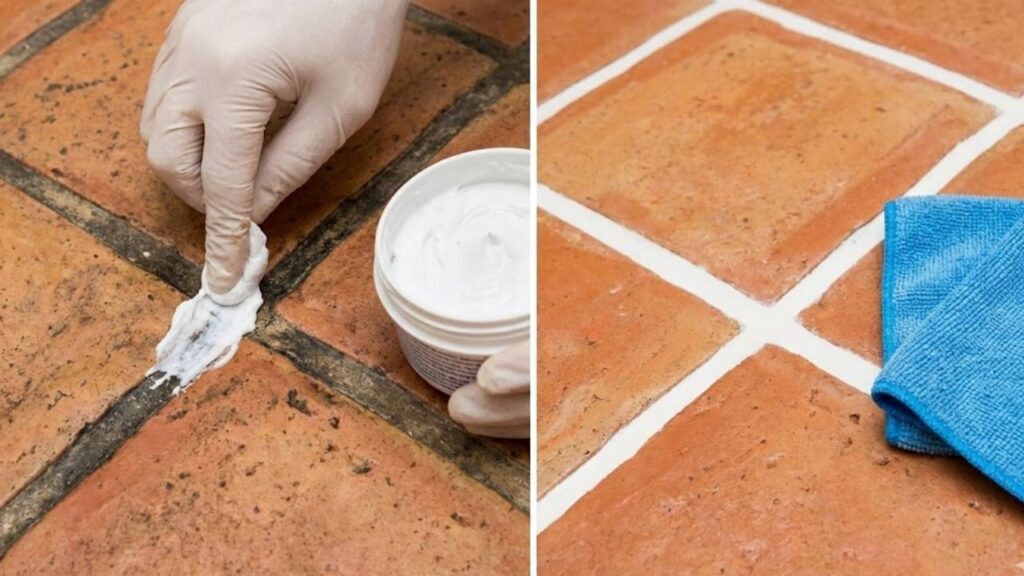
This is not a stand-up, rush-through chore. Whitening grout means getting close to the floor. Start by sweeping or vacuuming to remove loose dirt. Then, using an old toothbrush or grout brush, press the paste directly into the grout lines.

Let it sit for five to ten minutes. During that time, the peroxide begins lifting stains while the baking soda rests against the surface. When you start scrubbing, you’ll notice the paste turning gray—that’s dirt leaving the grout.
Wipe it away with a damp cloth, and the change is immediate. One bright line next to a dull one is often enough motivation to keep going.
Why This Works Better Than Many Store Cleaners
Many commercial cleaners are designed for speed and scent. They’re often diluted, run off quickly, and rely heavily on fragrance rather than long contact time. Your homemade paste stays exactly where it’s needed, working slowly and thoroughly.
Because you make it yourself, you also use it with intention—scrubbing carefully, watching the change, and adjusting as you go. The result is not just cleaner grout, but a more satisfying process.
Turning Cleaning into a Quiet Ritual
There’s something unexpectedly grounding about kneeling on the floor and working through each grout line. You notice the light, the texture of the tiles, the absence of harsh chemical smells. It becomes less about rushing to finish and more about restoring something that’s been overlooked.
When the last line is wiped clean, the room feels different. Not showroom-perfect, but refreshed and cared for—like the space remembers how it’s supposed to look.
| Cleaning Method | Estimated Cost per Use | Odor & Chemical Impact | Stain Removal Performance |
|---|---|---|---|
| Baking Soda + Hydrogen Peroxide Mix | Very low (costs only a few cents) | Light smell, no strong or choking fumes | Highly effective when scrubbed and left to sit |
| Commercial Grout Cleaner Spray | Medium to high depending on brand | Perfumed fragrance, may feel harsh or irritating | Moderate results; works quickly but mostly surface-level |
| Bleach-Based Cleaning Solution | Low | Strong odor, can irritate lungs and damage fabrics | Effective for whitening but aggressive on grout |
Keeping Grout Bright for Longer
No cleaner lasts forever, but small habits make a big difference. Drying tiles after showers, wiping kitchen spills quickly, and using mild cleaners between deep cleans can keep grime from settling back in.
The baking soda and peroxide paste doesn’t need to be a weekly task. Think of it as a seasonal reset—a simple, reliable way to bring your floors back when they start to feel tired again.
Sometimes, the most effective solutions are the quiet ones already sitting in your home, waiting to be mixed, spread, and trusted.