
A friend opens their freezer and, instead of rigid plastic tubs and mismatched lids, you see neatly wrapped silver parcels, stacked like small bricks. Nothing spills out. No labels shouting for attention. Just calm order, each item wrapped snugly in aluminum foil.
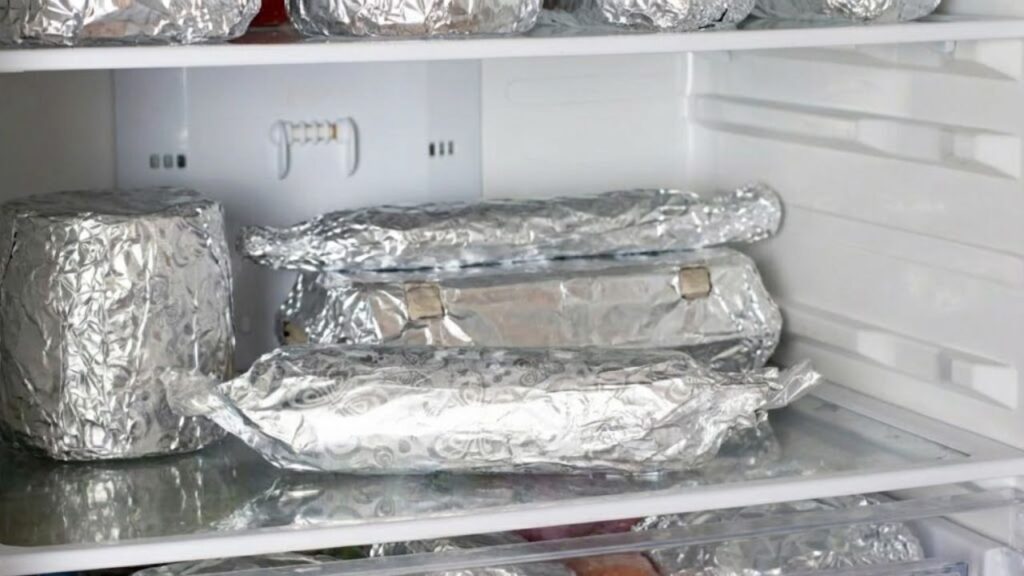
They pick one up, tap it on the counter, and say casually, “Lasagna. Two months old. Still perfect.” As the foil catches the light, your own freezer flashes through your mind — mystery containers, freezer-burned bread, and that half-bag of something you promised yourself you’d cook “this week.”

Then comes the line that lingers: “Foil completely changed how we use our freezer.” It sounds dramatic. And yet, you can’t stop thinking about it.

Why aluminum foil is quietly reshaping freezer habits
For years, freezers were where good intentions quietly disappeared. Leftovers, bulk buys, and hopeful meal plans all went in, only to be forgotten. Aluminum foil is subtly changing that pattern by making freezing feel simple again.
People are rediscovering foil as more than something for baked potatoes. It’s thin, flexible, and fast. You wrap it closely around food, press out the air, and it stays exactly in place. No bulky containers. No awkward lids. Just compact silver shapes that slide easily into any spare corner.
Behind this small habit is a shift in how households think about food waste, time, and comfort meals on standby. The freezer stops feeling like a chaotic archive and starts acting like a backup plan you actually trust.
In a small London flat, a family of four proves the point. Dinner is late, everyone is tired, and the youngest has rejected every vegetable in sight. The dad opens the freezer and pulls out a flat foil parcel marked in black pen: “Chicken curry – 12/09.”
He peels back the foil, drops the frozen block into a pan, adds a splash of water, and ten minutes later the kitchen smells like a weekend meal. No container hunting. No mystery leftovers. Just food they genuinely want to eat. That’s the quiet strength of this habit — it turns past effort into present relief.
Less chaos, less waste, more meals actually eaten
Households in the US report similar results, especially among people trying to reduce food waste. A 2023 consumer survey from a major retailer found that those who batch-cook and freeze with foil threw away fewer meals and felt less guilt about forgotten leftovers. Beyond the numbers, the stories repeat themselves: less freezer clutter and more food used.
The logic is simple. When wrapped properly, aluminum foil creates a tight barrier against air and moisture, slowing freezer burn. That’s the process that turns pizza rubbery and chicken grey. By pressing the foil firmly against the food, you trap less air, reduce ice buildup, and preserve texture.
Foil is also remarkably space-efficient. Its thinness means no wasted centimetres from thick plastic walls or awkward lids. Portions can be shaped into flat bricks that freeze faster and stack neatly, which is why shelves lined with foil-wrapped lasagna or sliced bread look so satisfying.
There’s a psychological effect too. When opening the freezer doesn’t feel like digging through a junk drawer, you’re more likely to use what’s inside. Dated, neatly wrapped portions send a clear message: this food is ready, not abandoned.
How to freeze with aluminum foil the right way
The method is refreshingly straightforward. Tear a piece of heavy-duty aluminum foil large enough to fully cover the food, with extra space to fold. Place the food in the centre. For delicate or saucy dishes, add a thin inner layer like baking paper or a freezer bag so nothing sticks.
Wrap it like a small gift. Pull the foil up from opposite sides, press it gently around the shape, and push out as much air as possible. Fold the edges tightly, rotate, and repeat. The goal is a compact, firm parcel — not a loose bundle.

Finish by writing the contents and date with a marker. Keep it simple: “Veg lasagna – Jan 3.” That five-second step makes a surprising difference.
Some common mistakes quietly undo the benefits. Thin foil can tear around sharp or bony foods, letting air in. A double layer or inner bag helps with jagged edges. Another issue is skipping labels, turning the freezer into a silver guessing game.
Placing hot food straight into the freezer is another trap. It raises the internal temperature, affects nearby items, and causes uneven freezing. Let dishes cool first. And while a full freezer inventory sounds ideal, let’s be honest — few people keep that up daily. What does work is keeping two or three reliable meals always wrapped and ready: a soup, a pasta bake, a curry.
The habits of people who swear by foil freezing
Those who adopt this approach often sound almost converted.
“Foil-wrapped portions saved our evenings,” says Emma, 38, who batch-cooks on Sundays. “My freezer feels like a shelf of backup dinners, not a graveyard of intentions.”
Clear patterns appear in households where it works well:
- Realistic portions, usually single or double servings
- Flat stacking, so nothing disappears at the back
- Stock rotation, eating older parcels first
- Selective containers for soups or very liquid meals
- Heavy-duty foil to reduce tearing and allow reuse
At its core, this habit isn’t about perfection. It’s about a gentler, more forgiving rhythm for everyday meals.
The quiet ripple effect of a silver-wrapped freezer
Once you start wrapping with intention, the effect spreads. Meals feel less random. You cook a little extra on good days, knowing future-you will benefit. Freezing leftovers stops feeling like guilt and starts feeling practical.
Maybe on a Sunday evening you roast vegetables, cook extra rice, and save leftover sauce. You portion everything, wrap it, date it, and stack it neatly. Ten minutes of calm order. By Thursday, tired and uninspired, you open the freezer and those silver parcels feel like small promises kept.
Many people notice side benefits too. Less takeaway because there’s actually something good ready. Fewer late-night grocery runs. Less food wasted as bread, cake, or tortillas are wrapped, dated, and frozen instead of going stale.
There’s no miracle involved. Just a thin sheet of metal — easy to tear, easy to forget — quietly becoming a daily ally. Tear, wrap, press, label, freeze. Over time, that simple loop can gently change how your kitchen supports you.

Why this simple habit works
- Better protection: Tight foil wrapping limits air and moisture contact, reducing freezer burn and preserving texture.
- Space efficiency: Flat, stackable parcels fit easily around other items, making small freezers feel larger.
- Everyday practicality: Quick wrapping and clear labels turn leftovers into reliable future meals.
