
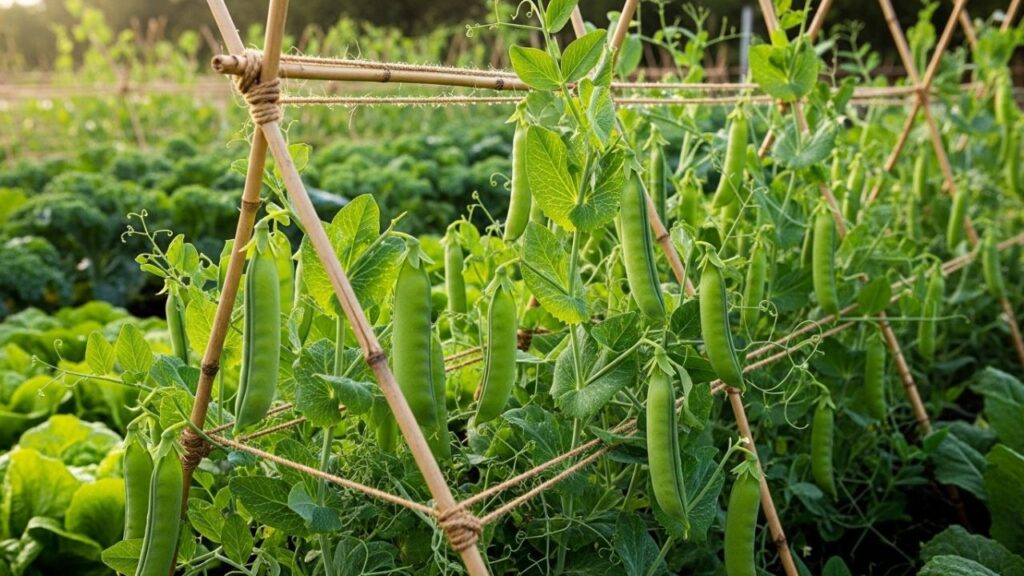
The first time I watched peas climb a properly built trellis, I stopped mid-step. The vines didn’t sprawl or panic-grab nearby plants. They rose calmly, tendrils reaching with intention, curling neatly around each horizontal line like hands finding familiar rungs on a ladder. The pods—smooth, cool, and matte green—hung at eye level, clean and easy to harvest. This wasn’t the usual pea patch chaos. The plants were sturdier, the growth more controlled, and the pods seemed to plump up overnight after every cool spring rain.
The Problem with Traditional Pea Supports
– If you’ve grown peas using the usual methods—netting tied between flimsy stakes, rushed bamboo teepees, or no support at all—you’ve likely faced the same frustrations. The vines begin politely enough, lightly leaning on whatever structure you’ve offered. Then growth explodes. Within days, your tidy row becomes a tangled green mass. Tendrils wrap around each other, neighboring plants, and anything nearby. Pods disappear deep inside the foliage, some rotting in damp shade, others growing unevenly and never fully filling.

– This disorder has real consequences. Poor airflow encourages fungal diseases. Lower pods stay wet long after rain. Slugs and sowbugs thrive in the shaded soil beneath. Pollinators struggle to navigate the mess. Yet peas are simple plants. They want cool soil, gentle support, light, and air. The problem isn’t peas—it’s the structures we ask them to climb.

The New Pea Trellis: A Calm Ladder in the Garden
– This trellis works like a vertical ladder rather than a chaotic net. Instead of wide squares or random supports, it uses closely spaced horizontal lines running the length of the bed. Imagine two sturdy parallel supports forming a narrow corridor, with horizontal rungs every 4–5 inches from just above soil level to about five feet high.
– The pea vines don’t need to leap or search. Their tendrils naturally reach the next line, step by step. The result is a flat, living curtain of peas—organized, airy, and easy to manage. The plants seem to understand the structure almost immediately, climbing with discipline rather than desperation.
Design Principles That Make the System Work
– There are many ways to build this trellis, but the principles remain constant. You need two strong side supports or a series of posts for longer beds. Horizontal lines should be spaced closely, mimicking ladder rungs. The base must be stable so the structure doesn’t sway or collapse. Most importantly, the layout should allow you to walk alongside the plants for easy care and harvesting.
– Once peas germinate and send out their first tendrils, they naturally latch onto the lowest lines. After a little early guidance, they climb on their own, using the structure exactly as intended.
Building the Ladder: Materials and Layout
This system doesn’t require advanced tools—just sturdy materials and thoughtful spacing. Side posts can be wooden stakes, metal T-posts, or even thick reclaimed branches driven 12–18 inches into the ground. Horizontal supports can be UV-stable garden twine, jute, or light galvanized wire.
For an 8–12 foot bed, place posts at each end and add a middle post for stability. Run horizontal lines every 4–5 inches, starting just above soil level and extending up to 4–5 feet. Pea tendrils are short, and this close spacing ensures they always find support without twisting around each other.
Why Close Spacing Changes Everything
The small, repeated gaps are the secret. When support lines are too far apart, peas dangle, twist, and grab neighboring vines instead. Close spacing allows each plant to grow vertically in its own column. The bed becomes a slim, double-sided wall of peas, rooted in a narrow strip of soil and trained upward instead of outward.
Harvesting becomes simple. You walk along one side, scanning the vines with your eyes and hands, finding pods without digging through tangles.
| Component | Recommended Size / Spacing | Practical Notes |
|---|---|---|
| Trellis Height | 4–5 ft (1.2–1.5 m) | Provides sufficient vertical support for most pea varieties |
| Horizontal Line Spacing | 4–5 in (10–12 cm) | Close spacing allows tendrils to grip easily and climb steadily |
| Post Spacing (Row Length) | 4–6 ft (1.2–1.8 m) | Shorter gaps between posts improve stability in windy conditions |
| Row Width (Between Sides) | 6–8 in (15–20 cm) | Narrow corridor design keeps vines upright and well-supported |
| Plant Spacing | 2 in (5 cm) apart, single row | Dense planting works well with trellis, maintaining airflow |
Cool-Season Timing: Let Soil Lead the Way
– This trellis shines when paired with proper timing. Peas thrive in cool conditions. Instead of watching the calendar, pay attention to your soil. When the surface no longer freezes solid at night and feels cold but workable, it’s time.
– Ideal soil temperatures range from 40–75°F (4–24°C), with fastest germination around 50–60°F (10–16°C). Install the trellis before planting so young shoots grow straight into a ready structure rather than navigating construction later.

Low-Stress Care for Strong Growth
– Once planted, peas need very little intervention. Keep soil evenly moist but not waterlogged. Mulch lightly with straw or shredded leaves to stabilize moisture while keeping soil cool. Avoid heavy fertilization—peas fix their own nitrogen, and excess feeding leads to leafy growth at the expense of pods.
– As vines climb, check weekly. Gently guide any wandering tendrils back toward the nearest line. No tying is required—just light guidance. The plants quickly take over.
Why This Method Produces Better Pods
– Trellised this way, peas grow with less stress. Stems remain straight, tendrils find support easily, and the plant directs energy toward filling seeds instead of survival. Air moves freely through the foliage, leaves dry quickly after rain, and pods stay clean and off the soil.
– Gardeners consistently notice plumper, more uniform pods, a longer harvest window, and fewer misshapen peas. Light reaches the entire plant, from base to tip, eliminating weak, shaded growth near the ground.
Harvesting Becomes a Pleasure
Harvesting from this trellis feels calm and deliberate. Pods hang visibly, easy to spot and pick. You move along the trellis, one hand steadying vines while the other snaps pods free. The flat plane makes it easy to judge ripeness, selecting peas at their sweetest moment.
Lower pods ripen first, followed by the middle and top. Regular harvesting every few days keeps plants productive and prevents overripe, starchy peas.
Adapting the System to Your Space
– This method is flexible. In windy areas, add extra posts or diagonal braces. In tight spaces, build a single-sided ladder against a wall. Where wildlife is an issue, the trellis doubles as a frame for lightweight row cover or mesh protection.
– Each season brings refinements—better knots, preferred twine, improved spacing. The peas respond with consistency and abundance.
Learning the Cool-Season Rhythm
– Growing peas on this trellis reconnects you with the slower rhythm of cool seasons. Building it in late winter feels like a promise to the garden. As peas climb, flower, and fill their pods, the structure supports more than vines—it supports patience.
– Stand before a full trellis on a quiet afternoon. Feel the cool pods, smell the green freshness, and taste a pea straight from the vine. The trellis hasn’t changed the pea’s nature—it has simply given it the space to grow with balance, grace, and intention.