
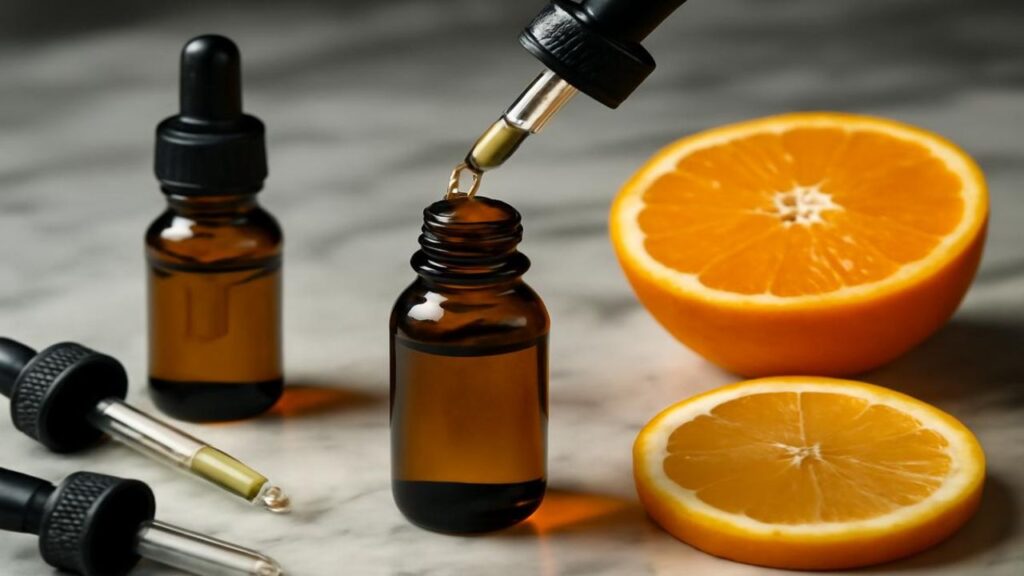
The first time I made my own vitamin C serum at home, my kitchen had a light citrus smell in the air. I used a small glass bowl and a spoon along with some amber bottles. Instead of buying another expensive product filled with ingredients I couldn’t pronounce, I decided to create something fresh myself. When I mixed the powder with water and watched it dissolve into a clear liquid I felt genuinely excited. This was skincare in its simplest form. It was just about skin & science and a fruit that everyone knows.
The Quiet Alchemy of Vitamin C on Your Skin
There’s a moment when you look in the bathroom mirror under soft morning light & notice something different. The faint shadow of an old breakout has lightened. The fine crinkle near your mouth looks less sharp. Your skin tone that was once patchy and uneven has begun to blur into something softer and more uniform. This is the kind of slow magic vitamin C is famous for. Not an overnight miracle but a steady process of brightening and firming and evening things out with the patience of the natural world. Vitamin C in its pure form as L-ascorbic acid slips into the upper layers of your skin and gets to work like a quiet architect.

It supports collagen production which is the protein that keeps skin springy & resilient. It also helps to blunt the overzealous melanin signals that can leave behind dark spots after pimples or sun exposure or hormonal shifts. If collagen is the scaffolding that holds your face taut and lifted then vitamin C is one of the workers keeping that scaffolding from rusting and collapsing. But what makes vitamin C truly fascinating is its fragility. It is notoriously unstable and breaks down when exposed to air or light or heat.

The same bright reactive energy that makes it so effective at neutralizing free radicals also makes it short-lived. That’s why so many serums come in dark glass with elaborate formulas designed to keep the molecule alive just long enough to help your skin. And it’s also why a fresh thoughtfully made DIY serum can feel like catching a fruit at the exact moment it’s perfectly ripe.
Before You Mix: A Little Skin Science and Safety
Standing at your counter with a small bowl and a jar of vitamin C powder can feel empowering but there are a few things worth understanding before you turn your kitchen into a mini apothecary. Your skin is delicate and layered like a forest ecosystem. It has a natural barrier & a microbiome and an ideal pH that is usually slightly acidic. Disturb that balance too aggressively and you will feel it through stinging or redness or dryness or irritation that lingers. Pure vitamin C is most effective at a low pH between about 2.5 and 3.5 but that is also where it can be quite strong for sensitive or compromised skin.
Think of it like sun on snow because it is bright and beautiful but capable of causing burn if you stay out too long. This is why dilution and patch testing and listening to your skin are essential steps you should not skip. As you start experimenting with DIY recipes these are the questions to keep in your back pocket like a compass in the woods. What is my skin like right now in terms of sensitivity or dryness or oiliness or reactivity or resilience? How strong is this formula since a 5 to 10 percent vitamin C solution is gentler while 15 to 20 percent is more intense? Am I willing to start slow and adjust rather than forcing fast results? Am I protecting my skin from the sun with a good SPF during the day? Here is the quiet truth buried beneath the glossy vitamin C marketing language.
Collagen building and tone evening are long games. Your skin is an organ with memory. Dark spots were written over weeks or months. Boosting collagen is like slowly weaving a stronger net under the surface one strand at a time.
Simple, Fresh Vitamin C Serum for Everyday Glow
There is something deeply satisfying about creating a serum with only a few ingredients that you can actually pronounce. You get no fillers and no mysterious fragrance. Instead you work with a small selection of elements that complement each other well. Think of it like preparing a simple recipe for tea or soup. This basic vitamin C serum serves as the ideal starting point for most people. It is gentle on the skin and clean in formulation. The serum works effectively and is meant for short-term use. This approach ensures you always have a fresh product to apply.
Base Recipe: Everyday 10% Vitamin C Serum
What you’ll need: 1 teaspoon L-ascorbic acid powder (cosmetic or supplement grade with no additives) 4 teaspoons distilled or boiled-and-cooled water 1 teaspoon vegetable glycerin or aloe vera juice (optional for extra hydration) 1 small dark-glass dropper bottle A tiny funnel or a steady hand How to make it: In a clean glass or ceramic bowl sprinkle the vitamin C powder. Add the water slowly and stir until the crystals dissolve completely and the liquid turns clear. Stir in the glycerin or aloe if you’re using it. This gives the serum a slightly silkier glide & adds moisture. Pour into your dark-glass bottle and cap tightly.
Store in the fridge. How it feels and works: Apply a few drops on clean skin at night. It will feel watery at first and then slightly tacky as it dries. The 10% strength offers collagen support & gentle brightening without irritating the skin barrier. Over a few weeks it becomes a simple routine. You take the cold glass bottle from the fridge and apply the serum with your fingertips over your cheeks and forehead. Because homemade vitamin C serums don’t have the stabilizers of commercial versions they’re meant to be used fresh. This usually means within 1 to 2 weeks. When the liquid starts to darken to pale yellow or amber it’s oxidizing and losing its potency. Pour it out & start anew.
Serum Recipes Tailored for Collagen and Tone
You can start making adjustments once you feel confident with the basic recipe. Think of it like learning which herbs work best for different health needs.
Collagen-Boosting Night Serum (Richer 15% Blend)
This formula uses vitamin C to help your skin produce collagen and pairs it with vitamin E and ferulic acid if you can get them. These three ingredients work as a team to improve stability and provide antioxidant protection. You will need 1.5 teaspoons of L-ascorbic acid powder along with 5 teaspoons of distilled water and 0.5 teaspoon of vegetable glycerin. Add 3 to 4 drops of vitamin E oil & optionally include a pinch of ferulic acid powder. To make this serum you should mix the vitamin C into the water & stir until it dissolves fully.
If you are using ferulic acid add it now and stir until it dissolves as well. Next pour in the glycerin and vitamin E oil and whisk gently until everything combines smoothly. Transfer the mixture into a dark glass bottle & store it in the refrigerator. You should use it within one to two weeks for best results. This serum has a slightly thicker texture that makes it suitable for nighttime use. The vitamin E oil creates a smooth application while the glycerin provides a soft feel on your skin. When you use this combination regularly it helps your skin feel firmer & more resilient. Your complexion develops better structure & feels more substantial and supported as time goes on.

Even-Tone Citrus Dew for Oily or Combination Skin
If your skin tends to be oily & you have dark marks that take a long time to fade a lightweight watery formula works better than thick cream. This recipe avoids heavy moisturizing ingredients and oils while focusing on clarity and fast absorption. What you need: 1 teaspoon L-ascorbic acid 6 teaspoons distilled water or green tea that has been cooled without sugar 0.5 teaspoon aloe vera juice if desired How to prepare it: Mix the vitamin C powder into the water or cooled green tea until it dissolves.
Add the aloe vera juice if you want some extra soothing moisture. Put it in a bottle & keep it in the refrigerator. Make a new batch every week to ten days. Green tea contains catechins which are antioxidants that help with brightening and calming the skin. This formula works well for skin that breaks out frequently but still shows marks from previous blemishes.
How Vitamin C Serums Fit Into Your Daily Ritual
Skin care routines engage your senses beyond their practical purpose. You hear water running and feel a towel on your face while watching serum absorb into your skin. Understanding where vitamin C fits into your routine & how frequently to use it helps your skin benefit without irritation. A simple routine works well: Evening cleanse: Remove sunscreen & the dirt from your day. Vitamin C serum: Apply a few drops to clean dry skin & let it absorb completely. Moisturizer: Apply a hydrating cream or gel that matches your skin type over the serum. Most people do well using vitamin C serum 3 to 4 nights per week when starting with a 10 to 15 percent concentration.
People with sensitive or dry skin should try every other night first. Your skin should feel soft and look subtly brighter rather than tight or irritated. You can use vitamin C in the morning if your skin handles it well but you must apply sunscreen afterward. Vitamin C protects against environmental damage but cannot replace broad-spectrum SPF protection. These products work together as vitamin C neutralizes free radicals while sunscreen blocks most of the damage before it starts.
Listening to Your Skin: Adjusting Strength and Frequency
There is a special connection that develops when you pay attention to your skin the same way you notice changes in weather. Sometimes your skin feels calm and other times it becomes sensitive or develops dry patches in unexpected places. Your vitamin C formulas should change based on these shifts. When your skin stings or turns red or starts flaking near your nose and mouth your mixture might be too concentrated or applied too often. You can make adjustments similar to how a gardener changes watering schedules and shade coverage. To reduce potency add more distilled water to your formula while using the same amount of vitamin C.
To calm irritation apply a thicker moisturizer or pure aloe gel on top of your serum. To give your skin a break skip application for several nights and use products with barrier-healing ingredients like ceramides or squalane or mild oils. As time passes you might discover that your skin tolerates and benefits from stronger concentrations such as increasing from 10% to 15%. You might also find that weaker solutions used gradually produce better results. The biological processes that build collagen and regulate pigmentation do not improve with aggressive treatment but instead need regular application. If you prefer specific measurements a basic guide can help you determine the right approach.
| Skin Category | Recommended Vitamin C Concentration | Ideal Usage Frequency |
|---|---|---|
| Sensitive / Easily Irritated | 3% – 8% (low-strength formulas) | 1–3 evenings per week |
| Normal / Combination | 8% – 15% | 3–5 evenings per week |
| Oily / Tolerant | 10% – 20% | Daily use if skin adapts well |
| Mature / Dry | 5% – 15% (with hydrating agents) | 2–5 evenings per week |
Stability, Storage, and Knowing When to Let Go
Homemade vitamin C serums work like fresh juice. They are bright and effective when new but you cannot store them for months & expect the same results. Oxidation constantly affects them and turns your clear liquid yellow then orange and finally brown. Some basic rules help maintain potency: Use dark glass bottles because amber or cobalt glass protects the serum from light. Store in the fridge since cool temperatures reduce oxidation and feel good on skin. Watch the color as clear or nearly clear is best. Pale straw color usually works fine but once it becomes deeper yellow or orange you should discard it.
Keep it small by making only enough for one to two weeks at a time because smaller batches stay fresher. If you have seen a sliced apple turn dark on a countertop you understand what happens inside that bottle. The same antioxidant reaction that makes vitamin C valuable is also what causes it to slowly break down. You want that transformation to occur on your face where it neutralizes free radicals and supports collagen instead of happening in the bottle on your shelf.
When a Little Glass Bottle Becomes a Quiet Ritual
Over time making your own vitamin C serum can shift from being a project to becoming a calming routine. Measuring the powder and stirring until it dissolves and feeling the cool serum on your skin becomes a moment to pay attention. You start noticing not just fine lines and dark spots but how your whole face changes based on your sleep and stress & time outside and how you care for yourself. Vitamin C supports collagen production and helps even out skin tone and softens the appearance of acne marks and sun damage and brightens dull skin from everyday life.
But there is something meaningful about taking a proven ingredient and bringing it into your own routine at your own pace. In a world where serums promise to erase and fix and perfect everything a small amber bottle you mixed yourself sends a different message. It says you are working with your skin instead of against it. You will give it what it needs in amounts it can handle over time. You will watch and adjust and be patient. Maybe in the process you will learn to see your face not as a problem to solve but as something living that you get to care for.