
Most people first spot it during a regular moment while standing in front of the bathroom mirror. You move closer & look carefully at your teeth. Those light brown marks appear along the edges and refuse to go away. Your mind thinks back through recent days. You remember all those mornings when coffee was the first thing you needed. You think about drinking hot tea each evening from that old mug you love. Then you understand something that bothers you a bit. Those small things you enjoy every day have been slowly staining your teeth.
The Morning Your Smile Starts to Bother You
It often starts with a photograph. Maybe it’s a group selfie taken under harsh café lights or an unexpected candid at a family gathering. Everyone looks happy. You look happy too. But when you zoom in, your eyes catch something else. Your teeth don’t look bright and polished. They look lived-in. Slightly yellow. Touched by years of tea and coffee. Once you notice it, it’s hard to look away.

You tell yourself it doesn’t matter. Teeth aren’t meant to look like porcelain. Still, the next morning at the sink, you brush a little harder, hoping effort alone might scrub the stains away. But they remain. Tea and coffee stains don’t sit loosely on the surface. Over time, they settle into the microscopic texture of enamel, clinging like dye soaked deep into fabric.

The Search for a Simpler Whitening Answer
You’ve probably seen the ads. Overnight whitening promises. Blue lights, sticky strips, pen-like applicators that feel more like markers than dental tools. Maybe you even tried one, only to feel sharp sensitivity or irritated gums afterward. Somewhere inside, you sense there must be a gentler way—something effective without turning your mouth into a chemistry experiment.
This is where a quiet, old-school combination reappears: baking soda and hydrogen peroxide. Ingredients so ordinary they’re easy to overlook, often already sitting in your kitchen or medicine cabinet. Used carefully, they can help lift tea and coffee stains and reveal the natural shade your smile has been carrying beneath layers of daily habits.
| Ingredient Used | Primary Function | Benefit for Stain Removal | Usage & Safety Advice |
|---|---|---|---|
| Baking Soda | Mild Abrasive & pH Regulator | Gently scrubs and reduces visible tea and coffee surface stains | Apply as a light paste only, limit use to 2–3 times weekly |
| Hydrogen Peroxide (3%) | Light Whitening Agent | Breaks down dark stain molecules through oxygen release | Do not ingest; always use low-strength solution |
| Water | Diluting Base | Softens the mixture, making it safer for enamel and gums | Add gradually to maintain a smooth, non-gritty texture |
The Science Sitting Inside Everyday Ingredients
Tea and coffee stains build slowly. These drinks contain chromogens and tannins—pigments that bind easily to enamel. Over time, they settle into tiny pits and grooves on your teeth, darkening them little by little.
Baking soda works as a mild polishing agent. Its fine particles help loosen and lift surface stains without bleaching the tooth itself. Hydrogen peroxide, when used in low concentrations, releases oxygen that breaks apart pigmented molecules. Together, they don’t repaint your teeth; they gently clean away what doesn’t belong there.
How to Make a Gentle Whitening Paste at Home
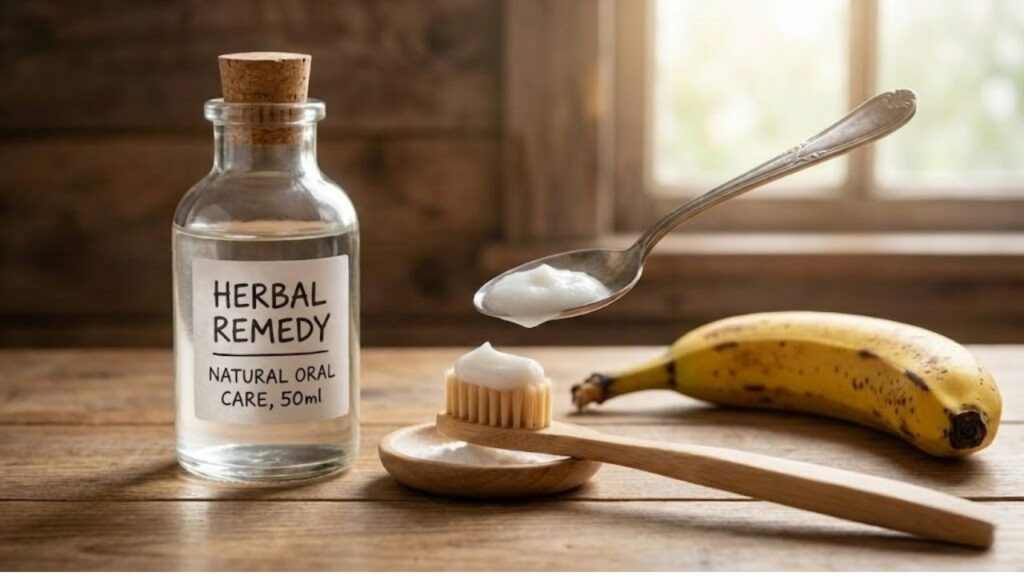
In a quiet moment at your sink, all you need is a small dish, baking soda, and a 3% hydrogen peroxide solution. Mix about half a teaspoon of baking soda with a few drops of peroxide until you get a smooth, creamy paste. The texture should feel soft, not gritty.
Brush lightly with your regular toothpaste first, then apply the paste using a soft-bristled toothbrush. Use gentle, circular motions on the front surfaces of your teeth for one to two minutes. Rinse thoroughly and pay attention to how your teeth feel. Comfort is your guide.
How Often Is Enough Without Causing Harm
This paste isn’t meant for daily use. Even gentle abrasives can wear enamel if overused. For most people, two to three times a week is enough to see gradual improvement without stressing the teeth. Your regular fluoride toothpaste should remain the foundation of your routine.
If you notice sensitivity or gum irritation, stop and give your mouth time to recover. Whitening should never feel painful. Your teeth usually signal when they’ve had enough.

What the Experience Feels Like
The paste tastes slightly salty and chalky, with a faint fizz from the peroxide. It doesn’t feel dramatic or aggressive. The process is slower, calmer, and almost meditative. Instead of attacking stains, you’re gently tending to your teeth.
After a week or two, stains often begin to soften. The change is subtle but noticeable. Your teeth don’t look artificially white. They look cleaner, fresher, and more like themselves.
Safety Matters More Than Speed
Just because something is common doesn’t mean it’s harmless. Stick strictly to low-concentration hydrogen peroxide. Never scrub hard or use the paste daily. Enamel doesn’t regenerate, and once it’s worn down, it’s gone.
If you have sensitive teeth, gum issues, exposed roots, braces, crowns, or veneers, it’s best to talk to a dentist first. This method helps with surface stains, not deep discoloration or dental problems.
Keeping Your Smile Bright Without Giving Up Tea or Coffee
You don’t have to abandon the drinks you love. Simple habits help protect your teeth: rinse your mouth with water after sipping, wait at least 30 minutes before brushing, use a straw for iced drinks, and maintain a strong daily oral care routine.
These small habits reduce the chance for stains to settle in, making any whitening effort more effective and longer lasting.
Letting Your Natural Tooth Color Be Enough
Healthy teeth aren’t paper white. They naturally carry warm, ivory tones because of the dentin beneath the enamel. Whitening isn’t about erasing that character. It’s about removing what dulls it.
When used with care, baking soda and hydrogen peroxide help clear away surface stains so your natural smile can show through. Not perfect. Just clean, comfortable, and confidently yours.