
The first time you see a new line on your face it usually happens without much drama. It shows up quietly in the bathroom mirror as a small crease near your mouth or a faint line by your eye. You move closer and press your finger against the skin and the wrinkle vanishes for a second under the pressure & hope. Then you release your finger and it comes back. It doesn’t look terrible or particularly unwanted but it feels new. It serves as a gentle reminder that your face is more than what other people see. It’s where time leaves its mark.
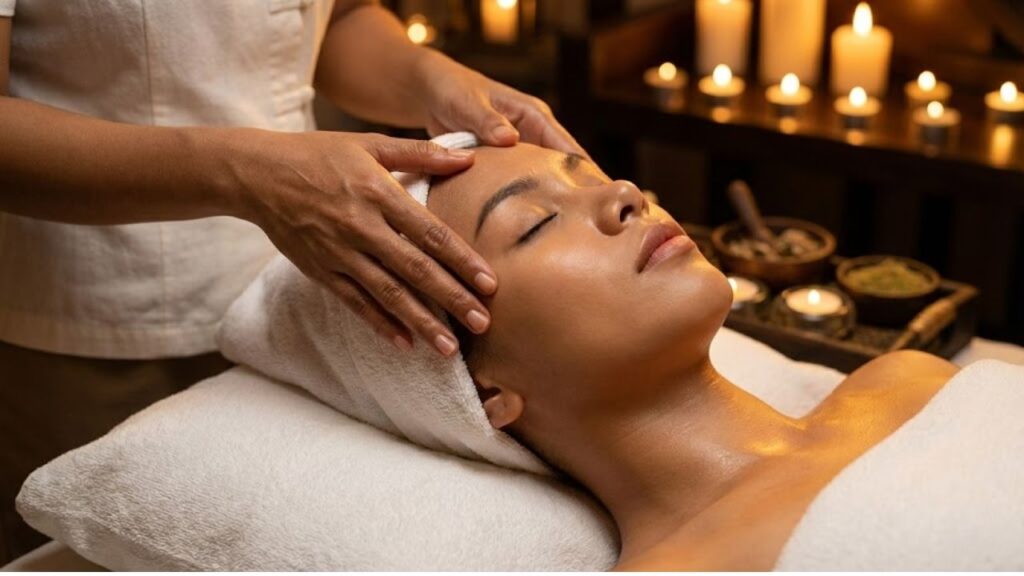
The Quiet Ritual of Touch
Imagine an evening when the noise of the day has finally softened into a gentle hum. You stand by the sink, warm water flowing over your hands, a clean towel nearby. You reach for your favorite oil or cream—something familiar, comforting—and before you even touch your face, something shifts inside. Your breathing slows. Your body prepares. Facial massage begins here, not with technique, but with awareness and presence.

There is a quiet difference between quickly applying skincare and intentionally touching your face. One is habit; the other is ritual. When your fingertips meet your skin with care, your nervous system responds. Shoulders relax, the jaw loosens, and the small muscles of the face—busy all day with expressions, tension, and emotion—finally receive permission to rest.

Understanding the Landscape of Your Face
Your face is more than skin over bone. It is a living, layered landscape of muscles, connective tissue, and expression. Beneath the surface, fine muscle fibers lift brows, soften smiles, and help you speak, chew, and react. Over time, repeated movement, gravity, and natural collagen loss leave their marks as lines, folds, and changes in firmness. This is not damage—it is simply the story of living.
Facial massage works by gently influencing this landscape. It improves circulation, encourages lymphatic flow, releases tension held in overworked muscles, and supports healthier skin function. With regular practice, skin can appear brighter, puffiness may reduce, and lines can soften, becoming less sharp and more blended into the natural structure of the face.
Setting the Stage: Preparing for Facial Massage
Preparation is a quiet but essential step. Begin with clean hands and a freshly washed face. Choose a product that provides slip—a facial oil, serum, or nourishing cream—so your fingers glide without pulling the skin. You only need enough to feel smooth and comfortable.
Posture matters. Sit or stand tall, relax your shoulders, soften your jaw, and let your tongue rest away from the roof of your mouth. Take a slow breath in through your nose and release it through your mouth. This signals that this moment is not rushed, but intentional.
| Step | What to Use | Purpose & Benefit |
|---|---|---|
| Cleanse Skin | Mild face wash, lukewarm water | Clears away dirt, oil, and makeup to avoid friction and irritation during massage. |
| Add Slip | Face oil, hydrating serum, or moisturizer | Creates smooth movement, protects the skin barrier, and reduces pulling. |
| Relax Body | Slow breathing, relaxed shoulders and jaw | Helps release tension so facial muscles respond more effectively to massage. |
| Start Softly | Light to moderate fingertip pressure | Keeps sensitive facial areas safe, especially under the eyes and around the mouth. |
Facial Massage for Natural Lift and Firmness
Facial massage does not require tools—only your hands and mindful pressure. Your touch should feel supportive, never harsh. If your skin feels sore or overly red, reduce the pressure. Comfort guides effectiveness.
Jawline Lift and Sculpt
Place your index and middle fingers at the center of your chin, just beneath the jawbone. Glide outward toward the ears using slow, upward strokes. Repeat five to ten times on each side. This movement helps release jaw tension and encourages a more defined lower face over time.
Cheek Lift for Soft Fullness
Starting at the corners of the mouth, sweep your fingers upward along the cheekbones toward the temples. Move slowly and symmetrically with both hands. Repeat ten times. This boosts circulation, supports natural facial volume, and brings a subtle brightness to the cheeks.

Forehead Smoothing for Expression Lines
Place both hands at the center of the forehead and glide outward toward the temples in long, gentle strokes. Keep pressure light to medium. Repeat ten to fifteen times. This helps relax habitual tension and soften the appearance of horizontal lines over time.
Softening Wrinkles with Intention
Wrinkles are part of expression and experience. Facial massage does not erase them but helps them soften and integrate naturally into your features. Gentle repetition and awareness are far more effective than force.
Eye Area: De-Puff and Brighten
Using your ring fingers, trace lightly along the bone beneath the eyes from the inner corner outward, then up across the brow bone, forming a slow circle. Repeat eight to ten times. This supports lymphatic drainage and reduces puffiness while maintaining comfort for delicate skin.
Smile Lines: Gentle Softening
Place fingertips beside the nostrils and sweep diagonally outward and upward toward the cheeks. Then use small, light circular motions along the smile lines. Spend about one minute here. This helps keep the area supple and reduces the appearance of deep folds over time.
Creating a Daily Massage Ritual
Consistency matters more than duration. Even three to seven minutes a day can create visible changes over time. Pair facial massage with an existing routine—morning skincare or evening cleansing—to make it effortless and sustainable.
Sample 7-Minute Evening Routine
Minute one to two: Cleanse and apply oil or cream. Minute three: Jawline strokes. Minute four: Cheek lifting movements. Minute five: Forehead smoothing. Minute six: Eye-area circles. Minute seven: Smile-line massage and final outward strokes. End by resting your palms on your cheeks and taking one slow breath.
Listening to Your Skin and Knowing Your Limits
Facial massage should always respect your skin’s condition. Reduce pressure or avoid massage during active breakouts, irritation, sunburn, or after cosmetic procedures unless advised otherwise. Healthy signs include warmth and a gentle glow—not pain or broken capillaries.
Facial massage works best alongside supportive habits like hydration, nourishment, sun protection, and rest. Its true benefit goes beyond appearance—it changes how you relate to your face. Instead of judgment, there is presence. Instead of distance, there is touch. In those few quiet minutes, you become an active, compassionate participant in your own care.