
The first time you see it you barely think twice about it. It looks like a faint amber shadow spreading along the edge of your denture or retainer. You rinse it off and brush it and forget about it. A week passes and it comes back. This time it looks darker and more obvious. Your morning coffee and afternoon tea and maybe that glass of red wine at night all add up. That appliance that used to be clear or pearly white now looks like an old coffee mug you have used for years. Something you never paid attention to before now bothers you every time you look at it.
The Quiet Embarrassment of a Stained Smile
Most people avoid this topic entirely. They will talk about whitening strips or charcoal toothpaste without hesitation but bringing up stained dentures or a yellowed retainer makes the conversation stop. You might catch yourself hiding your smile or turning away when you take out your retainer at night. There is something uncomfortable about showing an object that spends half its time in your mouth & the other half sitting in water next to your bed. If you use dentures or partials or a clear retainer you understand they are more than just medical equipment. They affect how you look when you interact with others.

When they begin showing traces of every coffee you have drunk recently it can feel like a personal failure even though it really is not. The reality is that this problem usually comes from normal daily life. A hot drink on a chilly morning. A mug you hold during a lengthy phone call. Coffee you drink while driving to work. The stains develop gradually and steadily until one day you notice your reflection and realize something that used to be transparent now looks discolored & you wonder if this is permanent.

Why Coffee and Tea Love Your Dentures So Much
Coffee & tea are excellent at leaving stains because of their chemical makeup. Both drinks contain high amounts of tannins. These are natural plant compounds that give beverages their bitter taste and complex flavor. Tannins also stick very easily to different surfaces & particularly to anything with a rough texture at the microscopic level. Acrylic dentures and clear retainers might look smooth to the naked eye but they actually have countless tiny ridges and grooves when viewed under magnification. These small imperfections become perfect spots for pigments to settle in. Every time you drink coffee or tea you leave behind a thin layer of residue that is almost invisible. A single cup does not cause much damage. However when you drink these beverages repeatedly over weeks and months the pigments start to accumulate and bond together. This buildup gradually forms a visible film that darkens over time.
Regular brushing often fails to remove these stains because it tends to polish the surface rather than lift away the bonded pigments. Think of it like a path that forms in the woods from people walking the same route over & over. One person walking through leaves no trace. But after hundreds of people take the same steps a clear trail appears. Coffee and tea work in a similar way by creating a persistent stain that becomes harder to remove as time passes.
The Two Simple Soaks: Efferdent and Vinegar
Some solutions work quietly, without drama or clever marketing. Efferdent tablets and plain white vinegar fall into this category. They don’t promise miracles. They simply work — gently, consistently, and without damaging your appliance.
Why Efferdent Works So Well
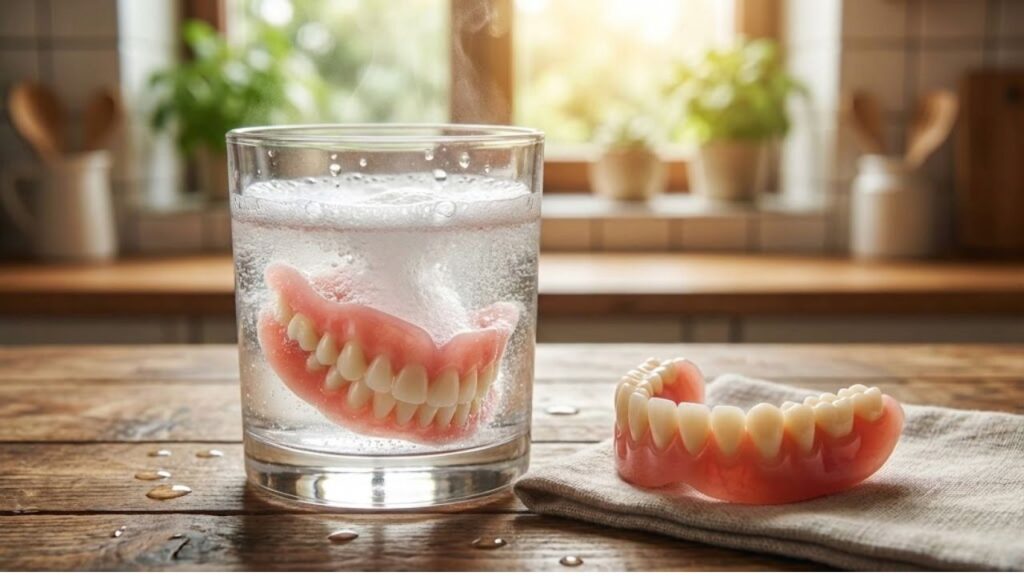
Drop an Efferdent tablet into water and it starts fizzing right away. The bubbling action releases cleaning agents & oxidizers that break down protein buildup and stains on your denture or retainer. The bubbles get into spots that are hard to reach with a toothbrush. They work around clasps and under wires and along curved areas. Rather than scrubbing every small space by hand you can let the chemical reaction handle the cleaning and loosen stains from hard-to-reach places.
Why Vinegar Deserves a Place Too
White distilled vinegar offers a unique advantage through its gentle acidic properties. When you mix it with water it breaks down mineral buildup from hard water & loosens fresh stains before they set in permanently.
The process happens gradually and quietly without any bubbles or dramatic effects. Using diluted vinegar for regular soaking works particularly well for routine upkeep if you drink coffee and tea every day. While it cannot substitute for dedicated cleaning products it serves as an effective supplementary option.
Turning Cleaning Into a Small Ritual
Instead of seeing cleaning as a task you have to do think of it as part of your nighttime routine. Get a clean glass and fill it with warm water but not hot water. Put your denture or retainer in the glass carefully. The sound is quiet and gentle like you are putting away something valuable before bed. When you use Efferdent the tablet creates bubbles that move around your appliance while you do other things. When you use vinegar the liquid stays calm & clear while it cleans.
Both methods work while you sleep. When you come back in the morning rinse it well under cool water. If your dentist told you to do so then brush it lightly with a soft brush made for dentures. The surface should feel smooth again because it is clean but not damaged.

Efferdent vs Vinegar: A Simple Guide
Efferdent: Best for deeper stains and regular cleaning. Suitable for daily or frequent use as directed. Always use warm water and rinse well.
Vinegar: Best for early stains and mineral buildup. Use diluted 1:1 with water, soaking for 15–30 minutes once or twice weekly. Rinse thoroughly to remove taste.
The Gentle Art of Not Overdoing It
Once stains begin to fade, it’s tempting to push harder — hotter water, longer soaks, stronger solutions. This often causes more harm than good. Dentures and retainers aren’t enamel. Heat can warp them. Abrasives can scratch them. Harsh chemicals can weaken materials.
The most effective care is consistent, not aggressive. A short soak, done regularly, protects both appearance and fit. Think maintenance, not rescue missions.
Listening to Your Mouth
Pay attention to how your mouth feels after you clean your appliance. If you notice soreness or irritation or if the fit seems different these are important signs. Taking care of your appliance should make your mouth feel fresh and comfortable rather than causing any discomfort. When something does not feel right you should talk to your dentist or orthodontist.
Each appliance uses specific materials and getting advice tailored to your situation makes a real difference.
Living Well Between Sips
You can enjoy your coffee or tea without worrying about your smile. Cleaning your dentures or retainer is just part of daily life. The things you enjoy during the day can be balanced with simple care in the evening. Stains will come back because that is normal. But you now understand they do not need to be permanent.
When you use gentle cleaning methods and take care of your dentures or retainer regularly they will stay clear and comfortable while supporting your everyday activities.