
The first time Helen tried the wobble board at her community center it felt like standing on a boat in a storm. Her sneakers squeaked and the board tipped & she grabbed the rail with a sharp breath. The instructor smiled kindly but the plastic gym-smelling contraption under her feet felt foreign and clinical and just a little bit scary. Helen went home thinking there has to be an easier way to practice this balance thing. Something that doesn’t feel like medical equipment. Something that feels like home.
The Quiet Strength of Everyday Balance
When balance is mentioned for older adults, it often sounds like medical advice—something prescribed, serious, and slightly dull. But balance is far more than an exercise to tick off a list. It is confidence in motion. It’s the calm feeling that when you step into the shower, reach up for a shelf, or walk across uneven ground, your body knows how to respond without panic.

The good news is that you don’t need expensive equipment or intimidating gym tools to build this skill. Your home already holds gentle balance trainers hiding in plain sight. A folded towel, a cushion, a sturdy book, even the soft surface of a mattress can become a safe challenge. These familiar objects gently wake up the feet, ankles, hips, and the inner sense that tells you where your body is in space.

Think of your home as a balance-friendly space—safe, familiar, and full of small surfaces that invite gentle movement. The key is intention. Move with awareness, respect where your body is today, and let confidence grow slowly. Safety always comes first, curiosity follows, and pride arrives quietly later.
Before You Begin: Safety, Support, and a Calm Start
Before stepping onto anything unstable, even something as soft as a towel, it’s important to prepare your environment. This isn’t about fear—it’s about respect for balance work and its impact.
Start by choosing a reliable support point. A kitchen counter, a heavy table, or a sturdy chair should always be within reach. These are not signs of weakness; they are smart safety anchors. Clear the surrounding area of rugs, cords, or clutter so that a small misstep doesn’t turn into a bigger problem.
Footwear matters too. Some people feel steadier in supportive shoes, while others prefer bare feet on carpet or a yoga mat. Avoid slippery socks on hard floors. Pay attention to how your body feels—mild muscle effort is fine, but sharp pain, dizziness, or anxiety are signs to stop and rest.
Most importantly, breathe. Slow, steady breathing helps calm the nervous system. When your breath is relaxed, your balance often follows.
Household Helpers That Act Like Wobble Boards
Your home contains many simple items that provide just enough instability to challenge balance safely. These everyday objects create small, controlled “wobbles” that train your body to adjust naturally.
The Folded Towel: A Gentle First Step
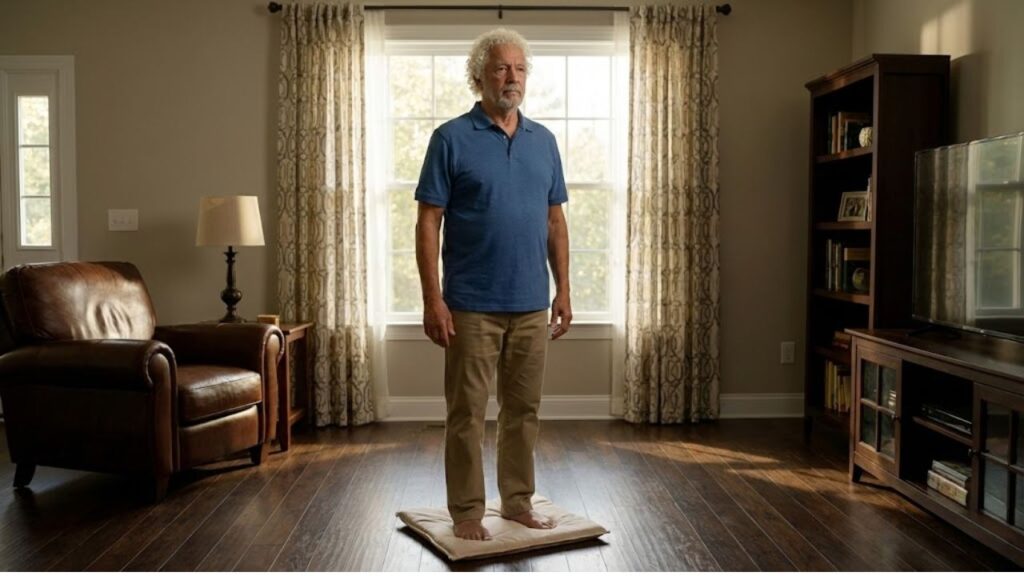
A thick bath towel folded once or twice creates a soft, forgiving surface. Place it near a counter or sturdy chair and step onto it with both feet. You’ll immediately notice your feet working harder to stay steady.
Begin by gently shifting your weight forward and backward, then side to side. Keep the movements small and controlled. When that feels comfortable, try lifting one heel at a time, as if slowly marching in place. The towel moves just enough to encourage awareness without feeling threatening.
This simple tool helps your brain and feet reconnect. Each tiny correction strengthens your balance instinct, quietly building confidence with every session.
Cushions and Pillows: Soft but Challenging
A firm couch cushion or thick pillow introduces more movement under your feet. It may feel unfamiliar at first, but with support nearby, it becomes an excellent balance trainer.
Start by placing one foot on the cushion and one on the floor. Shift your weight back and forth slowly. When that feels steady, bring both feet onto the cushion and stand with feet hip-width apart. Hold for several breaths, focusing on calm breathing rather than tension.
As you improve, try lifting your arms to shoulder height and lowering them again. Over time, what once felt unstable begins to feel manageable. That’s a clear sign your balance system is adapting and growing stronger.
The Sturdy Book: Small Height, Big Benefits
A solid hardcover book can act like a low step, helping you practice balance with uneven height. Place it against a wall or counter to prevent slipping.

Begin with one foot on the book and one on the floor. Slowly shift your weight onto the elevated foot, then back again. As confidence builds, practice stepping fully onto the book and then stepping back down. Alternate legs so both sides work equally.
This movement prepares your body for real-life situations like curbs and steps. Practicing these small height changes at home turns everyday obstacles into familiar experiences.
Rolled Mats and Blankets: Gentle Rocking Balance
A rolled-up yoga mat or blanket creates a soft, rocking surface that challenges balance without overwhelming it. Place the roll lengthwise on the floor and stand with one foot on each side, holding onto support.
Gently shift your weight from heels to toes, feeling the roll move under your arches. Then try slow side-to-side shifts. As confidence grows, you may experiment with placing one foot directly on top of the roll for a deeper challenge.
These small ankle movements train your body to make quick, subtle corrections—often the difference between catching yourself and falling.
Using the Bed for Balance Practice
The bed is a surprisingly effective balance tool. It’s familiar, soft, and forgiving. Sit near the edge with feet flat on the floor and practice slow sit-to-stand movements. Lean slightly forward, press through your feet, and stand up with control. Slowly lower yourself back down.
As you progress, try standing with your heels close to the mattress and gently leaning back until you feel it touch your calves, then return upright. Always keep support nearby. This movement mimics balance challenges while staying in a safe, comfortable environment.
Bringing Balance Into Daily Life
Balance practice doesn’t need a scheduled workout time. It fits naturally into everyday moments. Stand on a folded towel while waiting for the kettle to boil. Do a few controlled sit-to-stands before settling into a chair. Use a TV commercial break to stand on a cushion and focus on slow breathing.
These small moments add up. Balance improves through repetition, not intensity. A few mindful minutes most days are far more effective than occasional long sessions.
Knowing Your Limits and Noticing Progress
Everyone’s balance journey is unique. Past falls, joint stiffness, or fear can make movement feel intimidating. That doesn’t mean you shouldn’t practice—it means your approach should be gentle and gradual.
If you have medical conditions or recent falls, consult a healthcare professional before starting. Use support without hesitation, stop before fatigue sets in, and respect your body’s signals.
Progress often appears quietly. Standing a few seconds longer, feeling less tense, or realizing you didn’t reach for support when you normally would—all of these are meaningful wins.
With patience and consistency, even the simplest household items can help rebuild trust in your body. Over time, balance becomes less about effort and more about ease—showing up when you least expect it, in the middle of everyday life.