
The first time you notice your hair is thinner it feels like more than just hair. You see it in the bathroom light when your scalp shows through more than before. Your ponytail feels smaller when you hold it. The mirror stops being just a tool and becomes something that reveals too much. You tilt your head and fluff your hair & twist it around. You quietly ask yourself if it was always like this. For many people hair is not just about style. It frames your face and gives you confidence and makes you feel protected. When it starts to feel flatter or finer or more fragile you want to fix it quickly. You might grab a heavy mousse or tease it with a comb or use dry shampoo that promises to help. But often when you try to force volume with harsh products and rough techniques your hair just gets weaker. It wilts instead of looking full and natural. There is another approach. It is slower & kinder and works with your hair instead of against it. It is less like covering up a problem and more like taking care of something that needs attention. Think of each strand as something living that responds to more than just products. It responds to how you touch it & what you eat & how you sleep and how you live your life. Making thin hair look fuller naturally is not about finding one magic product. It is about making small simple choices that help your hair become fuller & healthier over time.
Understanding Your Hair’s Landscape
Understanding Thin Hair and Natural Volume Before learning how to add volume to thin hair you need to understand what you are dealing with. Think of your scalp like a garden where each hair follicle works like a small root. Some gardens grow thick strong trees while others resemble a sparse field with delicate grass moving in the breeze. Two factors matter most here: the thickness of individual hair strands and how many strands you actually have. You might have lots of very fine hairs or fewer hairs that are somewhat thicker or even both at once. Either way your hair can look flat & struggle to keep any volume throughout the day. Think about what happens when you use heavy creams or oils or products loaded with silicone. It works like flooding a field until everything gets pressed down and waterlogged. Even a small amount of extra weight drags fine hair down flat. Building volume naturally starts with keeping things light in both your washing routine and your daily care. Every scalp works differently too. Some make more oil and some make less. Some get irritated easily. Your scalp acts like soil that controls how well your hair can grow. When your scalp gets clogged or inflamed or ignored your thin strands cannot lift up and create volume. The real first step toward natural volume is not about styling products or techniques. It is about gently restoring balance to your hair and scalp.

Nourish from Within: Food, Flow, and Follicles
The Quiet Power of Everyday Nutrition

There is something reassuring about knowing that every meal can help your hair stay healthy. No single food will transform your hair overnight, but the nutrients you consume directly affect how strong & shiny your new hair grows. Hair consists mainly of a protein called keratin, which means your follicles need plenty of protein-rich foods. Good options include eggs, beans lentils yogurt, nuts, seeds & lean fish or poultry for those who eat meat. You should also add iron from sources like leafy greens, beans and seeds. Healthy fats from avocado, olive oil and walnuts are important too. Eating a variety of colorful vegetables provides vitamins A, C & E that help with scalp circulation and collagen production.
| Meal Time | Suggested Foods | Hair Health Benefits |
|---|---|---|
| Breakfast | Oats prepared with dairy or plant-based milk, topped with fresh berries, chia seeds, and a small serving of yogurt |
Supports keratin production through protein, improves scalp condition with antioxidants, and enhances hair shine using omega-3 fatty acids |
| Lunch | Lentil or chickpea salad combined with leafy greens, olive oil, lemon juice, and pumpkin seeds |
Provides iron and zinc for reduced hair fall, along with healthy fats that improve blood circulation to the scalp |
| Snack | A handful of assorted nuts paired with one fresh fruit | Supplies biotin and vitamin E for stronger hair roots, plus fiber to support overall body balance |
| Dinner | Grilled fish or tofu served with quinoa and roasted vegetables, lightly drizzled with healthy oil |
Delivers complete protein, essential minerals, and nourishing fats for long-term hair strength and repair |
The Subtle Role of Stress and Sleep
There is another hidden factor that affects volume: stress. When stress becomes constant it can cause more hair than normal to enter the shedding phase. You might see more strands on your pillow or in the shower and this naturally makes your hair appear thinner and less full. You do not need an expensive getaway to help your hair. Small daily habits work just as well. Spending a few minutes on deep breathing before sleep or stretching your neck and scalp can make a difference. Even stepping outside briefly to feel the evening air helps. Getting enough sleep allows your body to repair itself and balance the hormones and processes that affect hair growth.
Wash, Dry, and Care: The Everyday Rituals That Build Volume
Light, Gentle Cleansing
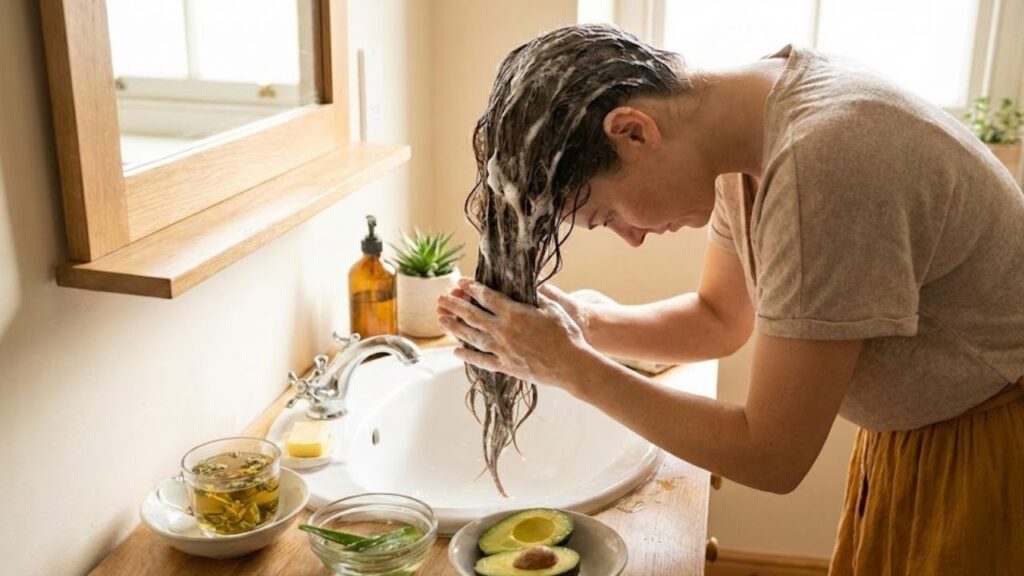
Think of wash day as your chance to bring back volume. Fine hair looks better when it is clean because natural oils make it flat quickly. However clean hair should not feel stripped bare. Strong shampoos that make your hair squeak can bother your scalp & damage the outer protective layer of each strand. Choose gentle shampoos without sulfates that are made for volume or fine hair types. These products remove extra oil without coating your strands. When you wash your hair apply shampoo mainly to your scalp since that is where oil builds up. Allow the foam to run down through the rest of your hair rather than rubbing it hard.
Condition with Intention
Fine or thin hair needs moisture but you have to apply it the right way. Using heavy conditioners & masks near your roots is like trying to fly a wet paper kite. It simply won’t work. Apply a light conditioner or detangler only from the middle of your hair down to the ends. This is where your hair is older and breaks more easily. If your hair goes flat very easily you can try conditioning first and then shampooing your scalp afterward. This method is called a reverse wash. It keeps your roots clean while protecting the ends of your hair.
The Towel and the Air
Gentle Hair Drying Techniques for Better Results The way you dry your hair has more impact than most people realize. Rubbing your hair vigorously with a standard towel generates friction that damages individual strands and creates unwanted frizz. A superior technique involves gently squeezing and pressing your hair with a soft cotton t-shirt or a microfiber towel instead. This simple adjustment keeps fine hair smoother and less puffy while allowing it to move more naturally throughout the day. For those seeking additional volume there is an effective trick to try. Flip your head upside down while blotting your hair dry. This position allows your roots to dry while lifted away from your scalp. The result is better root lift and more natural volume once your hair has dried completely.
Heat with Care, Not Fear
Heat itself is not harmful but excessive heat can damage your hair. A blow dryer can help create volume when you handle your hair gently like fine fabric. Start by applying a thin layer of heat protection product before you begin. Set your dryer to medium heat rather than maximum power and direct the air from your scalp down toward the tips to keep the hair smooth. To add volume you should bend forward and use your fingers to lift small sections near the scalp while drying. You do not need to dry your hair completely because working on the roots while your head is upside down usually creates good natural lift without much work. Allow the rest of your slightly damp hair to dry naturally while it stays in that raised position as it cools down.
Scalp Rituals: Where Volume Truly Begins
The Art of the Scalp Massage
A slow scalp massage offers a calming experience. Your fingers provide warmth while moving in circles & releasing tension from behind your ears down to your neck. These massages do more than help you relax because they boost circulation at the roots and provide nutrients to hair follicles. Special tools are not required but a soft scalp brush can enhance the experience. Take two to five minutes once or twice daily to massage your scalp using your fingertips. Begin at the front hairline and move backward before working along the sides with small circular movements. This practice delivers blood flow and oxygen to the roots.
Light Oils and Herbal Rinses
Heavy oils can make fine hair look flat but using small amounts of lightweight oils like jojoba or grapeseed directly on your scalp before washing can help keep it comfortable & flexible. Put a few drops along your part lines and massage them in gently. Leave the oil on for 20 to 30 minutes and then wash your hair normally. This simple routine helps remove buildup and reduces dryness without making your hair feel greasy after you rinse it out. Herbal rinses offer a natural way to add volume to your hair. Make a tea using rosemary or green tea or hibiscus and let it cool down completely. After you finish shampooing and conditioning your hair pour the tea through it as a final rinse. You don’t need to wash it out afterward because the plant compounds will stay on your scalp and hair to give you a gentle lift & extra shine.

Styling Tricks That Coax, Not Crush, Volume
The Magic of the Part Line
A small change can make a big difference in how your hair looks. When you part your hair in the same spot for a long time that section can start to look flat because of routine & gravity. Switch your part to the other side or make it slightly zigzag instead of straight. This hides the scalp better and makes your roots lift up in a new way. The best time to change your part is when your hair is a bit damp. Comb it in the new direction and let it air dry. You might be amazed at how much fuller your hair appears from this simple adjustment.
Layering with Intention
A good haircut helps thin hair more than any styling product can. Cutting too many layers makes the ends look thin and weak. The right kind of gentle layers inside the hair adds movement & volume. The goal is to remove enough weight so the hair moves freely without looking too sparse. When you visit your stylist you should show them how your hair naturally falls and where it parts or flattens. Tell them you want soft and airy movement instead of asking for heavy layers or thinning. Most people with fine hair find that a length between the collarbone & chest works best. This length keeps enough weight to look full while staying short enough to avoid pulling the hair down flat.
Heatless Volume Techniques
There’s something satisfying about waking up with hair that styled itself overnight. Heatless methods work with this idea by using braids and loose buns that add volume at the roots and texture along the hair. Velcro rollers at the crown work well on hair that’s slightly damp or nearly dry. Roll a few large rollers at the top of your head by pulling the hair straight up before rolling it back. Leave them in while you get ready and then take them out carefully. This gives you soft volume without needing heavy products. Loose top bun is another simple option. Put your almost-dry hair into a very loose bun on top of your head before bed and use a soft scrunchie to hold it. When you wake up let it down and use your fingers to separate the hair. This creates volume at the roots and a soft bend through the middle sections. Two loose braids give you more texture. Braid your damp hair into two loose sections & undo them in the morning. You’ll have soft waves that make your hair look fuller and thicker.
Products That Enhance, Not Smother
Product Strategy for Thin Hair Thin hair works best with fewer products. Using too many will weigh down your strands & make them look flat. Stick to one or two lightweight options like a volumizing mousse at the roots or a light texturizing spray through the middle sections. Put volumizing foam on damp hair near the roots only. Work it through with your fingers & then blow dry while flipping your head upside down or lifting sections with a round brush. You can add a light texturizing spray or salt spray from the middle of your hair down to create some grip & movement. This makes hair look thicker and less limp. The goal is not to create stiff hair but to give it gentle support. Products should feel almost invisible on your hair.
Daily Habits That Quietly Protect Your Volume
The Way You Touch Your Hair
Pay attention to how much you touch your hair during the day. You might twist it or smooth it or tuck it behind your ear without thinking. Each time you do this you transfer oil from your fingers to your hair. This makes your hair look flat and greasy much faster. Touching your hair too much can also cause breakage if your strands are thin & delicate. You can fix this by being more aware of what you do. Keep a comb or brush close by instead of running your fingers through your hair all the time. If you need to tuck your hair away then switch which side you use or try soft clips. Avoid tight elastics because they put too much pressure on your hair and cause it to break.
Sleep Protection
Protecting Thin Hair While You Sleep Most hair damage occurs during the night without you realizing it. Rough cotton pillowcases create friction that weakens already delicate strands. Sleeping with your hair in tight styles pulls at the roots and causes breakage. Tossing and turning throughout the night creates knots that lead to more damage when you brush them out in the morning. The simplest fix is switching your pillowcase material. Cotton grabs onto hair and creates resistance with every movement. Satin or silk pillowcases let hair slide smoothly across the surface instead of catching and pulling. This small change can make a noticeable difference in how your hair looks & feels after a week of use.
Knowing When to Seek Help
Natural methods help with hair thinning but your body might be signaling something more serious. You should see a healthcare provider if you experience sudden thinning or bald spots or lose a lot of hair over several months. Hair density can be affected by low nutrients or thyroid problems or hormonal shifts or other medical conditions. Natural volumizing works best when you pay attention to what your body needs. You respond to these signals & make changes as necessary. This might mean eating more healthy fats or checking your iron levels or switching from a heavy shampoo that never worked well for your hair.