
The first crack usually shows up during winter. You notice it when you get out of bed and your heel touches the cold floor with a small sting. You look down and see it: that pale dry patch that feels rough like sandpaper with a tiny split in the skin like a crack. If you ignore it then by the end of the week your feet feel like they belong to someone who walked barefoot across a desert. But here is the good news: you do not need a fancy spa visit or an expensive cream to fix things. The softest and most healing remedies are often sitting on your kitchen shelf waiting for you to remember they can do far more than flavor dinner.
The Story Your Heels Are Trying to Tell You
Before you start applying oils and masks it helps to understand what is happening under that dry chalky surface. Think of your heels as the workhorses of your body. They carry you everywhere day after day while being pressed against hard floors and trapped in shoes that may or may not fit perfectly while being exposed to hot showers and dry air. When the skin on your heels gets too dry and loses elasticity it does not just flake but starts to crack. Imagine mud in a dried up riverbed where the ground tightens and splits when the water disappears. Your skin behaves in almost the same way. Hot water strips away natural oils. Standing for long periods puts extra pressure on the edges of your heels and forces the skin to spread sideways. If the outer layer of skin is thick and dry it cannot stretch so it tears. Diet and hydration and even the weather play a role in this story too. A few days of not drinking enough water or a week of walking barefoot on rough tiles or a month of cold dry winds all affect your feet. The good news is that they also respond to care. With the right ingredients and a little consistency you can bring them back from cracked and sore to smooth & comfortable and soft enough to glide against your sheets without scratching the fabric.

Gathering Healing Magic from Your Kitchen
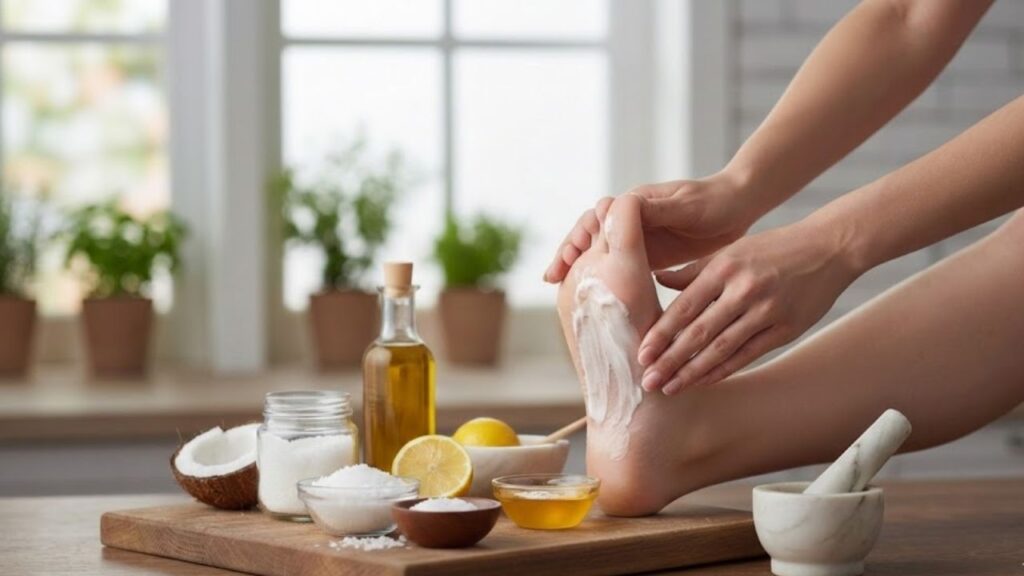
Walk into your kitchen & look at your shelves like you are stocking a medicine cabinet. The same things you stir into soups or spread on toast or whisk into cakes can work as soothing medicine for your skin. These ingredients do not just sit on the surface. They bring deep moisture & mild exfoliation & a gentle kind of nourishment that your heels have been asking for. You probably have most of what you need already. Honey works as a natural humectant that pulls moisture into your skin. Oatmeal calms irritation and softens rough patches. Coconut oil melts into dry cracks and creates a protective barrier. Sugar & salt scrub away dead skin without harsh chemicals.

Olive Oil: Liquid Silk for Tired Heels
Olive oil brings quick comfort when you apply it to dry skin. It contains healthy fats that sink into fine lines and rough areas to ease tightness right away. Warm a small amount between your palms until it feels pleasantly warm but not hot. Massage it slowly into your heels using your thumbs in gentle circular motions. As you rub the oil in you should feel the rough texture begin to soften. For better results wear clean cotton socks after you massage in the oil and keep them on through the night. When you remove the socks in the morning your heels will feel noticeably softer. Repeat this process for two or three consecutive nights and the hard dry skin will start to smooth out and become more flexible.
Coconut Oil: A Comforting Blanket of Moisture
If olive oil feels like silk then coconut oil feels like a warm blanket. It stays solid when kept at room temperature but melts fast when it touches your warm skin. It releases a light tropical smell that can make your bathroom feel like a small getaway. Coconut oil works well at keeping moisture locked in your skin. This matters a lot when your heels are dry & cracked. Use it right after your shower when your feet are still a bit damp but not soaking wet. Take about a teaspoon of coconut oil & rub it into your heels. Doing this at the right time helps trap water in your skin because the oil acts like a barrier. Wear socks afterward so the oil does not get on your floors. Let your heels absorb the oil overnight while you sleep.
Honey: Golden Nectar That Clings and Heals
Honey is thick and sticky & moves slowly. It stays on your skin instead of running off. This makes it perfect for cracked heels. Honey pulls moisture from the air and keeps it locked in your skin. It also fights bacteria gently which helps when small cracks feel tender and painful. To treat your feet with honey you should mix one or two tablespoons with some warm water so it spreads more easily. Apply it to clean heels and then cover your feet with a warm damp cloth for 15 to 20 minutes. It gets messy but the sticky feeling is actually soothing. Your heels feel like they are being coated in something sweet and healing.
The Gentle Ritual: Soak, Smooth, and Soothe
Healing dry & cracked heels quickly depends on more than just the products you apply to your skin. The routine you follow matters just as much. A basic evening practice can transform foot care from something tedious into a peaceful moment of calm. You do not need expensive spa treatments. A bowl of warm water and a few simple ingredients from your kitchen are enough. Start by soaking your feet for about ten minutes in warm water. This softens the hardened skin & prepares your heels for treatment. After soaking, gently pat your feet dry with a clean towel.
Step 1: Warm Water and Salt or Baking Soda Soak
Fill a basin or large bowl with warm water that feels comfortable on your skin. Add a tablespoon of salt or baking soda to help soften the tough outer layer and loosen dead skin cells on your heels. Place your feet in the water and soak them for 10 to 15 minutes. Let the warmth relax your soles and release the tension. This step softens your skin while giving your hardworking feet the attention they deserve.
Step 2: Natural Scrubs for Instant Softness
When your feet feel soft and wrinkled from soaking you can start removing the rough skin. The key is to scrub firmly but gently without being too aggressive. Here are some easy homemade scrub recipes that work well:

| Scrub Mix Name | Required Ingredients | Application Method |
|---|---|---|
| Sugar & Olive Oil Scrub | 1 tablespoon sugar + 1 teaspoon olive oil | Apply on slightly damp heels and massage gently for 2–3 minutes. Rinse thoroughly with lukewarm water. |
| Rice Flour & Honey Scrub | 1 tablespoon rice flour + 1 teaspoon honey + a few drops of water | Rub in slow circular motions, concentrating on cracked areas. Wash off once done. |
| Baking Soda Exfoliating Paste | 1 teaspoon baking soda + sufficient water to form a smooth paste | Use as a mild exfoliator once or twice weekly. Rinse well after gentle scrubbing. |
Step 3: The Overnight Kitchen-Heel Mask
This is when things really start working. After you soak and scrub your feet your heels become ready to absorb whatever treatment you put on them next. Pick one of these easy kitchen remedies and let it do its job while you rest: Banana and Honey Mix: Take half a ripe banana and mash it with one teaspoon of honey. Spread this mixture on your heels and put on cotton socks before bed. Bananas contain natural oils and vitamins that help soften dry skin. Yogurt and Olive Oil Mix: Combine one tablespoon of plain yogurt with one teaspoon of olive oil. Apply it to your heels for twenty to thirty minutes before sleeping and then rinse it off and add a thin layer of oil. Aloe and Coconut Oil Combination: If you have fresh aloe or plain aloe gel available mix it equally with coconut oil. Aloe helps calm the skin while coconut oil locks in moisture. This mixture works well if your cracked heels feel sore. It might seem strange to put food ingredients under your socks but when you wake up your heels will feel like they received careful attention throughout the night.
Quick Kitchen Fixes for When You’re in a Hurry
There will be days when you lack time for a complete soaking routine. On those evenings when you arrive home exhausted but still want to care for your heels there are quick kitchen methods that require only a few minutes but still produce noticeable results. You can apply a thick layer of petroleum jelly or coconut oil directly to your heels before bed. Cover them with cotton socks overnight & wake up to softer skin.
The 5-Minute Oil Wrap
Quick Evening Heel Care When You’re Short on Time Some days you won’t have time for a full soaking routine. When you get home tired but still want to take care of your heels there are fast kitchen solutions that take just a few minutes and still work well. You can put a thick layer of petroleum jelly or coconut oil straight onto your heels before going to sleep. Put cotton socks over them for the night and you’ll wake up with softer skin.
Honey Dab for Painful Cracks
When a crack in your heel feels especially painful or looks worse than the others you can treat it directly with pure honey. After you wash your feet and dry them completely put a small amount of honey right into the crack. Cover it with a small piece of clean cotton or gauze and then put a sock over it. By the next morning that spot usually feels less irritated & more comfortable.
Helping Your Heels from the Inside Out
Kitchen remedies work beyond what you apply to your feet. What goes inside your body matters just as much as what you put on your skin. Dry and cracked heels often mean you need to drink more water and eat better fats while watching daily habits that affect your skin health. Think of your skin as a garden. You can apply oils and masks on top but if the ground underneath stays dry the results will not last. A few simple changes can speed up healing and keep your heels smooth for longer periods. Drink more water by keeping a glass nearby and taking regular sips during the day. When skin stays hydrated it becomes more flexible and resists cracking. Add healthy fats through foods like avocados & nuts along with seeds & olive oil to feed your skin from inside. Include vitamin-rich foods by eating colorful fruits and vegetables that provide vitamins A and C and E to help skin repair itself. Limit long hot showers because very hot water removes natural oils and leaves your heels exposed to damage. These changes do not work overnight but they support the surface treatments you use and make each home remedy work better.
Protecting Your Newly Soft Heels
When your heels begin to improve it feels wonderful to slip them into bed or put on your slippers without any rough discomfort. The goal now is to maintain this condition & preserve the effort you have put in during your evening routines. Consider it a simple commitment you make with your feet: Wear soft socks indoors: Walking barefoot on hard floors removes moisture and causes rubbing. Cotton socks provide a protective layer. Moisturize every day: Even when you are busy apply a small amount of coconut or olive oil to your heels after bathing or showering. It only takes a few seconds. Do not walk barefoot outside: Hard surfaces like concrete and rough tiles along with dusty ground can reverse your progress within days. Check your feet regularly: Once each week take time to examine your feet closely. Spot any new dry areas early and address them before they turn into painful splits. If your cracks are very deep or bleeding or show no improvement despite consistent home treatment your body is sending a warning signal. In these situations you should consult a healthcare professional particularly if you have diabetes or blood flow problems. Home remedies can be effective but they work best alongside proper medical attention when necessary.