
That mountain range you loved, the one that used to carve the sky in sharp blues and granite greys, now feels like a tired backdrop. The horizon looks washed, as if a dirty brush has been dragged across the lens. You notice it most when planes vanish into a milky veil far sooner than expected, or when city skylines blur even on days labeled “clear.” Sunsets lose their crisp edges and turn softly smudged, giving the sense that the world itself has slipped out of focus.
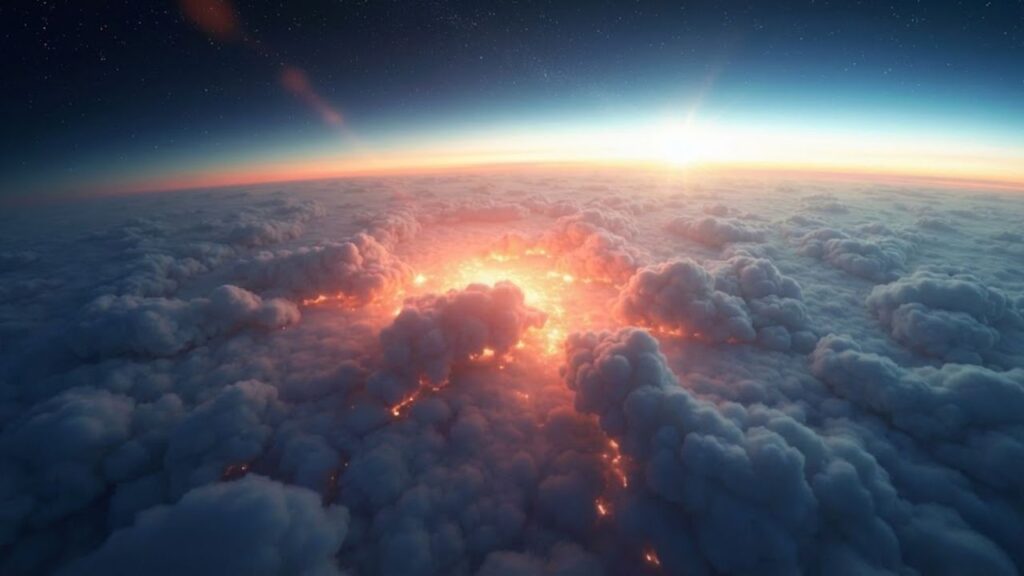
For years, many people blamed this change on weather or harmless mist. Yet the air has quietly shifted. It is now crowded with tiny, invisible particles that reshape how far we can see, and sometimes what we would rather not notice at all.
 Daily Exercise Over 60: Personal Trainer Shares the 1 Move Worth Practicing Every Single Morning
On a summer afternoon in the Rockies, a park ranger once pointed across a valley and sighed. A famous peak that usually dominates the view was reduced to a faint silhouette, its edges swallowed by pale grey air. Tourists still took photos, but their screens showed a landscape that felt oddly drained of energy.

This washed-out effect is not just smoke or fog. Dust, soot, sulfates, and organic compounds hang in the atmosphere, scattering and absorbing light. Instead of traveling cleanly from mountain to eye, sunlight ricochets in every direction. Skies lose depth, distances shrink, and the horizon fades into uncertainty.
We notice this loss most in places we love. A childhood coastline seems shorter. A familiar road dissolves into a low-contrast blur after only a few hundred meters. Once you see this softness, it is hard to ignore. The world feels closer, but not comfortingly so.
In cities like Beijing during winter or Delhi in late autumn, reported visibility may still reach several kilometers. In reality, skylines stack into shadowy layers, each swallowed by thicker smog. Buildings that once stood clearly against blue skies now melt into beige air by mid-morning.
Los Angeles tells a different story. Once notorious for its brown haze, stricter air-quality rules have brought measurable gains. On some days, visibility has improved by tens of kilometers. Old photos show a city trapped under a dirty dome; today, mountains sometimes reappear behind the skyline, proving that clearer air is a choice, not a coincidence.
Even remote areas are affected. Data from the National Park Service show that human-made haze has cut natural visibility in many U.S. parks by more than half compared to pre-industrial times. You may still capture the postcard shot, but the fine ridges, distant layers, and sharp line between land and sky are often missing, replaced by a sense of permanent visual fatigue.
The science behind this is straightforward. Atmospheric aerosols are tiny solid or liquid particles floating in the air. Some come from natural sources like sea spray or volcanic eruptions. Many others originate from car exhaust, coal plants, agricultural burning, and everyday heating or cooking.
These particles affect light in two main ways. Darker or larger ones, such as soot, absorb light and dim the scene. Smaller, lighter particles scatter it in all directions. When the air is crowded with them, contrast drops, edges soften, and the horizon becomes less a line and more a guess.
Adding to the unease, some cleaner technologies can still contribute to haze. Power plant scrubbers reduce certain gases but can increase sulfate aerosols. Climate change also plays a role, as hotter and drier conditions fuel wildfires that inject vast amounts of smoke into the atmosphere. The air may hold fewer large particles than decades ago, yet remain packed with countless light-scattering specks.
What you can realistically do in a hazy world
On an individual level, no one can clear the entire sky, but daily choices still matter. Rethinking how you travel is a powerful start. Swapping a few car trips each week for walking, cycling, or public transport cuts down the local traffic plume that you and your neighbors both breathe and see.
At home, what you burn makes a surprising difference. A cozy wood fire releases fine particles that can linger far beyond the living room, especially on calm winter nights. Cleaner heating systems, well-maintained boilers, and choosing induction over gas stoves where possible all help reduce the particle mix building up in streets and cities.
 Goodbye to Grey Hair: The Cheap Kitchen Ingredient Sparking Heated Debate Over Aging and Beauty
Support also matters. When residents push for low-emission zones, cleaner buses, or stricter industrial controls, they are not chasing abstract goals. They are defending the ability to see hills, skylines, and distant edges again. Clear horizons are political as well as poetic.
There is a practical side too. On heavy pollution days, small habits soften the impact. Checking air-quality indexes before exercising, closing windows during rush-hour peaks, or using a basic air purifier in a bedroom can quietly reduce exposure.
Many people feel guilty for not following every clean-air tip perfectly. That guilt achieves little. Choosing two or three habits that truly fit your life, and sticking with them, is far more effective. Consistency matters more than perfection.
Experts often return to one idea: visibility is a bridge. It connects complex science with what people actually feel when they look outside. When the mountains disappear, belief in “fine air” often vanishes with them.
A simple mental checklist can keep this grounded:
- Observe the horizon once a week and note how sharp or hazy it appears.
- Match air-quality alerts with what you see outdoors.
- Reduce routine car trips and notice how your breathing and views change.
- Support local clean-air efforts for transport, heating, and industry.
- Talk about hazy days with others, because shared attention sparks change.
Soyons honnêtes: no one does this perfectly every day. Still, even occasional attention to the sky can shift how you travel, vote, and define what “normal” air should look like.
Looking through the blur, together
We remember landscapes as they were when we first fell for them. A sharp coastline from childhood. Crystal-clear winter air on a ski trip. A city skyline etched cleanly against the sunset. As particles reshape visibility, those memories become a quiet benchmark that clashes with what we see now.
This tension may feel nostalgic, but it also measures loss. When a generation grows up without deep-blue skies or distant ridges, something cultural fades along with the view. The sense of scale changes. The idea of “far away” shrinks. We adapt, often without noticing what we have adapted to.
A final goodbye to clear horizons is not inevitable. Cities that cleaned their air have shown partial recoveries. Sharing photos of unusually crisp days, asking older relatives how the sky once looked, or noticing how wildfire smoke transforms sunsets into something both beautiful and unsettling all keep awareness alive.
The next time a distant hill dissolves into soft blur, it is not just weather. It is the visible outcome of human choices, technologies, and trade-offs. That softened horizon is a message. How it is answered will shape what future generations see when they lift their eyes to where earth meets sky.

| Key Insight | Rewritten Explanation | Why It Matters to Readers |
|---|---|---|
| Airborne particles affect clarity | Microscopic aerosols bend and block light, making distant views appear blurred and washed out | Clarifies why landscapes and skylines seem less sharp than in the past |
| Everyday decisions shape air quality | Daily activities like commuting, home heating, and city planning directly impact particle pollution | Highlights how personal and local actions can actually improve what we see |
| Reduced visibility signals deeper risks | Disappearing horizons often reflect rising pollution levels linked to health concerns | Encourages readers to view hazy skies as a prompt for awareness and action |
