
The first time I saw the “soft tie and diagonal lash” rose arch trick in a glossy gardening reel, it felt almost magical. Stems followed a perfect curve, flowers aligned like a bridal veil, and the comments overflowed with admiration. In just 30 seconds, the arch looked flawless.
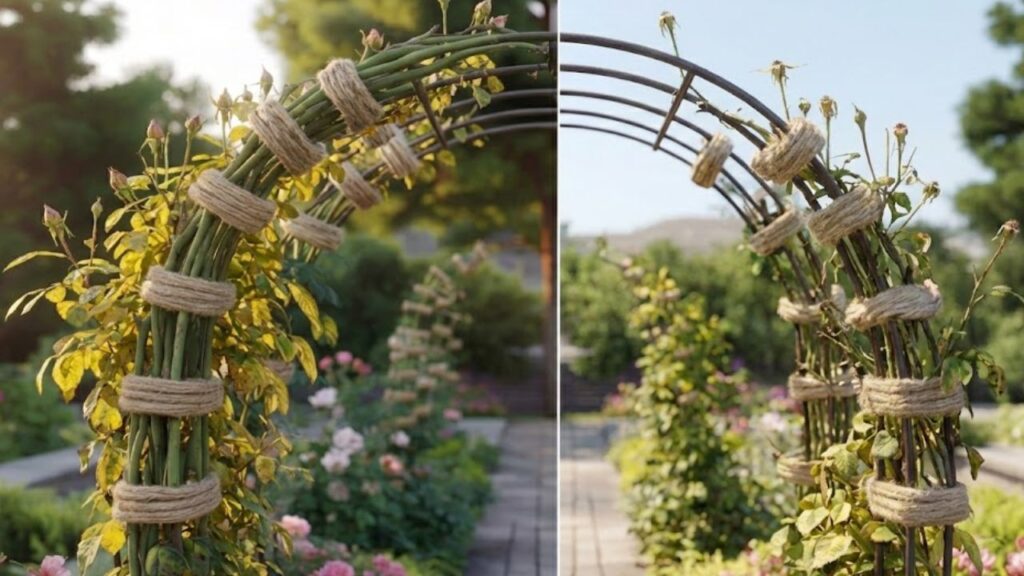
Then I encountered the same idea in a real garden. Up close, the picture changed. Stems were pinched tightly with fabric ties, bark was rubbed raw, and buds appeared only at the very top. From the path, it still looked attractive. Step inside the arch, and the strain was impossible to miss.
The method delivers great photos. For the long-term health of your roses, it tells a very different story.

Why the “soft tie and diagonal lash” trend looks stunning but harms roses
Spend a few minutes scrolling gardening social media and you’ll see it everywhere. Long canes are pulled into sharp diagonals and fixed tightly to metal arches using pale cloth or rubber “soft ties.” The lines look bold, the symmetry pleasing.
In warm evening light, everything glows. You barely notice the crushed leaf joints or stems bent just beyond what they can comfortably handle. The focus is all on instant visual impact.
Roses, however, don’t respond to aesthetics. They depend on steady sap flow, balanced bud development, and intact bark. When those needs are ignored, problems quietly begin.
Last June, I walked beneath a newly planted rose arch in a small-town show garden. The owner proudly shared that she had followed a viral “soft tie and diagonal lash” tutorial. From the entrance, the arch looked polished and impressive.
A closer look revealed every main cane pulled into a harsh angle and wrapped multiple times with stretchy ties, some pressed hard against metal. On the street-facing side, blooms were acceptable. Inside the arch, there were blind shoots, yellowing leaves, and dead patches where bark had worn away.
The arch was only eight months old, yet the roses already appeared prematurely exhausted, as if they’d endured years of stress.
Roses flower along their stems, not only at the tips. Forcing a long cane into an over-tight diagonal disrupts how growth hormones travel. Gentle training encourages buds along the length, while sharp bends and repeated lashing push the plant into survival mode.
Even so-called soft ties can act like a slow tourniquet when pulled too tight or stacked together. Sap movement slows, bark scars form, and the plant compensates with weak side shoots or shuts sections down entirely.
This is why many picture-perfect arches thrive briefly, then decline with uneven dieback. Eventually, the cost of the photo trick comes due.
A healthier way to train roses over an arch without losing beauty
A calmer approach begins with the natural shape of the cane, not the rigid outline of the arch. Let each stem show its own curve and work with it instead of forcing a graphic zigzag.
Choose wide, relaxed bends rather than tight diagonals. Gently guide the cane toward the arch and secure it with a single, loose tie where it already wants to flex. If you hear a creak or feel resistance, you’ve pushed too far.
Place ties so each one supports rather than controls. For thick canes, one tie every 30–40 cm is usually enough. Younger stems may need more guidance, but ties should always be loose enough to slide a finger underneath.
Forget rigid patterns borrowed from social media. Think in terms of layers and seasons. In the first year, focus on getting a few main canes established and roughly following the arch. In the second year, allow side shoots to develop and gently fill gaps.
 Goodbye Hair Dyes New Grey-Cover Trend Is Everywhere - The “Younger Look” Claim Has People Split
Use ties as temporary guides, not permanent restraints. Natural jute, soft raffia, or even cut-up stockings work well if they’re kept loose and checked once or twice a season. Leave room for growth, because stems thicken faster than you expect.
From a distance, the lines may look softer than the dramatic diagonals seen online. When flowering begins, though, the arch rewards you with blooms from knee height to eye level, not just a crowded ring at the top.
As one gardener told me while standing under her mature arch:
“I stopped treating my roses like props and started treating them like living guests. They relaxed — and so did I.”
A simple checklist to step away from the hype
- Choose broad curves instead of sharp kinks.
- Use fewer ties, space them out, and keep them loose.
- Follow the cane’s natural line first, the arch’s outline second.
- Check ties twice a year and remove any that bite into bark.
- Measure success by next year’s growth, not this week’s photos.
Redefining what a “perfect” rose arch really means
Gardens have drifted toward an odd expectation where roses must behave like wallpaper: flat, graphic, and perfectly symmetrical by midsummer, regardless of the cost. The “soft tie and diagonal lash” trend feeds that pressure, promising that strict patterns lead to picture-ready results.
Real gardens move at a different pace. Roses sulk after pruning, surge after rain, and pause again after wind. An arch that looks slightly uneven this year may become rich with character the next.
Standing under an arch trained with care feels different. There’s room to walk, leaves sit at eye level, and the plant feels open rather than clenched.
Forcing harsh diagonals is ultimately a short-term trade. You exchange several seasons of balanced flowering for one year of tight control and tired, stressed canes. It’s gardening’s version of crash dieting: dramatic visuals hiding fragile health.
In a street lined with clipped hedges and flawless fences, a slightly loose rose arch stands out in the best way. It tells a story of time, patience, and care.
Many of us have heard neighbours apologise for a “messy” garden that actually feels more alive than the polished yards filling our feeds.
That may be the real question behind this trend: are we growing roses, or curating content? Viral tricks focus on the brief moment when everything looks best on camera. They rarely consider roots, soil, or long-term structure.
A kinder method won’t deliver instant drama. What it offers instead is years of arches you can walk through, prune, and enjoy without hiding damage for a photo.
Once you’ve seen a cane scarred by last season’s “soft tie,” the pale ring etched into the bark, it becomes hard to ignore the true cost of chasing trends.

Key principles for long-lasting rose arches
- Gentle angles, never forced diagonals: Work with natural stem curves to reduce stress and encourage flowering along the full height.
- Truly soft, well-spaced ties: Keep them loose, check them twice yearly, and avoid any garrotting effect.
- Think long term, not instant photos: Build structure gradually over several seasons for an arch that ages gracefully and remains enjoyable.
