
Steam clouded the kitchen as another pot of broccoli softened into submission. Anna watched as her four-year-old prodded a floret with his fork, studying it like a failed experiment. “I thought steaming was the healthiest way,” she said quietly, more to herself than anyone else.
Minutes later, the broccoli was pale, over-soft, and bland, tasting mostly like hot water. Everyone chewed politely, trapped in that familiar silence where no one wants to hurt the cook, yet no one is excited either. The food did its duty, but nothing more.
 Use These 13 Deeply Nourishing Night Creams to Support Skin Repair and Better Overnight Recovery
Later that night, while scrolling through her phone, Anna came across a small study comparing different cooking methods. Steaming, it turned out, wasn’t the clear winner she believed. The next time broccoli hit her kitchen, she tried a new approach. What followed surprised her more than any nutrition chart ever had.

Why steaming broccoli isn’t the clear winner we were taught
For years, many of us absorbed the same rule: healthy vegetables are steamed. No browning, no oil, no flavor risks. Just gentle heat and the hope that vitamins survive the process.
The problem is that steamed broccoli often feels like an obligation. It’s soft without tenderness, green without energy. You eat it because you “should,” not because you want to. Over time, that matters more than most people realize.
Researchers have tested broccoli under many conditions, from boiling to microwaving and stir-frying. Boiling consistently performs worst, washing away vitamin C and delicate compounds into water that gets poured down the drain.
Steaming performs better, but it still has limits. Compounds like sulforaphane, often linked to protective effects, rely on an enzyme called myrosinase. Extended heat, even from steam, reduces that enzyme’s activity when broccoli is overcooked.
The simple truth about cooking methods and real-life eating
Brief microwaving with minimal water often preserves more vitamin C and fragile plant compounds. Surprisingly, very fast, high-heat cooking does well too, as long as the broccoli stays bright and slightly crisp.
Here’s the part that rarely gets said out loud: the “best” method on paper means nothing if it produces vegetables no one wants again. The healthiest broccoli is the one that actually shows up on your plate tomorrow.
When broccoli keeps a bit of crunch, more flavor, and even a hint of char, something shifts. You stop counting bites and start eating naturally. That’s where nutrition quietly works its magic, not in a single perfect meal, but in habits that last.
The method that balances flavor, texture, and nutrients
If steaming steps aside, what replaces it is surprisingly straightforward. Quick, high-heat pan cooking with a small splash of water strikes a balance between science and pleasure.
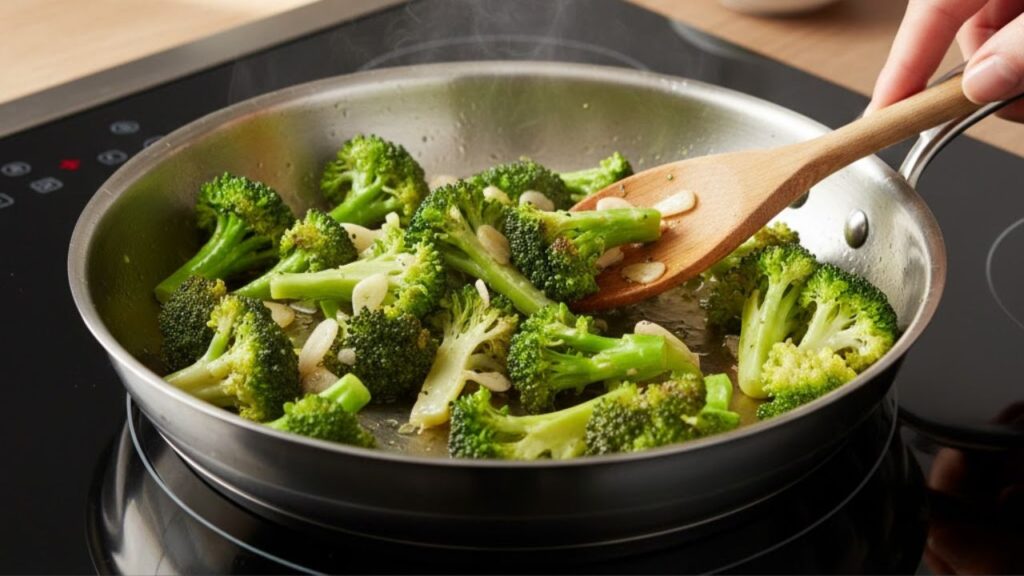
Start with a hot pan and a little oil. Add dry broccoli florets and let them sear briefly until browned spots appear. Then add one or two tablespoons of water, cover for a short burst, and finish uncovered with seasoning.
This approach keeps broccoli bright, lightly crisp, and flavorful. Heat-sensitive nutrients fare better than they do during long, drifting steam sessions that stretch on while distractions pile up.
A fast lemon-garlic skillet broccoli that wins people over
One weeknight recipe has quietly converted many steaming loyalists. Cut florets small and slice the stems thin instead of discarding them. Heat olive oil in a pan, add the broccoli with salt and minced garlic, and let it sizzle until you hear that gentle crackle of real heat.
Add a splash of water, cover for two minutes, then uncover and cook until the liquid evaporates. Finish with lemon juice and, if desired, a pinch of chili flakes. The entire dish takes under eight minutes.

The reaction is telling. Children are more willing to try it when there’s a bit of char and a citrus aroma. Adults reach for seconds without feeling like they’re “being good.” That shift at the table matters more than any label.
Small science tricks that make a quiet difference
Fast, high-heat cooking limits how long vitamins like C are exposed to heat and oxygen. Smaller pieces cook evenly, so nothing has to linger on the stove waiting for thick stems to soften.
There’s also a subtle but powerful step many overlook. Chop broccoli and let it rest for 20–30 minutes before cooking. Cutting activates myrosinase, allowing sulforaphane to form before heat is applied.
It looks like nothing is happening, but inside those green florets, chemistry is already at work. Sometimes the most helpful processes happen quietly, somewhere between the cutting board and the pan.
Easy broccoli ideas that pair nutrition with enjoyment
The guiding formula is simple: hot pan, short time, minimal water. It adapts easily to different flavors while keeping both texture and nutrients intact.
Cut broccoli into bite-sized pieces, slice the stems thin, and let them rest briefly. Heat a wide pan with oil, add broccoli in a single layer with salt and pepper, and let it brown slightly before stirring.
Add a few tablespoons of water, cover for two to three minutes, then uncover and cook until dry. The goal is tender broccoli with a gentle crunch, not uniform softness.
Overcooking “just to be safe” sacrifices both taste and nutrition. Starting with too much water pushes broccoli back toward boiling, long before the pan can add any character.
There’s also the guilt trap of promising yourself plain broccoli every day. A drizzle of olive oil, a sprinkle of cheese, or a spoon of tahini does not erase nutrients. Boredom is the real enemy, not seasoning.
- Pan-roasted broccoli with lemon and almonds – Finish with toasted almonds and fresh zest.
- Garlic-soy broccoli – Add soy sauce, a touch of honey, and sesame seeds at the end.
- One-pan broccoli with chickpeas and feta – Cook chickpeas alongside and crumble feta off the heat.
Redefining what “healthy cooking” really means
The move away from constant steaming isn’t about chasing trends. It’s about accepting that health depends on repetition, and repetition only survives when food tastes like something you’d serve a friend.
There’s a narrow moment when broccoli shifts from vibrant and crisp to dull and floppy. Living just before that moment is where flavor, texture, and fragile compounds can coexist.
Broccoli doesn’t need reverence or fear. It needs heat, timing, and permission to be imperfect. A charred edge here, a firmer stem there. Real food rarely looks pristine, and that’s fine.
The next time your hand reaches automatically for the steamer basket, pause. A skillet, a splash of water, and a wedge of lemon might tell a better story over time than one flawless, joyless meal.