
I never used to enjoy Pilates, but over time I’ve grown to genuinely appreciate the way it helps me build strength, increase mobility, and refine overall body control. With weekly Pilates sessions alongside CrossFit, yoga, and my work as a personal trainer, I’ve developed what I consider to be a solid core.
Even without visible six-pack abs, a strong midsection delivers far more than aesthetics. It supports good posture, spinal stability, and injury prevention, helping the body move efficiently and safely at any age. This is well supported by existing research.
Recently, I decided to focus on an exercise that appears frequently in Pilates sessions: flutter kicks. While commonly associated with Pilates, this move is widely used across many ab workouts. I’ve also relied on it for years when training my own clients.

To test my core strength and see the effects firsthand, I committed to doing flutter kicks every day for one week. Here’s what I noticed — and what didn’t change.
Understanding the Flutter Kicks Exercise
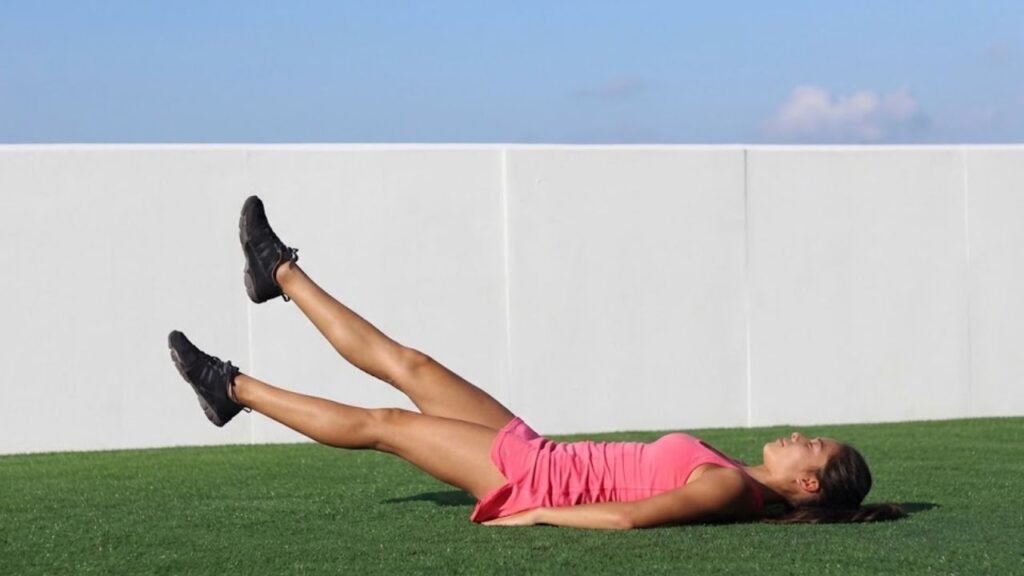
Flutter kicks involve lying on your back, lifting your upper body slightly off the mat, and moving your legs in a controlled, alternating up-and-down motion while they hover just above the floor. This exercise appears in both mat and reformer Pilates, although it’s considered more modern than the original movements created by Joseph Pilates.
Despite the fast leg motion, flutter kicks should be driven by your core muscles. Momentum should never take over. You may hear them referred to as scissor kicks, but regardless of the name, proper execution relies on controlled, intentional movement powered from the midsection.
How to Perform Flutter Kicks Correctly
- Lie flat on your back with your legs fully extended.
- Place your hands by your sides, or slide them under your upper glutes if you struggle to keep your lower back connected to the mat.
- Engage your core by drawing your belly toward your spine and gently tucking your pelvis.
- Lift both legs to hover above the mat, point your toes, and raise your shoulders slightly while keeping your gaze forward.
- Begin fluttering your legs up and down, alternating steadily.
- If needed, softly bend your knees to reduce strain or prevent discomfort in the hips or lower back.
Prioritize control and rhythm over speed. If lifting your upper body feels too challenging, keep your head supported on the mat. Avoid arching your lower back, as this shifts the workload away from your core and places unnecessary stress on your lumbar spine.
Doing Flutter Kicks Daily for One Week: What Changed
Flutter kicks maintain constant tension in the core, promote deep muscle activation, and help build long-term endurance in the hips and torso. After practicing them daily for a week, several things became clear.
1. Flutter Kicks Work More Than Just Your Abs
It’s important to distinguish between ab muscles and the entire core. The rectus abdominis is only one part of a larger system that includes the internal and external obliques, transverse abdominis, erector spinae, multifidus, pelvic floor, diaphragm, hip flexors, and glute muscles.
All of these muscles work together around the pelvis, spine, and ribcage. Training the core as a whole improves functional strength, supports posture, and may help reduce discomfort and pain.

Flutter kicks effectively engage the deep core muscles, particularly the transverse abdominis, while also challenging the lower abs, hips, and legs. If the exercise is felt mainly in the hips or lower back, it usually indicates insufficient core engagement.
Despite considering my core strong, flutter kicks proved extremely demanding. Keeping both the legs and upper back elevated requires continuous bracing, increasing muscular endurance and reinforcing the principle of time under tension.
CrossFit enhanced my maximal strength and power, while Pilates refined my control, balance, stability, and ability to slow movements down. Strength alone doesn’t guarantee endurance, and this exercise highlighted that difference clearly.
While lifting heavy weights feels achievable, maintaining flutter kicks for repeated intervals — such as 10 rounds of 45 seconds on and 15 seconds off — was a serious challenge.
Performing the movement required full-body awareness: keeping the shoulder blades lifted, compressing the abdomen, pressing the lower back into the mat without arching, stabilizing the hips, and controlling leg motion. Even breathing became something I had to consciously correct.
Proper breathing is essential for core engagement, especially since the diaphragm plays a central role in core stability. Shallow breathing and poor posture are closely linked — a reminder I learned quickly.
Unlike sit-ups, crunches, or Russian twists, flutter kicks keep the back supported on the floor, limiting repeated spinal flexion and extension. While this doesn’t automatically make the exercise suitable for everyone with back pain, my own spine certainly felt less strained.
Anti-flexion, anti-extension, and anti-rotation exercises like flutter kicks help the body learn how to resist movement while maintaining tension and stability. Incorporating them regularly can make traditional ab exercises feel far less necessary.