From time to time, I step away from my chair, unroll one of my favorite yoga mats, and start moving. Some days I follow a planned routine, while other days I let my body guide me. By the end, my muscles feel longer and stronger, my joints move more freely, and I regain both physical ease and mental clarity. This kind of gentle movement brings a sense of calm focus, especially when long hours at a home desk start to take their toll.
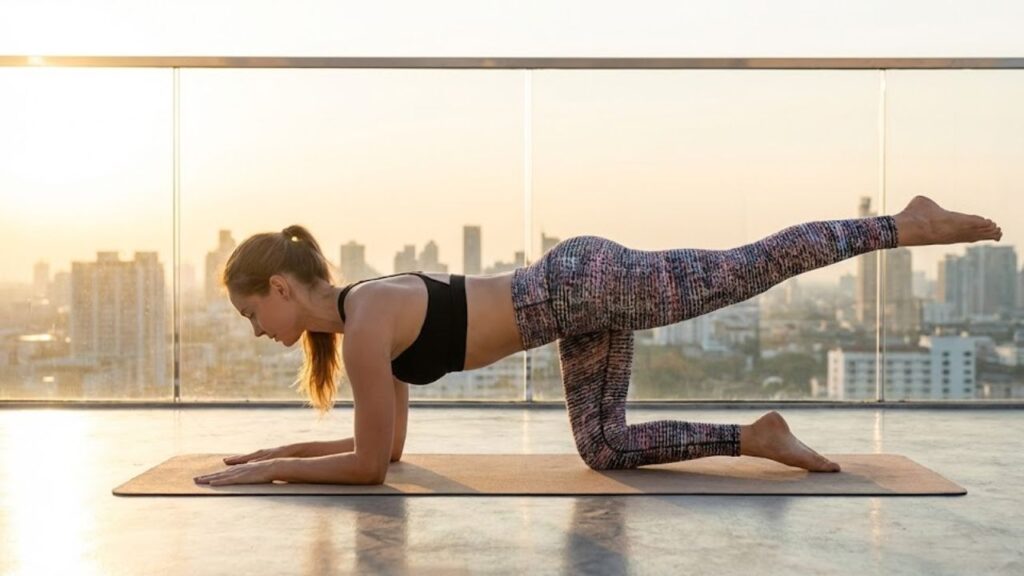
Recently, I created a simple five-move mobility flow designed to loosen stiff joints and stretch tight muscles. The aim is to move smoothly, almost as if you’re gliding across the mat, while encouraging a relaxed rhythm and a soothing flow. Below is a clear breakdown of how to follow the routine.
How the mobility flow works
The routine includes five exercises, performed for two sets of 6–8 repetitions each. To keep the movement feeling seamless, try completing all five exercises back-to-back for one set without resting, then repeat the sequence. If you prefer a slower pace, you can also finish each exercise individually. Both approaches support joint freedom and muscle release.

Leg opener movement
The leg opener focuses on improving mobility in the hips and groin while stretching the adductor muscles. At the same time, it builds strength in the hip flexors, which help lift your legs with control. Move slowly and deliberately, even though the exercise may tempt you to rush. Keep your feet flexed to activate the back of the legs and open only as far as you can without losing balance.
Once the movement feels more natural, you can add a challenge by lifting your leg over a block or dumbbell placed beside you. Pay close attention to your posture—avoid rounding your upper body or collapsing through the torso. Your spine should stay tall, with upright alignment and active posture guiding the movement.
Roll up and fold sequence
This exercise is inspired by the Pilates roll-up and targets the core while also stretching the spine and hamstrings. From the floor, engage your core to sit up, then fold forward over your legs for a deep stretch. Keep your legs steady and pressed into the mat, letting your abdominal muscles—not your hips—control the movement.
Move with intention as you inhale while reaching your arms overhead and exhale as you curl forward. Pause briefly in the folded position to allow a deep release through the hamstrings and back. As you lower yourself down, maintain tension in your abs to control the descent, creating a smooth transition between each phase.
Loaded beast position
This move, inspired by animal flow, is a regular feature in many lower-body workouts. From a crouched position, sit your hips back toward your heels as if winding up a spring. This action improves mobility in the ankles, hips, and knees. Then, drive forward over your wrists, shifting the emphasis toward the chest and shoulders.
The loaded beast builds full-body strength while also enhancing stability through the core. Aim to sit deeper into your heels with each repetition. For added intensity, placing light weight across your upper back can increase the challenge without sacrificing controlled movement.
Lateral shoot through exercise
Lateral shoot throughs use rotational movement to activate the core, especially the obliques along the waist. This exercise also improves balance and coordination. As you kick one leg through, lift the opposite arm upward, opening the chest and shoulders. Let your eyes follow your raised hand to encourage natural rotation.
Start from a strong tabletop position, keeping your shoulders stacked over your wrists and your knees hovering just above the floor. Returning to this base position between sides helps maintain stable control and proper alignment throughout the movement.
Downward dog to upward dog flow
To finish the routine, two classic yoga poses are linked together in a smooth transition. Move from downward dog through plank, then lower your hips into upward dog, untucking the toes as you go. The goal is a fluid shift that allows the spine to lengthen naturally.
Keep your shoulders relaxed and drawn away from your ears to avoid tension. If the stretch feels too strong on your lower back, adjust by walking your hands forward or lowering onto your elbows. Remember, this practice isn’t about comparison—focus on comfortable movement, body awareness, and creating a calm space where your body can move freely.