
Anthony Wall is an ACE-certified personal trainer and the Senior Director of Global Business Development and Professional Education for ACE. With more than 25 years of hands-on experience as a trainer, manager, and program developer, he has worked across all Les Mills gyms in New Zealand.
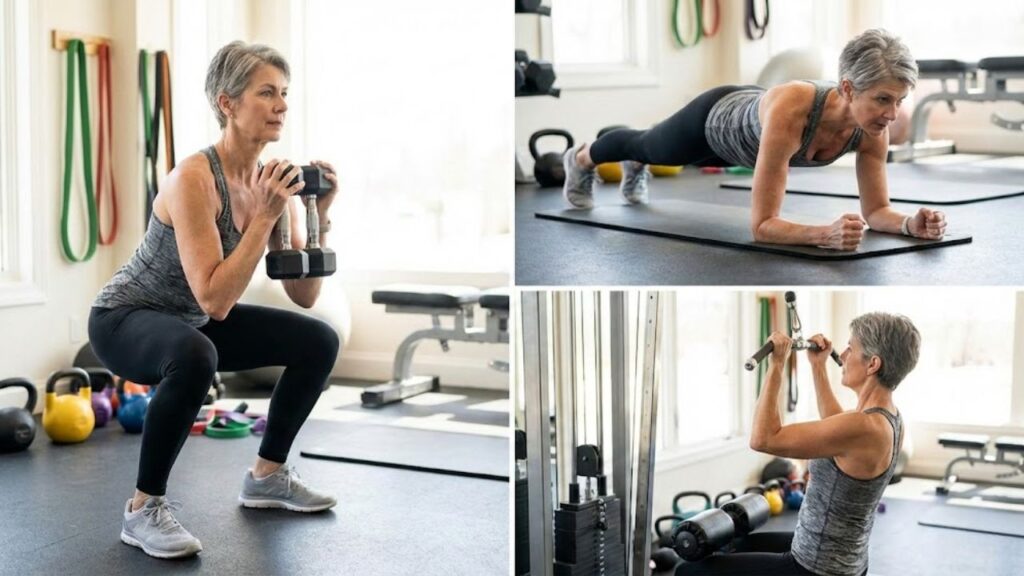
At age 55, Wall believes that flexibility and consistency are the foundation of long-term fitness. When traveling or feeling fatigued, he adapts by choosing shorter or lighter workouts. According to him, realistic scheduling plays a major role in staying active and avoiding burnout.

As people age, regular exercise becomes increasingly important. It can help lower the risk of chronic conditions such as diabetes, hypertension, and mental health challenges, while also helping manage symptoms and support longer life expectancy. Sports medicine physician Andrew Getzin, MD, explains that while aging is unavoidable, consistent physical activity can significantly slow physical decline.

Five Weekly Exercises That Support Fitness After 50
To maintain strength and endurance, Wall includes five key exercises in his weekly routine. He emphasizes that recovery is essential, as aging muscles experience greater inflammation and require longer recovery periods after workouts or injuries.
Modifications are available for each movement if needed. Before starting a new routine, anyone with a medical condition or injury should consult a healthcare professional to ensure safe participation.
1. Regular Three-Mile Runs
Wall typically runs two to four times per week, covering about three miles per session, which equals roughly 45 minutes. Like other forms of cardiovascular exercise, running supports better mood, blood sugar regulation, and improved sleep.
He prefers running outdoors, as it helps him mentally disconnect. Research shows that exercise in natural environments can offer additional benefits, including enhanced brain health and improved cognitive function compared with indoor activity.
However, running is not suitable for everyone. Because it places higher impact on joints, it may cause discomfort if the body cannot tolerate the load. Progressive pain is a sign that stress levels are too high. Lower-impact options such as walking, swimming, elliptical training, or stationary cycling provide effective alternatives.
2. Hip Drops for Strength and Mobility
Hip drops improve hip strength and mobility, areas that play a key role in preventing lower back pain and knee discomfort. Weak hips can contribute to tightness and poor movement patterns.
According to Dr. Getzin, this exercise strengthens the gluteus medius and gluteus minimus, which may help reduce overuse injuries, especially for runners. Stronger lateral hip muscles support better alignment and proper movement form.
Other helpful lower-body movements include squats and bridges, which strengthen the quadriceps, hamstrings, and supporting hip muscles. Strength training is also vital for slowing age-related muscle loss, known as sarcopenia.
To perform hip drops, stand on a step or block with one foot planted and hips level. Lower the free foot by dropping the hip, pause briefly, then return to level. The movement should come from the hips. Wall recommends three sets of eight to twelve reps per side, adjusting volume as needed.
3. Push-Ups for Upper Body Strength
Push-ups target the chest, shoulders, and triceps, while also engaging the core muscles for stability. They are a versatile strength exercise that can be done almost anywhere.

As people age, push-ups help maintain upper body strength and mobility. The exercise can be modified by using knees or a wall to reduce difficulty.
Start in a plank position with hands slightly wider than shoulder-width. Lower the chest by bending the elbows at about 45 degrees, then press back to the starting position. Wall suggests beginning with five to ten reps and increasing sets once ten reps can be completed comfortably.
4. Hanging Leg Raises for Core Control
Leg raises strengthen the core and require coordination, which supports balance. Balance often declines with age, increasing the risk of falls.
Research shows that core-focused exercises help improve muscle strength, motor control, and postural stability. Dr. Getzin recommends combining stability exercises like planks with contraction-based movements such as leg raises.
To perform the exercise, hang from a bar with an overhand grip. Slowly raise the legs in front of the body with controlled movement, then lower them back down. Wall aims for three sets of fifteen to twenty reps, adjusting as needed or starting with simple dead hangs if strength is limited.
5. Calf Raises for Balance and Power
Calf raises build lower-leg strength and support balance. The calf muscles play a major role in walking efficiency, running mechanics, and everyday movements like climbing stairs.
To perform the movement, stand with feet hip-width apart, maintain an upright posture, and engage the core. Rise onto the toes, then slowly lower the heels back to the floor in a smooth motion. Wall performs two to three sets of twenty to twenty-five reps, using a wall or table for support if needed.
Key Takeaways for Exercising as You Age
Exercise at any age supports overall health, preserves physical function, and reduces the risk of age-related conditions, cognitive decline, and premature mortality.
When starting or adjusting a fitness routine, it’s important to progress gradually. Recovery slows with age, making it essential to listen to your body and match intensity to your abilities.
For best results, combine regular cardiovascular activity with resistance training that targets multiple muscle groups. This balanced approach supports strength, endurance, and long-term mobility.