
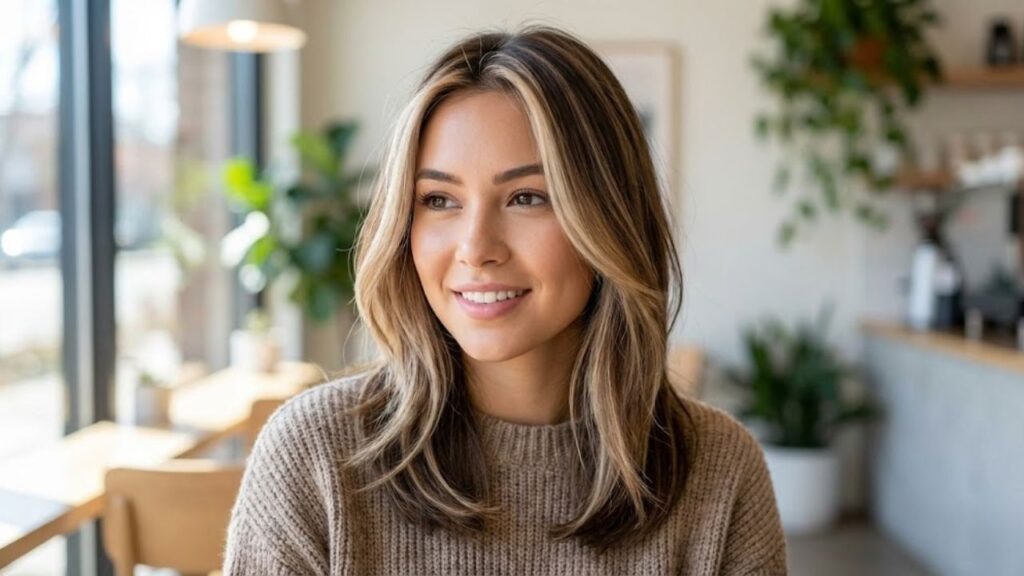
Sitting somewhere between a full balayage and an all-over shade, hair contouring is a clever colouring approach designed to lift a dull complexion and give the face a more refreshed look. Borrowing ideas from makeup contouring, it uses a softly brightened effect to naturally light up the features. The technique works by placing lighter tones where they’ll catch and reflect light, helping to soften facial angles and wake up the complexion. Paris-based stylist Étienne Sekola explains that it’s all about subtle, strategic placement rather than a dramatic colour overhaul.
What Is Hair Contouring?
Hair contouring is essentially a micro-balayage focused only on the sections that frame the face. Instead of sweeping through the entire head like classic balayage, it targets just a few strands in the right spots. As Sekola puts it, the goal is simple: to bring light to the face with delicate lightening. These carefully placed touches can brighten the complexion, create a softer appearance, and deliver an instant “well-rested” vibe—while still looking completely natural. It’s a technique that can also help reduce the look of shadows on the face and subtly energise the overall colour for a healthy glow effect, like you’ve had fresh air and sunshine (minus the sunburn).
 Beginner Lower Back Routine: 2 Simple Exercises That Build Strength Fast Without Fancy Equipment
Is Hair Contouring High-Maintenance?
According to Sekola, hair contouring is very easy to maintain. Because the lightening is gentle and well-blended, it grows out smoothly and can evolve naturally without obvious lines. He suggests maintenance roughly every three months, though many people can comfortably wait six to eight months depending on how subtle they want the result to stay. You typically won’t get harsh roots or strong regrowth marks, since the colour softens over time and develops a natural-looking finish as it settles.
Best Haircuts for Hair Contouring
The key to great hair contouring is movement in the cut. Sekola explains that the more layered the haircut, the more noticeable—and flattering—the light-reflecting effect becomes. It tends to be less effective on very blunt, solid shapes, such as a strict bob, because there’s less motion to reveal the dimension. Ideally, the hair should have a flow that lets the colour catch the light as you move. That’s why medium-to-long layers and soft, wavy styles often showcase hair contouring best, creating an effortless glow that looks like it could be completely natural.

What to Ask for at the Salon
The number-one guideline is keeping it light and minimal. Hair contouring is meant to look understated, not heavily highlighted. Sekola advises asking for discreet face-framing brightness with only a few lighter sections, rather than lots of pale pieces. For instance, if your base is dark chestnut, overly blonde highlights can feel too strong—so a chestnut-to-light-chestnut shift will usually look more balanced and seamless. He also recommends avoiding too much contrast, especially for your first session. Don’t lift too high or go too light immediately; instead, take a gradual approach so the colourist can fine-tune the result, adjust placement, and perfect the brightness step by step while keeping the finish almost imperceptible.