
Spending extended time at a desk, in a car, or relaxing on the couch can quietly push the hips into a tight, restricted state. Over time, the hip flexors shorten, blood circulation slows, and the joints gradually lose their natural range of motion. This often shows up as hip tightness, lower-back discomfort, poor posture, or a heavy feeling when standing up. The good news is that reversing sitting-related stiffness doesn’t require intense workouts. Gentle, mindful yoga poses can help restore hip mobility and make everyday movement feel natural again.
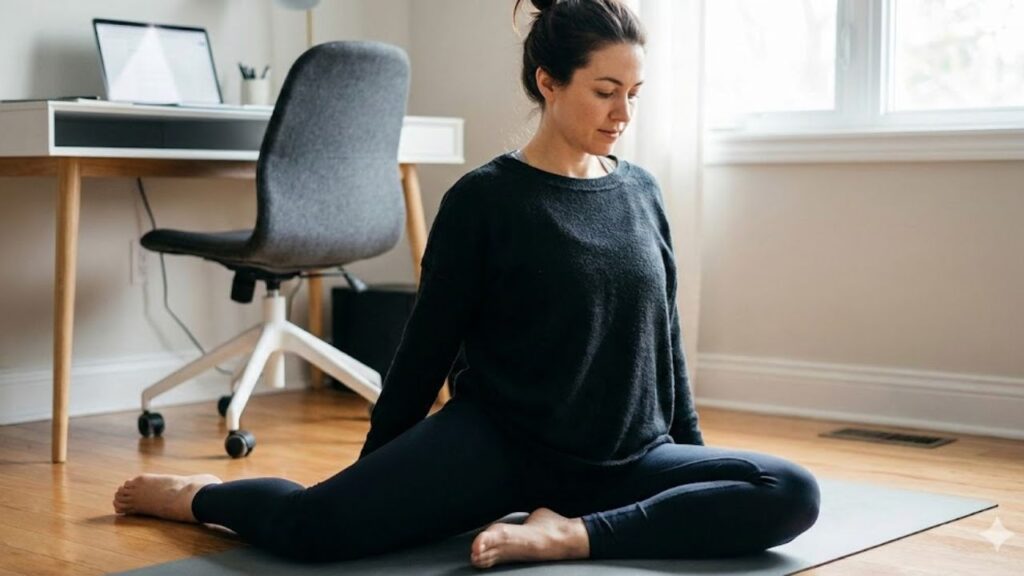
Why Sitting Leads to Hip Tightness
When you sit for long periods, the hips remain in a flexed position. The muscles at the front of the hips adapt by shortening, while the glutes and stabilizing muscles become underused. This imbalance reduces joint lubrication and signals the body to protect the area, resulting in stiffness. Yoga works by lengthening tight muscles, reactivating underused ones, and calming the nervous system so the hips can release safely.

How Yoga Helps Reverse Sitting-Related Stiffness
Yoga is most effective when practiced slowly and intentionally. By combining gentle movement with steady breathing, it boosts circulation to the hips, supports joint nourishment, and eases tension caused by stress. Unlike forceful stretching, this approach allows the hips to soften naturally, making it ideal for stiffness linked to prolonged sitting.

Standing Forward Fold to Release the Hips
A relaxed forward fold allows the hips and lower back to soften while gently decompressing the spine. Keeping the knees bent is essential, as it reduces strain and helps the hips release without resistance. This pose is especially helpful after standing up from long periods of sitting.
Low Lunge to Open Tight Hip Flexors
The low lunge directly counters the position the hips stay in while sitting. By gently opening the front of the hips and thighs, this pose helps restore balance and makes walking and standing feel easier. Slow, deep breaths enhance the release.
Half Split Stretch for the Back of the Hips
Shifting back from a lunge into a half split stretches the hamstrings and the back of the hips, areas that often tighten alongside the hip flexors. This balanced stretch supports smoother and more natural hip movement.
Butterfly Pose for Inner Hip Relaxation
Sitting with the soles of the feet together encourages the inner hips and groin to relax—areas that can feel restricted after sitting all day. Supporting the knees with cushions allows the hips to open gently without forcing depth.
Seated Figure Four for Outer Hip Relief
Crossing one ankle over the opposite thigh targets the outer hips and glutes, which often tighten from prolonged sitting. This mild stretch can help reduce pressure in the lower back.
Cat–Cow Flow to Restore Joint Hydration
Moving the spine through gentle flexion and extension improves circulation around the pelvis and hips. This rhythmic flow helps rehydrate the joints and reconnect breath with movement after long periods of stillness.
Wide-Knee Child’s Pose for Deep Release
Child’s pose with wide knees allows the hips to open softly while the body fully relaxes. It is particularly effective at the end of the day when physical stiffness is combined with mental fatigue.

Supine Knee-to-Chest for Decompression
Lying on the back and gently hugging the knees decompresses the hips and lower spine. This simple, restorative pose helps relieve built-up pressure after hours of sitting.
Supine Spinal Twist to Restore Natural Rotation
Gentle twists help bring back natural rotational movement in the hips and spine, which often becomes limited with sedentary habits. Twisting also helps calm the nervous system.
How Long and How Often to Practice
Aim for 10–20 minutes most days, especially after long sitting periods. Even short, consistent sessions can make a noticeable difference. Think of these poses as daily movement snacks for your hips.
Using Props for Comfort and Support
Pillows, blankets, blocks, or chairs can support the body so muscles relax instead of tighten. Comfort encourages deeper release and helps prevent overdoing the poses.
Common Mistakes to Avoid
Avoid forcing depth, rushing transitions, or holding your breath. A mild, comfortable sensation is enough—sharp pain is a signal to ease off. Gentle consistency always works better than intensity.
Signs the Practice Is Working
With regular practice, standing up feels easier, walking becomes smoother, posture improves, and the lower back feels less strained. Many people also notice better comfort while sleeping.
Final Thoughts
Hip stiffness caused by sitting is common, but it is also reversible. These gentle yoga poses help counter long hours of sitting by restoring mobility, improving circulation, and calming built-up tension. Start slowly, move with awareness, and breathe deeply. With consistent practice, your hips can regain freedom, making everyday movement feel lighter and more comfortable.