Fitness after 60 is not defined by lifting heavier weights or training for longer hours. Instead, it focuses on functional strength, balance, and quality of movement. Research consistently shows that functional exercise programs, those built around everyday actions such as standing, walking, stepping, and balancing, lead to better gait speed, improved balance, greater mobility, and stronger daily performance in adults aged 60 and above when compared to more traditional training methods.
This matters because strength and stability support every daily movement, from standing up from a chair to climbing stairs. When these systems work efficiently, the body becomes more resilient and capable. Standing exercises encourage muscles and the nervous system to work together, enhancing balance, joint support, and muscular endurance without placing excessive strain on the joints. The result is a form of fitness that feels more natural and practical than isolated training.

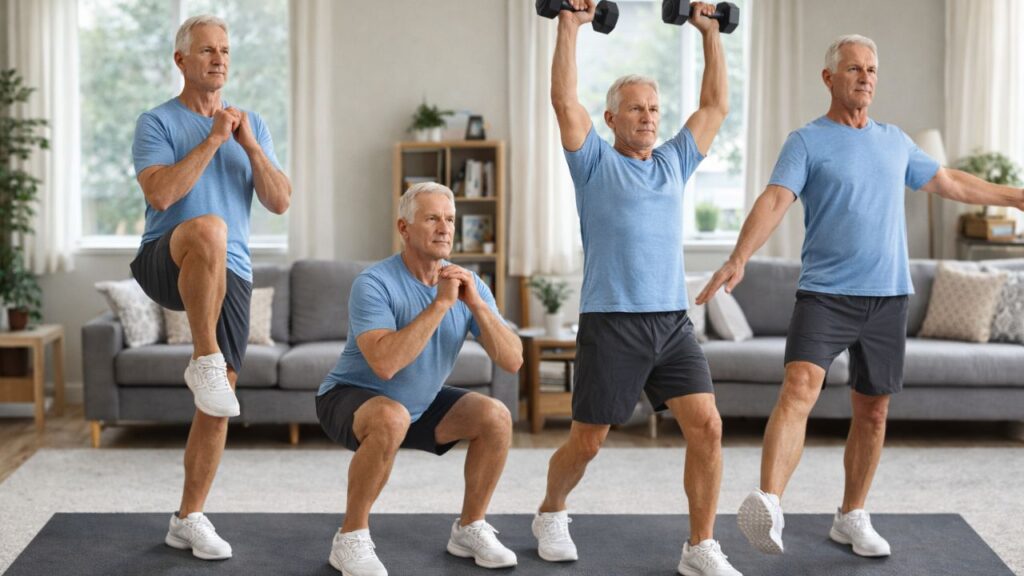
The four standing movements below assess more than muscle power, they reflect real-world physical capability. Performing them with control and confidence at 60 often indicates better overall function, stability, and coordination than many individuals years younger. Each exercise connects the shoulders, core, hips, and legs, training the body as one integrated system, exactly what supports long-term movement and independence.

Single-Leg Balance With Controlled Reach
Balance goes beyond avoiding falls; it represents how well muscles, joints, and sensory systems communicate. Standing on one leg while reaching engages the glutes, core, ankles, and proprioceptive system at the same time, teaching the body to stay aligned under challenge. Improved balance translates to more confidence while walking, turning, and navigating stairs. When performed with control, this movement builds functional strength that extends beyond static balance drills.
How to Do It
- Stand upright near a chair or counter for support
- Lift one foot slightly off the floor
- Reach the opposite arm forward, then overhead
- Keep hips level and spine tall
- Hold steadily, then switch sides
Hip Hinge Into Standing Walk
This movement reinforces the ability to generate force from the hips rather than stressing the lower back or knees. The hinge followed by a deliberate step demands coordination between the core, shoulders, and hips, training connected muscle chains instead of isolated muscles. Over time, this pattern supports smoother walking, better posture, and strength that carries over into tasks like lifting objects or rising from low positions.

How to Do It
- Stand tall with feet set at hip width
- Push the hips back while keeping the spine neutral
- Pause briefly at the bottom position
- Drive the hips forward to stand
- Take a slow, controlled step forward and repeat
Standing Partial Squat With Arm Lift
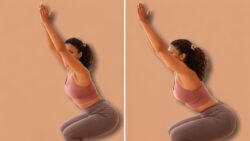
While squats strengthen the legs, adding an arm raise transforms this into a full-body movement. The combination activates the shoulders, upper back, core, and lower body simultaneously. This coordinated action elevates heart rate without impact, reinforces upright posture, and increases midsection engagement. For adults over 60, this pattern better supports lifting, reaching, and daily power production than machine-based exercises.
How to Do It
- Stand with feet wider than hip width
- Lower into a shallow squat, knees tracking forward
- As you rise, lift arms to shoulder height
- Keep chest open and core engaged
- Move smoothly through each repetition
Side Step With Knee Lift Control
Lateral strength often receives less attention but plays a vital role in stability and direction changes. This movement activates the hip abductors, adductors, and deep core while challenging balance. The knee lift introduces rotational control, making this exercise a strong indicator of functional fitness, coordination, and movement confidence. Mastery here often reflects improved control during real-life activities.

How to Do It
- Begin standing tall with feet together
- Step sideways into a wider stance
- Lift the trailing knee toward waist height
- Lower with control and switch sides
- Maintain core engagement throughout