Sunscreen Labels Explained: SPF, UVA Protection and Water Resistance
Read SPF, UVA markings, water-resistance claims and expiry information, then plan application alongside clothing and shade.
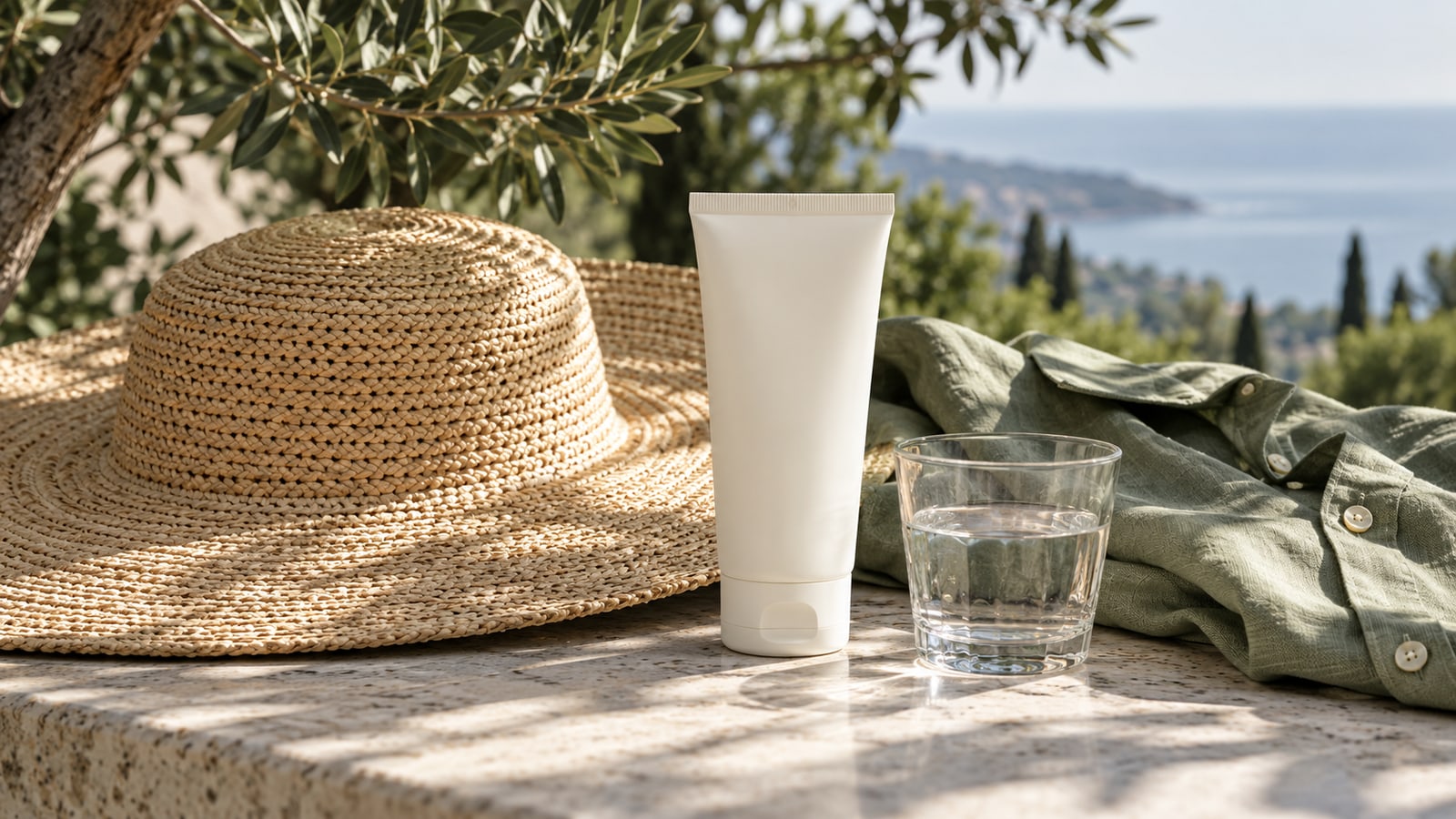
A sunscreen label answers several different questions. SPF describes UVB protection, UVA markings describe another part of the protection profile, and water-resistance wording concerns performance under specified conditions. None of those details cancels the need to apply the product properly.
Reading the label in that order makes comparison easier. Start with protection, check how the product needs to be used, then consider whether its format fits your day. A bottle that stays unopened in a bag cannot provide the protection described on its front.
Key takeaways
- NHS advice is to choose at least SPF 30 and high UVA protection.
- Read UVA stars or the UVA-circle marking alongside SPF.
- Water resistant does not mean that one application lasts through swimming and towel drying.
- Follow reapplication, expiry and storage instructions.
- Use sunscreen together with shade and suitable clothing.
On this page
What SPF tells you
SPF stands for sun protection factor. It concerns protection against UVB radiation, which contributes to sunburn. The number is established through testing; it is not a personal countdown telling you how many extra hours you can safely spend outdoors.
The NHS recommends SPF 30 or above. Choosing a higher number does not remove the importance of covering exposed skin evenly or replacing sunscreen that has rubbed away. Nor should it be used as a reason to stay in strong sun for longer than planned.
Consider the difference between a label and a routine. The label can describe a tested product. Your routine determines whether it reaches the ears, neck or other exposed areas, whether enough is used and whether it is reapplied. A useful comparison therefore includes both the protection markings and how you will use the product.
Read UVA protection separately
UK products may display a UVA star rating, commonly up to five stars, or the letters UVA inside a circle. The British Association of Dermatologists explains that stars concern the balance of UVA and UVB protection. Read them with the SPF, rather than treating a star count as a complete description on its own.
NHS advice specifies at least four-star UVA protection and also recognises the UVA-circle mark as indicating the relevant EU standard. “Broad spectrum” describes protection across UVA and UVB, but it is still worth checking the full markings and directions on the particular product.
For example, comparing two bottles only by a large SPF printed on the front misses part of the information. Turn both around and look for the UVA indication. Equally, a high star count does not make the SPF irrelevant. The two pieces of information belong together.
| Label detail | What it helps describe | What it does not promise |
|---|---|---|
| SPF | UVB protection under test conditions | A safe number of extra hours in sunshine |
| UVA stars or circle | UVA protection information alongside SPF | Protection without correct application |
| Water resistance | Performance under specified water-exposure testing | No need to reapply after swimming or towelling |
| Expiry or open-jar symbol | When to replace the product | Indefinite suitability after opening or poor storage |
Water resistance is a qualified claim
Swimming, sweating, rubbing and towel drying are practical reasons to pay attention to reapplication. The NHS advises reapplying after water exposure even when the product is described as water resistant, as well as after sweating or towelling. Read the directions before the activity, not once the bottle is wet and the label is difficult to see.
American sunscreen guidance often discusses water-resistance labels of 40 or 80 minutes. Those are features of US labelling and should not be converted into a universal rule for every UK product. The American Academy of Dermatology also explains that water resistance is not the same as being waterproof.
If a product was bought abroad, its presentation may differ from a familiar UK bottle. Identify the applicable directions and protection information rather than assuming that an unfamiliar phrase has exactly the same meaning. A pharmacist can help if the packaging is unclear or you need a product suited to a particular medical situation.
Reapplication belongs in the plan
The NHS recommends frequent generous reapplication, generally every two hours during exposure, and after events that remove the product. Follow the manufacturer’s directions as well. A morning application should not become a reason to ignore the rest of a long outdoor day.
Make the plan concrete: where will the sunscreen be kept, when will there be an opportunity to reapply, and which exposed areas are easy to miss? A person travelling lightly may prefer a different practical format from someone preparing for an afternoon outdoors with children. These are usability decisions, not evidence that one package shape gives superior medical protection.
Check that you have enough product for the planned use. A nearly empty travel tube may be convenient but unhelpful if it encourages stretching a small amount across a large area. Similarly, makeup or a moisturiser carrying an SPF claim should not distract from checking how much product and what application pattern its protection depends on.
Expiry, opening dates and storage
The open-jar symbol followed by a number and “M” indicates a period after opening in months. Check any expiry information and the manufacturer’s storage instructions too. Writing the opening month on the bottle is a practical way to avoid guessing when an old product reappears in a cupboard.
Do not deliberately leave sunscreen in direct heat or sunlight while relying on it for protection. If the product is out of date, its history is unknown or it has changed noticeably, ask the manufacturer or pharmacist about replacement. An intact-looking cap alone does not tell you how it has been stored.
When a general label is not the whole answer
Recently treated, sore or inflamed skin may need specific advice about which products can be applied and when. Our guide to sun protection during skin recovery explains why a procedure’s aftercare instructions take priority over a standard shopping checklist.
People managing pigmentation concerns may also receive more detailed advice. See our melasma guide for the role of an individual plan. Avoid assuming that the largest SPF number alone resolves every concern about pigmentation or treatment suitability.
If an exfoliating routine leaves skin uncomfortable, adding sunscreen does not make continued irritation harmless. Our glycolic and lactic acid guide discusses product tolerability. Seek advice about persistent reactions instead of repeatedly changing protection products without addressing the cause.
Check SPF and the UVA information together.
Check application, reapplication and water-resistance directions.
Combine the product with shade, clothing and opportunities to reapply.
Common questions
Does SPF 50 mean I can stay outside fifty times longer?
No. Do not use SPF as a personal exposure timer. Actual application, activity and conditions affect protection.
Is SPF the same as UVA protection?
No. Check the UVA information as well. SPF and UVA markings answer related but different questions.
Should I compare stars without looking at SPF?
No. Stars describe a balance of protection, so read them alongside the SPF rather than treating them as a complete standalone measure.
Does water resistant mean waterproof?
No. Reapply according to the directions and after swimming, sweating or towel drying. The claim does not eliminate product removal.
Do all UK products use a 40- or 80-minute water-resistance label?
No. Those durations are familiar from US labelling. Follow the actual directions on the product you are using.
What does 12M beside an open jar mean?
It indicates a twelve-month period after opening. Check other expiry and storage information rather than relying on that symbol alone.
Can sunscreen replace a hat and shade?
No. Sunscreen is one part of sun protection. Suitable clothing and shade remain useful even with a high SPF.
Can I apply my usual sunscreen immediately after a procedure?
Follow the treating clinician’s instructions about products and timing. A general sunscreen label does not establish suitability for newly treated skin.
Sources and further reading
Sources checked 22 October 2026. US water-resistance labelling is distinguished from UK product directions. Clinical review is not claimed.
Keep exploring
A Simple Skincare Routine: The Essentials Before You Add More Products
A practical starting point for cleansing, moisturising and sun protection, with room for your skin’s needs and your budget.
How to Choose a Facial Cleanser for Your Skin’s Needs
Choose a facial cleanser by its purpose, instructions and comfort, with practical checks for labels, budget and your existing skincare.
Humectants, Emollients and Occlusives: What a Moisturiser Actually Does
Understand the different jobs moisturiser ingredients perform and how to assess a finished product without buying unnecessary extra steps.
Niacinamide in Skincare: Uses, Evidence and Possible Irritation
Read niacinamide claims in context, understand what small trials studied and assess a finished formula without assuming stronger is better.