
The first thing that hits you is the sound. Not the soft, harmless splash you’d expect near water, but a heavier, sharper plunk that instantly signals trouble. It’s the sound of your phone betraying gravity—slipping from your fingers, sliding out of a pocket, or tipping off a sink edge into a sink, tub, puddle, drink, or, in the worst-case scenario, the toilet. Time doesn’t stretch like it does in movies. There’s just a frozen heartbeat where you stare, followed by a surge of panic as your hand dives after it.
The moment the noise stops
The moment the noise stops everything feels unnaturally still. You pull the phone out, dripping wet. Water trails down your fingers, seeps into your sleeve, and dots the floor below. The screen might still glow faintly, maybe flicker once, teasing you with hope. You press the buttons, swipe the glass, murmur a quiet, pleading “come on.” For a second, it responds—then stutters, fades, and finally goes black.

In that tight space between hope and dread, instinct takes over. You hold the phone close, as if squeezing it might force the water back out. Maybe you blow into the charging port. Maybe you shake it, gently at first, then harder. You tap the power button again and again, convinced that persistence alone might bring it back.

And almost on cue, a familiar thought appears—either in your own head or from someone just outside the room. The same advice that’s been passed around for years, spoken with absolute confidence:

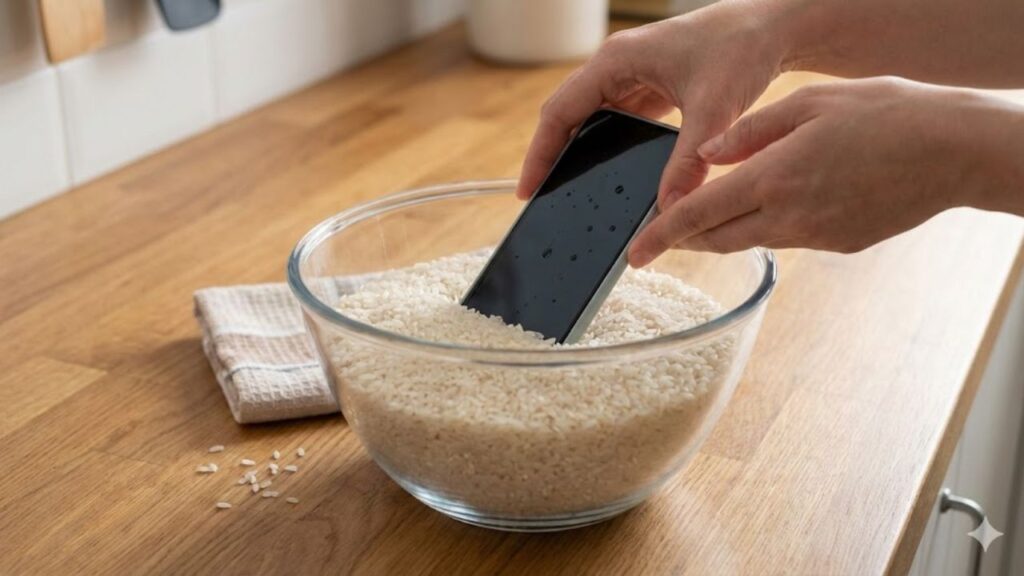
“Put it in rice.”
There’s something oddly comforting about the suggestion. Your sleek, expensive piece of technology saved not by tools or technicians, but by a bowl of dry grains from the kitchen. You picture the rice doing its quiet work overnight, each grain patiently pulling moisture from the phone’s hidden corners, restoring it by morning as if nothing ever happened.