
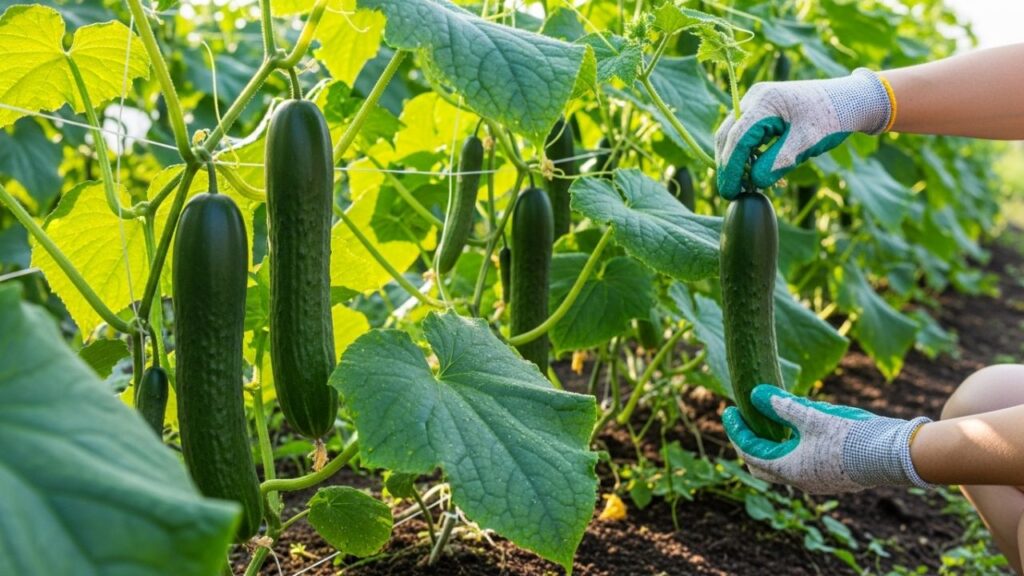
The first time you grow a cucumber that actually tastes like summer stays with you. You might have been a child sneaking slices from a cutting board or perhaps it happened last year on a hot afternoon when you bit into one fresh from the vine with warm skin & a surprisingly crisp and cool inside. For many gardeners that cucumber is Marketmore. It is an old and reliable variety that still feels somewhat magical every time the vines start to climb.
What Makes Marketmore Cucumbers So Special?
Walk into any seed rack & cucumber packets blur together with glossy photos and glossy promises. But Marketmore and especially classics like Marketmore 76 doesn’t shout. It quietly earns its place in gardens year after year. You notice it on a July morning when you brush aside the leaves and find a row of dark green uniform fruits lying there like polished jade. You slice one open and hear that clean wet snap and then the subtle scent of melon and rain-soaked soil rises up. Marketmore cucumbers are slicing cucumbers that are bred to be eaten fresh. They’re long at usually 7 to 9 inches and slim and straight with a handsome dark skin that resists yellowing. Their flavor is mild & refreshing & never bitter if you treat the plants decently. But the real story is in their toughness. Where other cucumbers sulk or collapse at the first hint of disease Marketmore stands its ground. Many strains of this variety are bred to resist the usual cucumber heartbreakers like downy mildew and powdery mildew & cucumber mosaic virus and more. That means less spraying and less fretting and more time wandering the garden and lifting leaves and discovering what feels like a daily harvest of green gifts. They aren’t fussy. They’re forgiving. And they make plenty. If you’ve ever wanted a cucumber that behaves the way gardening books say cucumbers should with reliable and productive and crunchy and beautiful results then Marketmore is unusually close to the ideal.

Preparing Your Soil: Building a Cucumber Paradise
Imagine the perfect home for a cucumber plant. The soil feels warm when you dig into it and your hand slides down easily. When you pull up a handful it crumbles without blowing away & smells faintly like a forest floor mixed with compost. This is what Marketmore cucumbers need: rich and loose soil that drains well but stays moist. Cucumbers need lots of water & nutrients. Before you open the seed packet you need to prepare the ground. Remove all weeds and old roots from the bed and then add plenty of compost or well-rotted manure. This creates a layer that holds water near the shallow roots without drowning them. If you have clay soil you should mix in coarse sand or fine bark to make it looser. If you have sandy soil you need to add extra compost so it holds moisture better. Marketmore grows best in slightly acidic to neutral soil with a pH between 6.0 & 7.0. You can check this with a simple soil test kit from any garden center. If your soil is too acidic you can add some garden lime to bring it closer to neutral. If it is too alkaline you can work in compost & a bit of elemental sulfur before planting. There is one more important detail: warmth. Cucumbers do not like cold soil. If you plant them too early in cold ground they will grow poorly or even rot. The soil temperature should be at least in the mid-60s Fahrenheit or around 18 degrees Celsius. In cooler areas you can lay down black plastic or dark mulch a week or two before planting to warm up the soil and give your cucumbers a better start.

Choosing Seeds and Planning Your Space
Standing in front of the seed rack, you might see several Marketmore options: Marketmore 76, Marketmore 80, or unnamed “Marketmore Slicing” that still carry the family traits—disease resistance, uniform fruits, and steady productivity. Any of these will likely serve you well; if you battle mildew every summer, reach for strains that specifically note resistance on the packet.
Now picture your future cucumber jungle. Marketmore vines like to wander, and you have a choice: let them sprawl across the ground, or send them climbing into the air. On the ground, they’ll take more space but need less structure. On a trellis, they stay tidy, the fruits hang clean, and you don’t have to bend over every time you harvest. There’s a certain delight in standing beside a living green curtain and plucking cucumbers at eye level.
Plan for spacing: about 12–18 inches between plants in a row, with 3–4 feet between rows if you’re letting them sprawl. If you’re trellising, you can tighten that up a bit—maybe 8–12 inches between plants along a sturdy fence or netting. The key is airflow. You want the leaves to brush shoulders, not choke each other. Good airflow is your quiet ally against disease.
| Growth Stage | What Marketmore Cucumbers Need | Your Role as a Gardener |
|---|---|---|
| Pre-Planting | Rich, loose, well-drained, slightly acidic soil (pH 6.0–6.8) | Incorporate compost, aerate soil, test & adjust pH |
| Germination | Warm soil (65–95°F), consistently moist surface | Water gently, apply row cover during cool nights |
| Vining & Flowering | Sturdy support, regular watering, good air circulation | Use trellis, mulch soil, space plants to avoid crowding |
| Fruit Set | Reliable pollination, steady moisture without splashing | Encourage bees, avoid overhead watering, water roots directly |
| Harvest | Frequent picking to extend fruit production | Harvest every few days, remove overripe cucumbers |
Planting Marketmore: From Tiny Seed to Climbing Vine
The first planting day has an almost ceremonial feeling to it. The sun has finally lost its cool edge and birds are arguing in the hedges while the soil gives off a warm feeling when you press your palm against it. This is the right time for cucumbers. In most climates you can sow Marketmore directly into the garden once the danger of frost has passed and the soil has warmed up. Push the seeds about 1 inch deep with three or four seeds in a small cluster and space each cluster 12 to 18 inches apart. Later when seedlings develop their first true leaves you will thin them to the strongest one or two per spot. It always feels somewhat cruel but the remaining plants will reward you for giving them the space. If your growing season is short you can start seeds indoors 3 to 4 weeks before your last frost date. Use biodegradable pots if possible since cucumber roots do not respond well when disturbed. A bright windowsill or grow lights combined with gentle watering will help those tiny heart-shaped seed leaves appear faster than you expect. When nights are reliably mild you can transplant them into the garden with the pot still attached while being careful not to bury the stem too deep. As the seedlings settle in you should consider using a floating row cover. This is a gauzy white fabric draped over hoops that protects young plants from cold snaps & insect pests. It works like a protective tent for your cucumbers. Just remember to remove it once flowers appear or the bees will not be able to visit & pollinate your plants.
Watering, Feeding, and Training: Keeping Cucumbers Happy
Marketmore cucumbers need steady moisture above all else. They don’t want flooding or drought but rather a reliable and deep watering schedule. If you let the soil dry out completely they will produce bitter and small fruits. When you maintain consistent moisture levels they will give you crisp & sweet cucumbers. The best approach is to water deeply but less frequently instead of light daily watering. Soak the soil at the plant base and then wait until the top inch dries slightly before watering again. Adding a layer of straw or shredded leaves around the base helps retain moisture and keeps soil temperature stable. Feeding these plants is straightforward. If you added compost to the soil before planting then Marketmore cucumbers won’t need much additional fertilizer. When the vines begin growing and flowers start appearing you can add a light application of compost or balanced organic fertilizer. Don’t use too much nitrogen-heavy fertilizer because that creates lots of leaves but very few cucumbers. Training the vines on a trellis or fence is a simple process. Guide the young tendrils toward the support structure and they will climb naturally. Every few days you can redirect any wandering vines back to the structure. This method keeps the fruit clean & straight while making it easier to find ripe cucumbers without searching through dense foliage.
Beating the Usual Enemies: Why Marketmore Shines
Every gardener knows the disappointment of watching healthy cucumber plants suddenly develop problems. One week the vines look perfect and the next week you see white powder on the leaves or yellow spots or the whole plant droops. Cucumbers naturally seem to attract diseases and pests. Marketmore changes this pattern in a meaningful way. Most Marketmore varieties resist common cucumber diseases including powdery mildew and downy mildew and cucumber mosaic virus and scab. This resistance does not make the plants bulletproof but it gives them a strong advantage from the start. Other cucumber types might fail halfway through the season while Marketmore usually continues producing new leaves & flowers well after neighboring plants have stopped growing. You can improve your chances of success with some basic practices. Space plants properly so air moves between them and water the soil directly instead of wetting the leaves & add mulch to keep soil from splashing onto the plant. Moving cucumbers to a different garden bed each year instead of using the same location also greatly reduces the risk of soil diseases affecting your crop.
Dealing with Pests and Spotting Trouble Early
Despite its strengths, Marketmore can still attract cucumber beetles, aphids, and the occasional slug. The key is regular walks through the garden, not just to harvest but to observe. Turn a leaf over; look for tiny clusters of yellow eggs. Notice if new growth is curling or sticky. These small daily check-ins are like listening to your plants whisper what they need.

If you spot cucumber beetles—the small yellow-green insects with black spots or stripes—hand-picking in the cool morning when they’re sluggish can help. Row covers early in the season can block them from seedlings entirely. Aphids can often be managed with a strong blast of water from the hose or, if needed, a gentle organic insecticidal soap.
Slugs and snails, fond of tender seedlings and low-hanging fruit, can be deterred with simple barriers like rough mulch or by going out at dusk with a bucket and a headlamp, collecting them manually. There’s a strange satisfaction in knowing your evening patrols are what stand between your cucumbers and total defoliation.
Thanks to Marketmore’s built-in disease resistance, many years you’ll find yourself with far fewer plant emergencies than you expected. Instead of constant triage, you get to focus on refining: better trellising, better succession planting, maybe a second sowing later in the season to keep cucumbers coming until fall.
Harvesting and Enjoying the Classic Slice
Every gardener knows the disappointment of watching healthy cucumber plants suddenly develop problems. One week the vines look perfect and the next week you see white powder on the leaves or yellow spots or the whole plant droops. Cucumbers naturally seem to attract diseases and pests. Marketmore changes this pattern in a meaningful way. Most Marketmore varieties resist common cucumber diseases including powdery mildew & downy mildew and cucumber mosaic virus and scab. This resistance does not make the plants bulletproof but it gives them a strong advantage from the start. Other cucumber types might fail halfway through the season while Marketmore usually continues producing new leaves and flowers well after neighboring plants have stopped growing. You can improve your chances of success with some basic practices. Space plants properly so air moves between them and water the soil directly instead of wetting the leaves & add mulch to keep soil from splashing onto the plant. Moving cucumbers to a different garden bed each year instead of using the same location also greatly reduces the risk of soil diseases affecting your crop.
Saving Seeds and Growing Marketmore Again
One of the quietly beautiful things about classic open-pollinated varieties like Marketmore is this: if you grow them away from other cucumber types and let a few fruits fully mature, you can save seeds and keep the story going year after year.
To do this, choose two or three of your healthiest plants and mark a few cucumbers early in the season. Let those chosen fruits stay on the vine far past eating stage, until they turn a dull yellow and soften, almost like overripe melons. Inside, the seeds will be fully developed. Scoop them out, rinse away the clinging pulp, and spread them on a plate or screen in a dry, airy spot until they’re thoroughly dry. Stored in a cool, dark place, they’ll keep for years.
There’s something grounding about this cycle: planting a seed from a packet one year, and a few summers later, holding a small envelope of seeds that came from cucumbers your own hands picked. Marketmore becomes not just a variety in a catalog but a living, evolving part of your particular garden, shaped by your soil, your weather, your choices.