
The sound of running water changes when you pay attention to it. This is not about waterfalls or rivers but the ordinary water sounds in your home. The shower runs steadily. The tap rushes quickly. The toilet gurgles as it refills. Most people treat these sounds as background noise that barely registers in their minds. Now picture a small device that beeps each time a litre of water goes down your drain. It would make a soft beep when you leave the tap running while brushing your teeth. It would beep louder when your washing machine fills up for a load that is only half full. This simple device would show you something important about your daily habits. You would suddenly understand how much water you waste without thinking about it. Water is a precious resource that flows clean & cold from your taps. Yet you let it run through your fingers constantly without giving it any real thought. The beeping meter would make visible what usually stays invisible in your routine.
Small Moments, Quiet Changes
Water conservation rarely starts with dramatic action. More often, it begins in an ordinary, almost forgettable moment at the sink.

Maybe it’s late evening. You’re washing dishes in warm, soapy water. The window above the sink reflects your face, the tiles, the quiet room behind you. The tap runs steadily, a thin silver stream. Nothing feels wasteful—it’s simply how you’ve always done it. Rinse, rinse again, water splashing and disappearing down the drain. Then, almost without thinking, you pause. You turn the handle slightly. The stream softens, but the dish still comes clean.

That small twist of the wrist—barely noticeable—is where meaningful change begins. Not through guilt or strict rules, but through awareness.
Water is a peculiar kind of wealth. When it flows freely, it feels endless. Yet its absence is absolute. Anyone who has lived through drought restrictions, dry riverbeds, or an unexpected water outage knows the quiet unease that follows. Still, saving water doesn’t have to feel like living in crisis mode. It can gently fit into daily life—woven into waking up, cooking, cleaning, resting, and tending to the world around you.
In a single day, there are countless chances to treat water with care. Each one seems insignificant on its own. Together, they form a calmer rhythm of living—one that respects both the water we use and the systems that carry it.
Shorter Showers, Better Mornings
Morning often begins with a shower. Steam fogs the mirror. Hot water drums against tile. Time stretches easily in that warmth. Another minute passes. Another song plays. Thoughts wander.
But those minutes accumulate. A typical showerhead can release 9–15 litres of water every minute. A 15-minute shower sends a bathtub’s worth of clean water down the drain before the day has even started.
Small changes make a real difference:
– Limit showers to the length of one song on your playlist.
– Turn the water off while shampooing or soaping, then turn it back on to rinse.
– Install a low-flow showerhead that reduces water use without sacrificing comfort.
A shower can still feel indulgent and calming. Mindfulness, not speed, is what changes the impact.
At the Sink: Tiny Streams, Big Impact
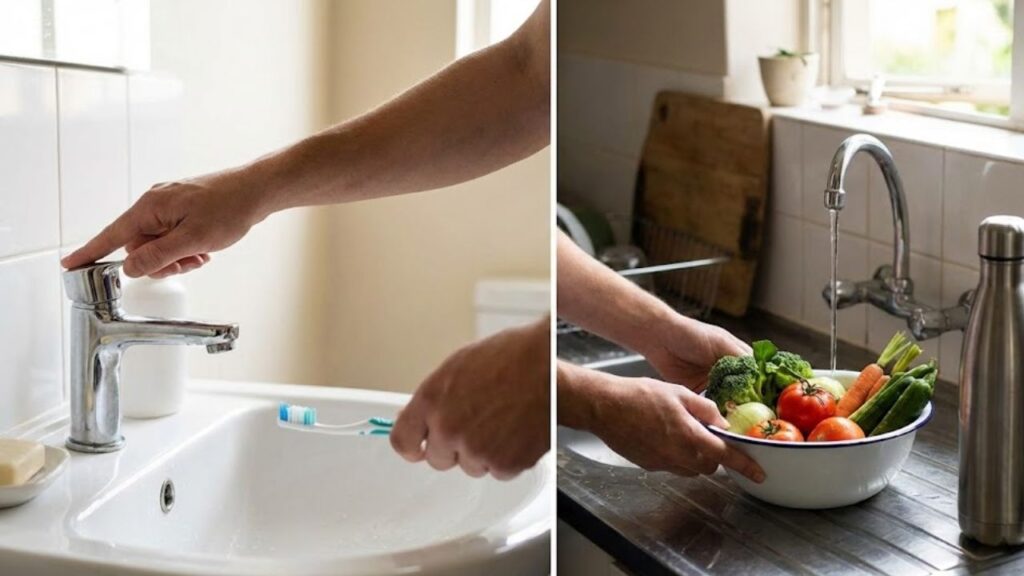
The sink hosts some of the easiest water savings. Brushing teeth, shaving, splashing your face—these habits often involve water running unattended.
– Turn the tap off while brushing your teeth.
– Use a small bowl or cup for shaving instead of letting the tap run.
– Add a faucet aerator to reduce flow while keeping pressure strong.
Pay attention just once to how long your tap runs in the morning. The silence when it’s turned off can feel surprisingly peaceful. Water begins to feel more precious when it’s not constantly slipping away.
Rethinking Dish Duty
The kitchen sink is where water habits quietly shape your household’s footprint. Whether you wash dishes by hand or use a dishwasher, small shifts matter.
For handwashing:
– Fill one basin with hot, soapy water.
– Use a second basin or brief trickle for rinsing, turning it off between batches.
– Wash clean items first, then move to dirtier ones.
For dishwashers:
– Run only full loads.
– Skip pre-rinsing under the tap; scrape instead.
– Use eco or water-saving cycles.
Over time, dishwashing becomes a collaboration with water rather than a one-way flow to the drain.
Cooking with Careful Hands
Saving water in the kitchen doesn’t mean sacrificing good food.
– Wash vegetables in a bowl instead of under running water.
– Reuse that water for plants.
– Use only as much cooking water as needed.
– Save cooled water from steaming vegetables for the garden.
Your kitchen can begin to feel like a small water cycle—less waste, more reuse.
Loads, Cycles, and Quiet Efficiency
Laundry hides its water use behind humming machines. Each cycle draws heavily from unseen sources.

– Wait for full loads.
– Match load size to clothing volume.
– Use shorter or eco cycles for lightly soiled clothes.
One fewer unnecessary load a week can save thousands of litres a year without effort or discomfort.
The Art of Wearing Things Twice
Not everything needs washing after one use. Jeans, sweaters, and towels can often go longer between washes.
This isn’t about neglect—it’s about awareness. Every extra wear prevents one load of laundry and conserves a surprising amount of water.
Watering with the Weather
Gardens respond best to thoughtful timing, not constant watering.
– Water early morning or evening.
– Direct water to the soil, not leaves.
– Use watering cans or drip hoses.
– Apply mulch to retain moisture.
Healthier soil often needs less water, not more.
Harvesting the Rain
Rainwater rushing off roofs can be captured with a simple barrel. Rainwater is ideal for gardens and outdoor cleaning.
When allowed locally, collecting rain changes how you see storms—from inconvenience to opportunity.
The Psychology of the Dripping Tap
A dripping tap or running toilet often fades into background noise. Yet one small leak can waste hundreds or thousands of litres a year.
Fixing leaks is one of the most effective conservation steps you can take. The silence afterward feels like reclaimed space.
Knowing Your Household Habits
Spend a week observing water use without judgment:
– Notice long-running taps.
– Identify habits driven by distraction.
– Spot chores that use the most water.
Change one or two easy habits first. Let them settle. Add others slowly.
Everyday Changes and Their Rough Savings
Tiny actions compound over time. Small daily choices can save thousands of litres each month.
These numbers are estimates, but they reveal how meaningful everyday habits can be when practiced consistently.
A Different Way of Listening
Water conservation isn’t about strict rules. It’s about listening—to your home, your routines, and the rhythms of rain and drought beyond your walls.
Start with one tap. One habit. One quiet adjustment. Notice how it feels—not as loss, but as care.
Somewhere, water stays where it belongs because of those moments. You may never see that river or reservoir, but you are connected to it every time you turn a handle.
The next time water flows from a tap, pause briefly. Notice its sound, its temperature, its presence. Use what you need—only what you need—and let the rest remain part of the world beyond your sink.