The air by the river feels heavy & damp on your skin. Your feet hit the pavement in the same pattern they have for months or even years. You breathe in and out. The podcast playing has faded into noise you barely notice. These runs used to end with your face red & a feeling of accomplishment. Now they just leave you tired & somewhat bored as you wonder why the results don’t match your effort when you look in the mirror or step on the scale. Around the second or third mile a thought crosses your mind about whether this is actually the best approach.
Why Traditional Running Hits a Plateau for Fat Loss
Steady-state running has a strong reputation. It’s simple and accessible and feels like the right thing to do. You put on shoes and pick a pace and get it done. For beginners it works well because weight comes off & endurance improves and progress feels real. But eventually things often slow down. Your body adapts because that’s what it does to survive. It learns to work more efficiently. A route that used to leave you breathless now feels manageable. You burn fewer calories covering the same distance. Fat loss slows down & then stops. You try to push harder and add more miles but your knees and hips start to hurt.

You might notice other problems too. Your knee aches when you go up stairs. Your ankles feel swollen by the end of the day. You feel tired the next day like your body never fully recovers. Sometimes it’s not just physical tiredness but mental staleness like you’re stuck in the same routine over and over. Here’s something that doesn’t get talked about much: doing more is not always the answer. Working smarter is better. When it comes to fat loss that usually means moving away from endless steady-state running and trying movements that challenge your muscles and lungs and nervous system in different ways without damaging your joints in the process.

How Modern Workouts Torch More Calories in Less Time
Fat loss depends on how much energy you use and how your hormones respond. Your body constantly chooses between storing fat and burning it. The way you exercise influences that choice. Long steady runs burn calories but they don’t create strong metabolic effects that keep your body burning energy hours after you finish. Two main factors make the difference: Intensity: Quick periods of hard work trigger something called EPOC or excess post-exercise oxygen consumption. This is when your body continues burning extra energy afterward to recover and restore normal function.
Muscle recruitment Using more muscles means burning more energy during exercise and afterward since muscle tissue needs fuel even when resting. Regular running uses many muscles but mostly in a repetitive moderate way. If you switch to exercises that increase intensity and activate more muscle fibers then a 20 to 30 minute session becomes much better for fat loss than jogging at an easy pace for the same amount of time. Think of workouts as quick intense bursts rather than one long gentle effort.
HIIT Workouts That Ignite Fat Burn Faster Than Long Runs
High-Intensity Interval Training or HIIT is different from a steady easy run. It involves breathing hard and feeling your legs get tired and your heart beat fast during short bursts that seem to last forever. Then you get a break to recover before doing it again. Imagine you are at a track or near a hill in your neighborhood. Instead of running past it you stop at the bottom. You walk for a bit to prepare yourself. Then you sprint up the hill with your knees lifting high and your arms moving fast while your lungs work hard. When you reach the top you walk back down slowly while your legs feel warm and your heart keeps beating hard.
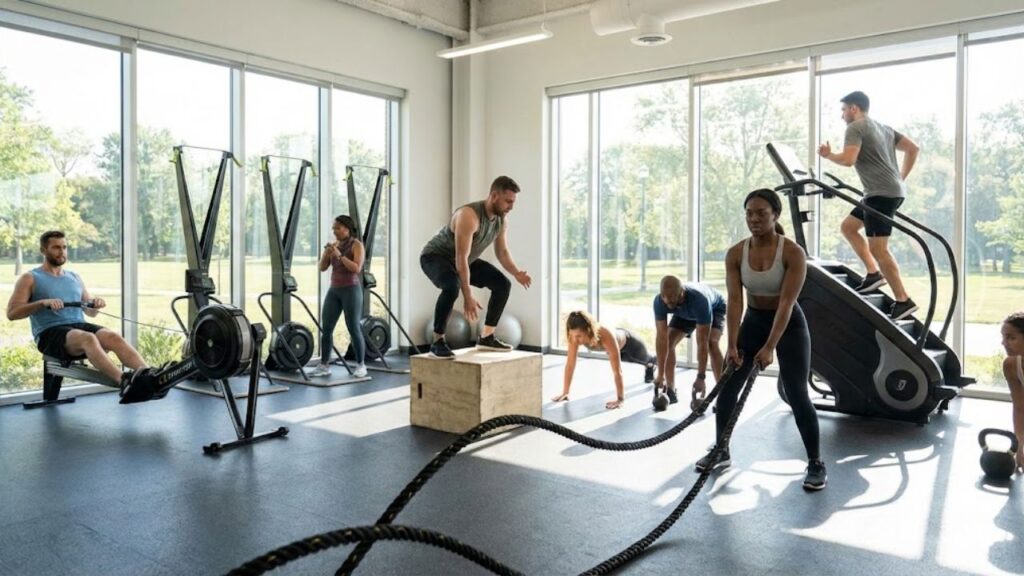
That is one interval. You might do this 6 to 10 times. The entire workout can be finished in 15 to 20 minutes when you include warming up and cooling down. What makes HIIT special is how it affects your body. Those short intense efforts require so much energy that your body continues working for hours afterward to restore oxygen and clear out waste products and balance your hormones. This afterburn effect means you use more total energy than you would during the same time spent jogging at an easy pace. HIIT does not have to be only sprinting. It can be fast cycling or rowing machine work or climbing stairs in your building. The basic idea is the same: you alternate between periods of hard effort and periods of rest.
Strength Training Secrets: Turning Muscle Into a Fat-Burning Engine
The sound of weights hitting together. The smell of metal and gym mats. The first time you lower yourself under a barbell or pick up dumbbells. Strength training doesn’t seem like cardio. There’s no running outside or music pumping through headphones. It’s just you working against resistance. But this is where serious fat burning happens. Each pound of muscle you build works like a small furnace. It burns energy while you exercise and also when you’re resting throughout the day & night. When you lift weights properly with exercises like squats that challenge your legs or rows that work your back or presses that build your shoulders you’re doing more than just burning calories during the workout.
You’re changing how your body works so it burns more energy constantly. That’s why a brief hard strength workout can match or beat a long run for losing fat over time. The calories you burn during exercise are just the start. After you finish your muscles repair themselves & grow larger. Your nervous system gets stronger. Your hormones change in ways that improve your fitness. You don’t need a gym for this. Your body weight provides enough resistance to start. Try doing slow squats or push-ups against a wall if regular ones are too hard. Do hip hinges and glute bridges. Hold planks that force your core muscles to stay tight. Put these exercises together with brief rest periods between them and your heart will beat hard like during a run but more muscles will be working at the same time.
Low-Impact Cardio Powerhouses: Cycling, Rowing, and Beyond
For many runners the problem is not their lungs but their joints. Ankles roll and hips grind while knees ache with a constant dull pain. The advantage of alternative cardio is that some of the best fat-burning exercises are also easier on the areas where bones connect with cartilage. Get on a rowing machine and grip the handle. The seat moves smoothly on its track while the chain moves forward & back. Your legs push and your hips bend as your core tightens and your back pulls. Almost your entire body works together in a smooth rhythm that feels like productive effort. After ten minutes your shirt is wet and your heart beats fast. Every stroke feels like your whole body is working hard. You can also get on a bike indoors or outside. There is something exciting about feeling the wind on your face as the pedals spin. Change gears and stand up on the pedals for a short hard climb uphill.

Then sit back down and pedal at an easier pace. Your joints move smoothly through the motion instead of taking the repeated impact that comes with running. Both cycling and rowing work well for interval training. You can mix sprints with recovery periods or do hard climbs followed by easier sections. They use large muscle groups like your quads and glutes and back that burn a lot of energy. Because they are low-impact exercises you can often handle more intensity more frequently without feeling like your body is breaking down.
Dynamic Circuits and Kettlebells: Full-Body Fat Burn in Motion
Imagine a small space on the floor with a timer on your phone and a single kettlebell sitting by your feet. This is not the organized world of gym machines and preset programs. This is movement as play & challenge & experiment. Circuit training and kettlebell work combine strength and cardio into one intense experience. You perform a series of movements like swings and squats & presses and rows and lunges with minimal rest between them. Your heart races & your muscles burn and your breath gets heavy as you move and learn. Balance & coordination and power and control develop with each rep as your brain and body work together. A set of kettlebell swings done correctly burns fat very efficiently.
Your hips snap forward and your glutes fire hard & your hamstrings stretch & contract like springs. The bell swings forward and then back between your legs in a controlled motion. Your heart rate jumps as if you had sprinted across a field but your feet barely move. These movements are dynamic and work your whole body so they create a huge demand for oxygen & energy. Your body responds by using its reserves both during the workout and afterward as it repairs itself. It follows the same principle as HIIT and strength training combined into one effective workout. There is also real satisfaction in this type of training. You feel quiet pride when you master a clean or a snatch or even just a perfect squat. You get the sense that you are not just doing cardio but becoming more capable and more coordinated & more alive in your own body.
Which Workout Burns More Fat? A Smart Comparison Guide
Every movement tells a different story in your body. Some movements need patience and time while others need intensity and focus. When you choose cardio alternatives to steady running it helps to see how they compare for fat loss time requirements and joint health. Running burns calories effectively but it puts stress on your knees and ankles. Walking offers a gentler option that almost anyone can do without special equipment.
| Workout Category | Average Duration | Fat Loss Effectiveness | Joint Stress Level |
|---|---|---|---|
| Traditional Steady Jogging | 30 to 60+ minutes | Burns calories steadily, limited post-workout fat burn | Medium to high due to continuous impact |
| High-Intensity Interval Training (HIIT) | 15 to 25 minutes | Extremely high calorie burn with strong afterburn effect | Varies — high with sprints, lower on bike or rowing machine |
| Strength-Based Circuit Training | 25 to 40 minutes | High fat burn plus long-term metabolic boost from muscle gain | Low to moderate with controlled, strength-focused movements |
| Cycling or Rowing Intervals | 20 to 30 minutes | High fat-burning potential, especially with interval pacing | Low impact, gentle on knees and ankles |
| Kettlebell & Dynamic Full-Body Circuits | 20 to 30 minutes | Very high due to intense, full-body engagement | Low to moderate, depends heavily on proper form |
The best choice is not the one that seems toughest when you read about it. It is the one you will actually do on a regular basis. Losing fat depends less on one amazing workout and more on what you keep doing week after week & month after month. This might mean rowing intervals twice a week along with one kettlebell workout & one long easy hike that helps your mental state as much as your physical fitness. It could also mean lifting weights three times weekly with brief intense cardio sessions between those days. Your body does not care if your heart rate goes up from cycling or lifting weights or running uphill with your dog. What matters is that your heart rate increases and that you allow time to recover and that you maintain consistency.
Building a Balanced Routine for Maximum Fat-Burning Results
You don’t need to stop running completely to try other things. Think of steady runs as one option among many. They work fine but they aren’t the only way to lose fat or stay healthy. The real benefits come when you start mixing in different types of exercise. Picture a week that feels more varied & interesting instead of repetitive. One day you sprint on grass in short intense bursts and realize how challenging ten seconds can be. Another day you do squats and push-ups in your living room & your heart rate climbs just as high as it would during a long run. Later that week you use a rowing machine and focus on the rhythm until you lose track of time. On the weekend you walk a trail or ride a bike at an easy pace just to enjoy moving your body without worrying about performance. After a while you might notice small changes like stairs feeling easier or bags feeling lighter or clothes fitting differently.
But you might also notice something better. Your workouts stop feeling like obligations and start feeling like something you actually want to do. Each session becomes a way to explore what your body can handle and what new things you might try. The running trail will always be available when you want it. You can still go for runs whenever you feel like it. But now you understand that losing fat and getting fit aren’t tied to just one type of exercise. You can sprint up hills or lift weights or use a rowing machine. There are many ways to raise your heart rate and challenge your muscles and several of them burn more fat in less time than long slow runs. The question changes from “Should I go running today?” to “What kind of movement sounds good right now?”