
Starting your day with yoga helps create a positive and productive mindset. A good morning yoga routine wakes up your body & clears your mind while boosting your energy levels. It also improves flexibility and balance while sharpening mental clarity. Adding a quick yoga session to your morning works for beginners & experienced practitioners alike. This simple practice can significantly improve your physical and mental health over time.
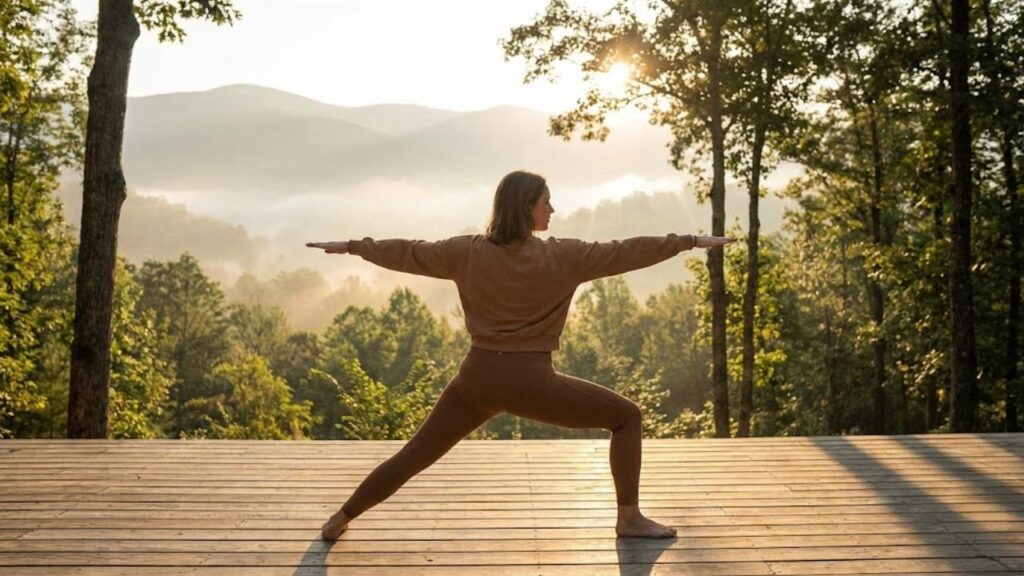
Sun Salutations (Surya Namaskar)
Duration: 5–10 minutes
Benefits: Improves flexibility, builds muscle strength, and enhances blood circulation

Sun Salutations are an effective way to energize the body and gently awaken stiff muscles. This flowing sequence of movements warms up the entire body while combining forward bends, backbends, and smooth transitions. Practicing it regularly helps release tension, improve mobility, and sharpen mental focus at the start of the day.

How to Do It:
Begin in Mountain Pose (Tadasana), standing upright with feet hip-width apart.
Inhale and lift your arms overhead, then exhale and fold forward into Standing Forward Bend (Uttanasana).
Step back into Plank Pose, lower down through Chaturanga, and transition into Cobra or Upward Dog (Bhujangasana).
Exhale into Downward Dog (Adho Mukha Svanasana) and hold for a few breaths.
Step forward, return to a forward fold, and slowly rise back to Mountain Pose.
Repeat 3–5 rounds, coordinating each movement with your breath.
Cat-Cow Pose (Marjaryasana–Bitilasana)
Duration: 2–3 minutes
Benefits: Enhances spinal flexibility, stretches the back and neck, and activates abdominal organs
Cat-Cow is a gentle spinal warm-up that improves mobility and eases morning stiffness. The rhythmic movement between arching and rounding the spine helps relieve tension in the neck and lower back while encouraging mindful breathing.
How to Do It:
Start in a Tabletop Position with wrists under shoulders and knees under hips.
Inhale to arch the spine into Cow Pose, lifting the chest and tailbone upward.
Exhale to round the spine into Cat Pose, drawing the chin toward the chest and engaging the core.
Continue flowing between these poses for several rounds, matching movement with breath.
Child’s Pose (Balasana)
Duration: 2–3 minutes
Benefits: Releases tension in the back, hips, and shoulders while calming the mind
Child’s Pose is a deeply restorative posture that encourages relaxation and gentle stretching. It allows the body to slow down, making it ideal for moments of rest or recovery during a yoga session.
How to Do It:
Kneel on the mat with knees slightly apart and big toes touching.
Sit back on your heels and stretch your arms forward along the floor.
Lower your forehead toward the mat and breathe deeply.
Hold the pose for several breaths, allowing the body to soften and relax.
Warrior II (Virabhadrasana II)
Duration: 1–2 minutes per side
Benefits: Strengthens legs, hips, and core while improving balance and focus
Warrior II is a strong standing pose that builds endurance and stability. It opens the hips and chest, promotes body awareness, and enhances mental concentration.
How to Do It:
Stand tall and step your feet wide apart.
Turn the right foot out and bend the right knee to form a right angle, keeping the left leg straight.
Extend both arms parallel to the floor with palms facing down.
Gaze over the right hand and hold for several breaths.
Switch sides and repeat.
Downward Dog (Adho Mukha Svanasana)
Duration: 1–2 minutes
Benefits: Stretches the full body, strengthens arms and legs, and boosts energy

Downward Dog is a foundational yoga pose that lengthens the spine and stretches the hamstrings and calves. It also strengthens the shoulders and arms while promoting circulation and alertness.
How to Do It:
Begin in a tabletop position with hands under shoulders.
Lift the hips up and back, forming an inverted V shape.
Press the hands firmly into the mat and extend the legs comfortably.
Hold for several breaths, focusing on spinal length and steady breathing.
Standing Forward Fold (Uttanasana)
Duration: 1–2 minutes
Benefits: Stretches hamstrings and calves, calms the nervous system, eases neck tension
Standing Forward Fold is a soothing posture that helps release tightness after rest. It encourages relaxation while gently stretching the lower body.
How to Do It:
Stand with feet hip-width apart.
Inhale to lengthen the spine, then exhale and fold forward from the hips.
Let the head hang freely and place hands on the floor or ankles.
Breathe deeply and relax into the stretch.
Seated Forward Fold (Paschimottanasana)
Duration: 2–3 minutes
Benefits: Stretches hamstrings, spine, and shoulders while calming the mind
This seated pose offers a deep stretch that helps lengthen the spine and release stored tension. It is especially beneficial for slowing down the body and breath.
How to Do It:
Sit on the floor with legs extended straight.
Inhale to sit tall and lengthen the spine.
Exhale and fold forward, reaching toward the feet or shins.
Hold for several breaths, deepening the stretch with each exhale.
Corpse Pose (Savasana)
Duration: 5 minutes
Benefits: Promotes deep relaxation, mental calm, and full-body restoration
Savasana allows the body to absorb the effects of the practice fully. It encourages complete relaxation and helps reset the nervous system.
How to Do It:
Lie flat on your back with arms relaxed by your sides and palms facing up.
Close your eyes and bring attention to your breath.
Allow the entire body to relax without effort.
Remain in this pose for 5–10 minutes, breathing slowly and evenly.