
The first thin silver lines along her hair part looked unforgiving under the bathroom light, as if they had been sketched in with a cold pencil. Her hand automatically reached toward the box dye under the sink, then hesitated. She remembered the itchy scalp, the sharp chemical smell, and the towels permanently marked with color.
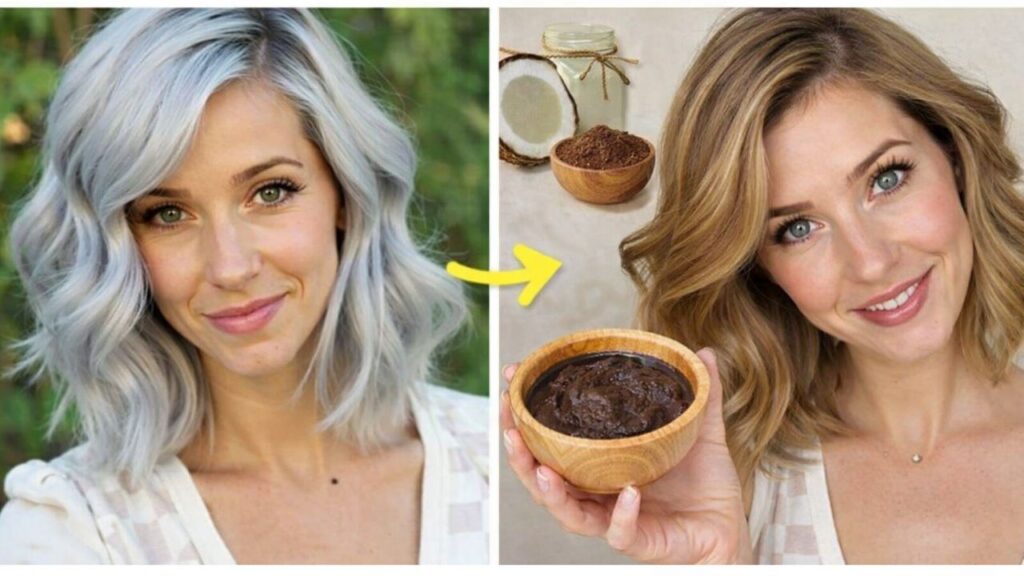
Instead, she unlocked her phone and typed what countless people search for late at night: natural ways to cover gray hair. Most results felt either vague or overly complex, drifting somewhere between old folk remedies and science experiments. Then one simple recipe kept appearing again and again, quietly shared like a trusted secret. Just two ingredients, a spoon, a bowl, and the promise that gray hair does not have to define the whole story.

Why gray hair is appearing earlier than expected
You often notice it first in unplanned photos. Not the carefully posed ones, but the casual picture dropped into a WhatsApp group. The hair near your temples looks lighter, almost translucent. Under harsh office lighting, it seems even more obvious. You laugh it off, yet the thought lingers long after.
 Goodbye Kitchen Islands According to Designers: The Practical 2026 Layout Taking Over Homes
Gray hair was once associated with later life, but now people in their late 20s and early 30s are seeking answers. Factors like chronic stress, ultra-processed diets, poor sleep, and pollution all play a role. Hair follicles lose melanin more quickly, and white strands appear sooner than expected. Each strand becomes a quiet reminder of how modern life affects the body.
What gray hair really signals beneath the surface
Gray hair itself is not unhealthy. It simply reflects changes happening within the follicles. Melanocytes, the cells responsible for pigment, gradually slow down. As their activity decreases, new hair grows in with less color until it appears silver or white.
Traditional dyes only mask this process by coating the hair. They do not change what is happening underneath, which is why roots show up so quickly. Plant-based homemade dyes work differently. They gently stain the outer layer of the hair, softening contrast instead of forcing a dramatic change. The result is more subtle, but often kinder to both hair and scalp.
The simple two-ingredient hair tint people keep sharing
The recipe that continues to circulate is surprisingly basic: ground coffee and conditioner. Not instant coffee, but strong, dark grounds that leave a stain on your cup. When mixed with a mild, silicone-free conditioner, it becomes a smooth, chocolate-toned paste.

You brew a small amount of very strong coffee and allow it to cool. Then mix two to three tablespoons of used grounds with four tablespoons of plain conditioner, adjusting with a little brewed coffee until smooth. This mixture acts more like a nourishing hair mask than a traditional dye, with coffee pigments clinging especially well to lighter gray strands.
How people apply it at home and what results to expect
Most apply it on clean, damp hair, section by section, focusing on areas where gray shows most clearly such as the parting, temples, and crown. Once fully coated, the hair is twisted into a loose bun and covered. The waiting time is longer than chemical dyes, usually 45 to 60 minutes, allowing the pigment to settle.
After rinsing thoroughly with lukewarm water, the gray does not turn jet black. Instead, it blends into a soft, warm brown tone that looks more like natural highlights. The method works best on dark blond to dark brown hair, while black hair gains subtle warmth and very light hair may shift slightly caramel.
- Use freshly brewed, cooled coffee, not instant powder.
- Choose a plain, light-colored conditioner to control tone.
- Repeat weekly for three to four weeks for better build-up.
- Protect towels and clothing, as coffee can stain.
- Patch test first if you have sensitive skin.
Over time, many people find this small ritual changes how they feel about their hair. Instead of reacting with urgency to every new silver strand, they have a gentle option on hand. The effect may be subtle, but it often restores a sense of control and confidence, turning gray hair from a source of stress into something that quietly blends back into everyday life.